Zuma's Meeting With Fugitive Ajay Gupta Sparks Outrage In South Africa
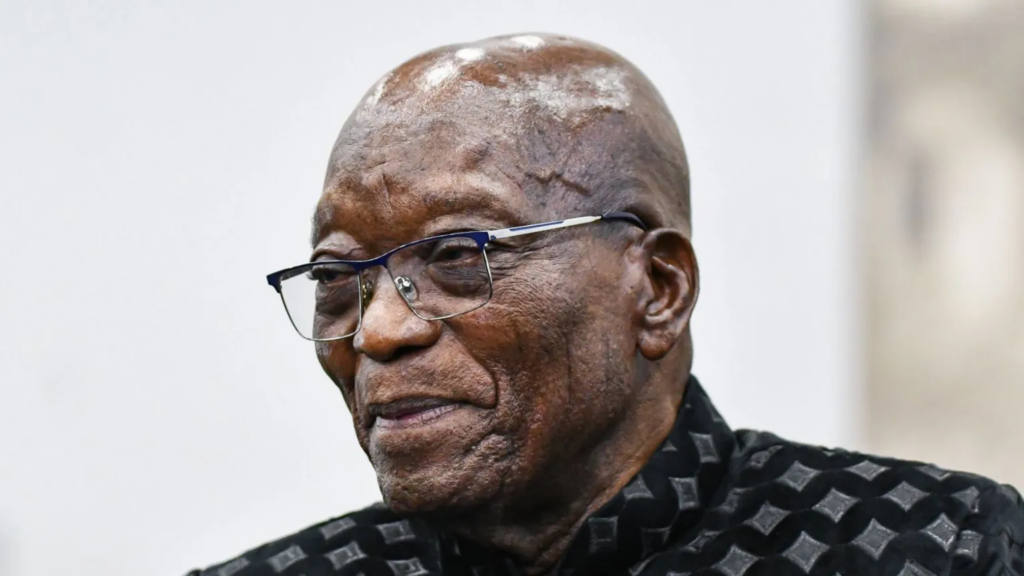
Image: GhanaFront Editorial
A Shocking Reunion in India Sparks Outrage in Pretoria
In a development that has reignited painful memories of systemic corruption in South Africa, former President Jacob Zuma has been photographed meeting with Ajay Gupta at a temple in India. The encounter between the 84-year-old political veteran and the controversial Indian businessman has prompted fierce condemnation from the current South African administration. To many political observers and citizens alike, the meeting is viewed as a direct insult to those who suffered under the devastating economic era widely known as "state capture."
The Gupta family remains at the absolute centre of South Africa's most notorious modern corruption scandal. For nearly a decade, the brothers allegedly leveraged their remarkably close relationship with Zuma to siphon billions of rand from state coffers. They exerted undue, unchecked influence over critical government appointments, essentially running a shadow government from their sprawling compound. While the family fled the country in 2018 amid mounting judicial scrutiny and intense public pressure, their shadow continues to loom heavily over the nation's political landscape today.
Adding a deeply problematic diplomatic dimension to the scandal, South Africa's High Commissioner to India, Anil Sooklal, reportedly accompanied the former president to this controversial meeting. The direct involvement of a sitting, high-ranking diplomat has escalated the situation from a mere political faux pas to a severe breach of state protocol, triggering immediate calls from lawmakers for a full, transparent investigation.
The "Middle Finger" to South Africans
The reaction from President Cyril Ramaphosa's cabinet has been rapid, sharp, and uncompromising. South African Cabinet Minister Khumbudzo Ntshavheni did not mince her words during a recent press briefing, expressing profound disgust at the public display of camaraderie between the former head of state and the fugitive businessman.
"It is very disturbing that a former state president openly and unapologetically shows the middle finger to South Africans who have lost a lot of money through the Gupta brothers' shenanigans."
Ntshavheni went further, describing the official involvement of High Commissioner Sooklal as an absolute disgrace to the nation's diplomatic corps. This fierce sentiment was echoed by International Relations Minister Ronald Lamola, who announced without hesitation that South Africa would immediately launch an internal investigation into the circumstances of the meeting. Lamola expressed grave concern over the diplomatic optics, stating flatly that Zuma appeared to be orchestrating a "parallel foreign policy" that fundamentally undermines the official diplomatic posture of the sovereign state.
The Legacy of State Capture and the Economic Toll
To fully understand the gravity of this meeting, one must revisit the devastating, long-lasting impact of the Gupta family's influence on the South African economy. A comprehensive 2022 judicial commission, chaired by Chief Justice Raymond Zondo, established conclusively that Zuma had manipulated his cabinet entirely at the behest of the Gupta family. This effectively surrendered the nation's economic sovereignty to private, foreign interests.
The commission detailed several alarming, high-level interventions that crippled the country's financial stability:
- The shocking 2015 dismissal of Finance Minister Nhlanhla Nene, who was explicitly targeted because he refused to comply with the Guptas' aggressive financial demands regarding nuclear procurement and airline routes.
- The subsequent, rapid-fire appointments of Des van Rooyen and Malusi Gigaba -- individuals who were deemed exceptionally friendly to the expanding business interests of the Gupta empire.
- The systematic infiltration and systemic corruption at Eskom, the massive state electricity utility. Key executive positions were filled by Gupta loyalists, directly contributing to the severe, rolling power crises (load shedding) that continue to plague the country's businesses and households today.
The economic toll on the average citizen has been catastrophic, leading to widespread job losses, stunted economic growth, and a severe degradation of public services. Despite these overwhelming, documented findings, Zuma has consistently and aggressively denied any wrongdoing, persistently portraying himself to his followers as a victim of a massive, politically motivated witch-hunt.
Failed Extraditions and Legal Dead Ends
The deep frustration of the South African public is exponentially compounded by the repeated failures of both local and international law enforcement authorities to bring the Gupta brothers to justice. Following their hasty departure in 2018, the family has successfully, and seemingly effortlessly, evaded prosecution.
In a surprising and demoralizing turn of events, South African authorities actually cancelled the arrest warrant for Ajay Gupta the year following his departure, citing procedural issues. Meanwhile, his younger brothers, Atul and Rajesh, sought luxurious refuge in the United Arab Emirates. In 2023, a UAE court formally rejected South Africa's extradition request for the pair, citing technicalities in the legal documentation. This decision dealt a severe, possibly fatal blow to the nation's desperate efforts to recover stolen state funds and hold the primary perpetrators accountable.
This lack of legal consequence makes the recent photograph of Zuma and Ajay Gupta all the more inflammatory. For millions of South Africans, it is a stark, painful visual representation of impunity -- a daily reminder that the architects of state capture remain entirely free to enjoy their illicitly acquired wealth abroad, far from the consequences of their actions.
A Political Resurgence Against All Odds
Perhaps the most alarming aspect of the India meeting is the turbulent political context in which it occurred. During the encounter, Zuma reportedly declared his unwavering intention to stand for re-election in South Africa's next electoral cycle. At 84 years old, his absolute refusal to exit the political stage continues to violently disrupt the traditional balance of power in Pretoria.
Zuma currently heads the uMkhonto weSizwe (MK) party, a heavily populist breakaway faction that significantly altered the political landscape during the pivotal 2024 elections. Capturing approximately 15 percent of the national vote, the MK party was directly instrumental in driving the historically dominant African National Congress (ANC) below the critical 50 percent majority threshold. This marked the first time the ANC lost its absolute grip on power since the dawn of the democratic era under Nelson Mandela in 1994.
As Zuma manoeuvres to consolidate his grassroots base, this highly publicized meeting with Ajay Gupta signals a brazen, calculated defiance of the political establishment. It heavily suggests a campaign strategy that relies on aggressive populism, historical grievances, and anti-establishment rhetoric rather than distancing itself from past controversies. For the fragile ruling coalition currently governing from Pretoria, the spectre of Zuma's continued political relevance -- backed potentially by lingering illicit wealth and formidable local support networks -- remains a critical, existential threat to national stability.
Broader Implications for African Governance
The ongoing, dramatic saga of Jacob Zuma and the Gupta family serves as a profound cautionary tale for governance and democratic integrity across the entire African continent. It starkly highlights the extreme vulnerabilities of state institutions to sophisticated private capture and the immense, sometimes insurmountable difficulty of achieving true accountability once corruption becomes deeply entrenched at the absolute highest levels of government.
As South African authorities scramble to investigate this latest diplomatic embarrassment and contain the domestic fallout, the international community watches closely. The ability of the current administration to enforce diplomatic discipline, penalize rogue actors like Sooklal, and actively pursue justice will serve as a crucial test of South Africa's enduring commitment to the rule of law. Until decisive, visible action is taken, the jarring image of a former head of state cheerfully fraternizing with a wanted fugitive will remain a very bitter pill for the continent's most advanced economy to swallow.
More from GhanaFront Editorial
Related Stories
More from Politics
Newsfile to discuss EOCO arrest of Manhyia South MP, drug trafficking, teachers' strike and Ghana's sports crisis
What links an MP's arrest, port drug seizures, a strike, and sports upheaval? Newsfile digs in.
1d ago•