Walewale Rice Training Graduates Receive GEA Start-Up Boost
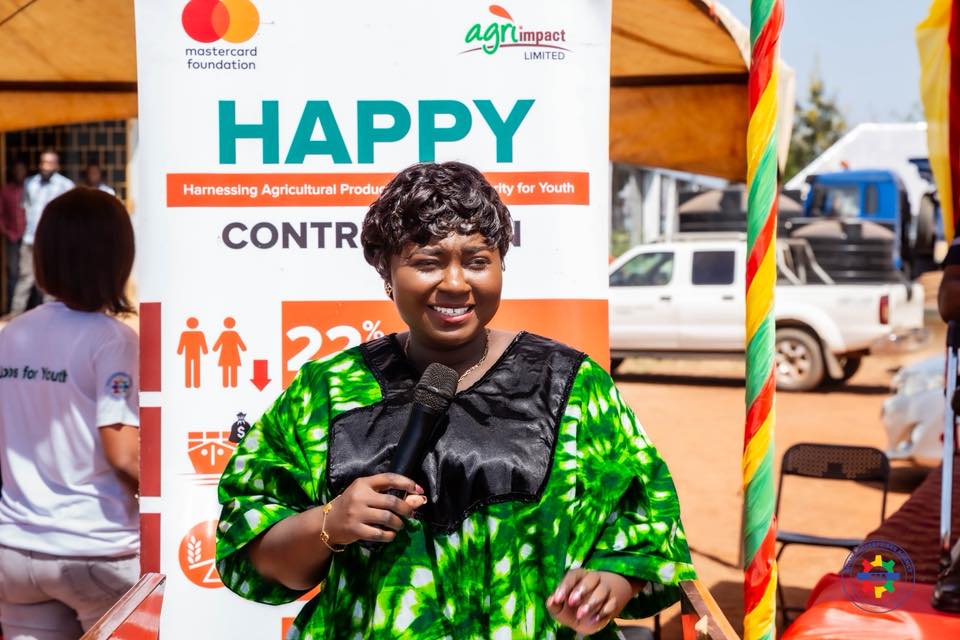
Image: GhanaFront Editorial
The Ghana Enterprises Agency has moved from training to enterprise support in Walewale, handing start-up kits to 150 young women who have completed skills development in rice processing under the agricultural value chain.
The support was presented by the Agency's Acting Chief Executive Officer, Margaret Ansei Magoo, in a move aimed at turning classroom instruction into actual business activity for beneficiaries in the North East Region.
The intervention forms part of the Harnessing Agricultural Productivity and Prosperity for Youth project, widely known as the HAPPY Project. It is being implemented through a partnership between the Ghana Enterprises Agency and the Mastercard Foundation, with technical backing from partners including Agri-Impact Limited.
At the centre of the initiative is a simple but important objective: give young women practical tools they can immediately use to start earning, grow small enterprises and build financial independence through agribusiness.
From training to enterprise support
The beneficiaries in Walewale were selected after completing training in rice processing, a segment of the agricultural value chain with direct relevance to local production, food systems and rural enterprise development. By following up the training with equipment support, the programme is attempting to close one of the biggest gaps in youth entrepreneurship -- the inability to move from skills acquisition to business start-up.
That gap is especially sharp for young women in many parts of Ghana, where access to capital, equipment and stable business support remains limited. A certificate alone does not create a business. Machinery, tools and working assets often determine whether training translates into income or ends as another stalled opportunity.
That is why the distribution in Walewale matters. The kits were not presented as ceremonial items. They were framed as working tools meant to help recipients begin productive activity and establish sustainable ventures within the rice processing space.
According to the Ghana Enterprises Agency, 150 young women in Walewale received start-up kits after completing rice processing training under the HAPPY Project.
The decision to focus on rice processing also reflects the growing importance of value addition within Ghana's agriculture sector. Processing creates room for better income retention, local enterprise growth and stronger rural economies than raw commodity participation alone. When young people can participate beyond production and into processing, packaging or related services, the economic impact spreads wider.
Margaret Ansei Magoo's message to beneficiaries
Addressing the women who received the kits, Margaret Ansei Magoo urged them to treat the items as productive assets, not as handouts. That distinction is critical. Public programmes often lose impact when beneficiaries view support as one-off donations rather than tools tied to responsibility, output and long-term planning.
Her message was direct: the value of the intervention will depend on how carefully and strategically the recipients use the equipment. If the tools are maintained and put to work properly, they can become the foundation for viable small businesses. If mishandled, the promise of the intervention weakens quickly.
That emphasis on enterprise discipline signals a broader institutional shift in how youth support programmes are being framed. Increasingly, agencies are focusing not only on access but also on productive use, accountability and business sustainability. The point is not just to distribute equipment. The point is to create working entrepreneurs.
Ms. Magoo also linked the initiative to a larger national ambition. She said youth-led agribusiness remains a practical route to Ghana's wider agricultural transformation, and she reaffirmed the Agency's commitment to supporting that path. The argument is hard to dispute. Ghana cannot talk seriously about agricultural transformation while leaving its youth outside the most promising parts of the value chain.
- Beneficiaries: 150 young women
- Location: Walewale, North East Region
- Training area: Rice processing
- Programme: HAPPY Project
- Lead institutions: Ghana Enterprises Agency and Mastercard Foundation
- Technical support: Agri-Impact Limited and other partners
Why the intervention could shape local livelihoods
Well-targeted support of this kind can have an effect that extends beyond individual recipients. When young women gain the means to process agricultural products and earn income, the benefits can reach households, local markets and community-level economic activity. Enterprise ownership also changes social expectations, particularly in regions where many young people still face limited formal employment prospects.
The Walewale distribution therefore sits at the intersection of youth employment, women's economic inclusion and agricultural development. It is not simply a welfare gesture. It is an investment in productive capacity.
The long-term success of the effort, however, will depend on what follows next. Start-up kits can open the door, but sustained business growth usually requires continuous mentoring, market access, financial literacy and an ecosystem that supports expansion. Training and tools matter, but so do follow-up systems that help early-stage entrepreneurs survive the fragile first phase of business formation.
That is where collaborative models like the HAPPY Project become especially important. By combining institutional leadership, philanthropic backing and technical support, such programmes stand a better chance of producing durable results than isolated interventions. The partnership between the Ghana Enterprises Agency, the Mastercard Foundation and technical partners suggests an understanding that youth enterprise development requires more than symbolic support.
For Walewale's beneficiaries, the immediate challenge is practical: put the kits to work, protect the assets, organise production and build a pathway to steady income. For policymakers and implementing institutions, the test is equally clear: ensure that today's distribution leads to tomorrow's functioning enterprises.
If that happens, the Walewale intervention will represent more than a distribution exercise. It will stand as evidence that when training is matched with the right tools and a serious implementation structure, young women in agribusiness can move quickly from potential to productivity.
That is the result Ghana needs more often -- not announcements without outcomes, but targeted support that gives young people a real shot at building businesses, strengthening local economies and contributing to national agricultural growth.
More from GhanaFront Editorial
Related Stories
More from Technology

GH¢49.72m S.A. evacuation: Some evacuees didn't receive reintegration and transport allowance - JoyNews Research
Did every evacuee receive their promised allowances? New data analysis suggests otherwise.
2d ago•