Pope Leo criticises Equatorial Guinea prisons as he winds up Africa tour
Pope Leo criticised the treatment of prisoners in Equatorial Guinea ahead of a visit to a jail known for its dire conditions. He addressed the Central African nation on Wednesday at a Mass that drew some 100,000 people, including Teodoro Obiang Nguema Mbasogo, the country's leader. Pope Leo said: "My thoughts go to the poorest, to families experiencing difficulty and to prisoners who are often forced to live in troubling, hygienic and sanitary conditions."
Equatorial Guinea, a country with a poor human rights record and vast income inequalities, is the Pope's final stop on a four-nation tour of Africa. During Wednesday's Mass at the Basilica of the Immaculate Conception in the town of Mongomo, Pope Leo urged Equatoguineans "to serve the common good rather than private interests, bridging the gap between the privileged and the disadvantaged". He also called for the country's resources to be used to improve the lives of the wider population and not just a privileged few. Watchdog Transparency International has listed Equatorial Guinea as one of the world's most corrupt states, while the World Bank reports that more than half of Equatoguineans live in poverty.
In the evening on Wednesday, his last full day of the tour, Pope Leo is scheduled to visit an infamous prison in the economic capital, Bata. Amnesty International has said inmates in Bata prison are "reportedly routinely beaten as punishment".
Quick Summary
Pope Leo has used his tour of Africa to shine a spotlight on prison conditions in Equatorial Guinea. The pontiff's visit comes amid growing concerns about human rights and wealth inequality - but what did he find?
Summary - read the full story for complete context.
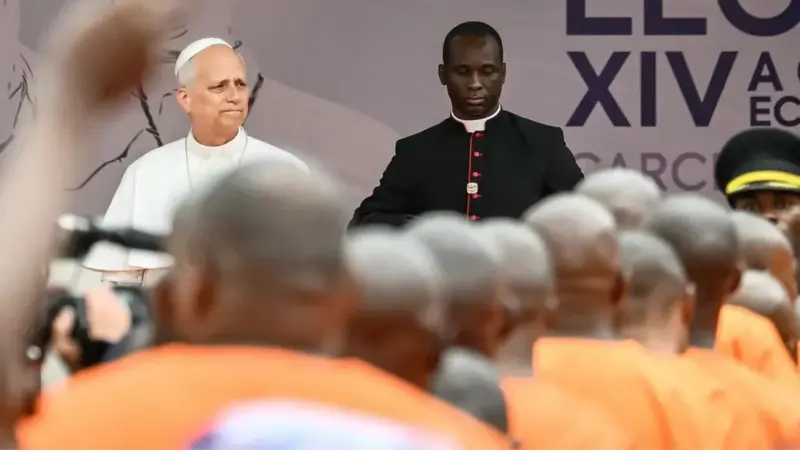
Image: MyJoyOnline
GhanaFront aggregates news from trusted sources. Click to read the original article.
Keywords
Explore related tagsMore from MyJoyOnline
Related Stories
More from Regional
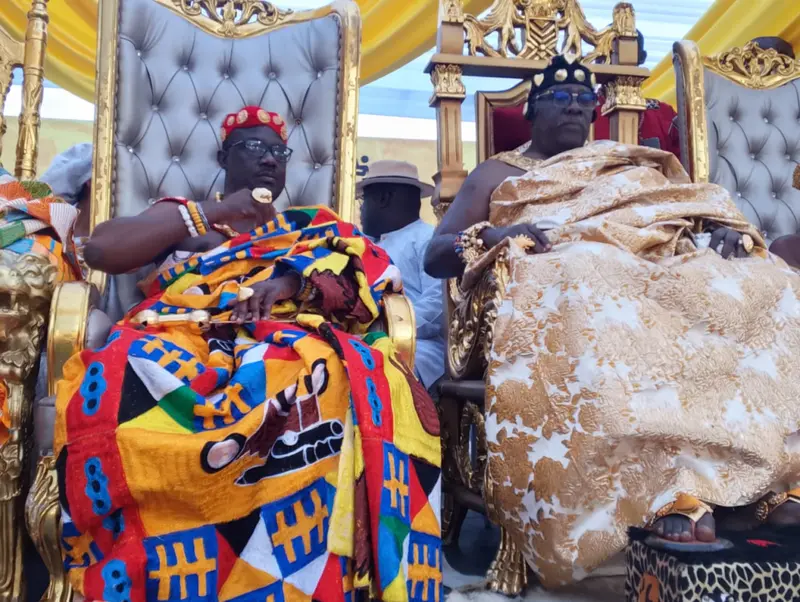
Ngleshie Alata installs Nifahene as Paramount Chief calls for peace, integrity
A new chief takes office, but the Paramount Chief's warning to all traditional leaders could reshape local governance.
5h ago•