Torkornoo's ECOWAS Case: A Stress Test for Ghana's Judicial Independence

Image: GhanaFront Editorial
Ghana's Defense and the Spectre of Judicial Overreach
The Republic of Ghana's vigorous defense against former Chief Justice Gertrude Sackey Torkornoo's challenge at the ECOWAS Community Court of Justice has ignited a crucial debate about judicial independence and the limits of executive power. The Attorney General's plea for the court to dismiss Torkornoo's action in its entirety raises fundamental questions about the separation of powers and the potential for political interference in the judiciary. While the specifics of the case hinge on the interpretation of constitutional provisions related to the removal of a Chief Justice, the broader implications extend to the very core of Ghana's democratic institutions.
The core issue revolves around the circumstances of Justice Torkornoo's suspension and subsequent removal from office, actions she contends were unjust and violated her rights. The state, on the other hand, maintains that due process was followed and that the removal was justified based on stated misbehaviour. The ECOWAS Court now finds itself at the center of this legal and political storm, tasked with adjudicating a matter that touches upon the sovereignty of Ghana while simultaneously upholding regional standards of justice and human rights.
The Stakes for Judicial Independence
The independence of the judiciary is a cornerstone of any functioning democracy. It ensures that the law is applied fairly and impartially, without fear of political reprisal or undue influence. When the executive branch is perceived to be overstepping its boundaries in matters concerning the judiciary, it can erode public trust and undermine the rule of law. This case, therefore, is not simply about the fate of one individual, but about the integrity of the entire judicial system.
"Judicial independence is not a privilege or prerogative of judges; it is the right of every citizen to have disputes resolved by an impartial and independent tribunal." -- Adapted from a statement by the UN Special Rapporteur on the independence of judges and lawyers.
Research suggests that a strong and independent judiciary is essential for attracting foreign investment, promoting economic growth, and ensuring social stability. When investors and citizens alike have confidence in the fairness and impartiality of the legal system, they are more likely to engage in productive activities and contribute to the overall development of the country.
Analyzing the State's Position
The Attorney General's defense likely rests on several key arguments. First, the state will argue that it acted within its constitutional mandate in initiating the removal proceedings against Justice Torkornoo. This argument will likely cite specific provisions of the constitution that outline the grounds for removing a Chief Justice and the procedures to be followed. Second, the state will likely contend that Justice Torkornoo was afforded due process throughout the proceedings, including the opportunity to present her case and challenge the allegations against her. Third, the state may argue that the ECOWAS Court lacks jurisdiction to hear the case, claiming that the matter falls within the exclusive domain of Ghana's domestic legal system.
However, these arguments must be carefully scrutinized in light of the principles of natural justice and the international human rights standards to which Ghana is a signatory. The ECOWAS Court has a mandate to ensure that member states uphold these standards, and it cannot shy away from its responsibility to review the fairness and legality of the proceedings that led to Justice Torkornoo's removal.
- Was the process transparent and impartial?
- Were the allegations of misbehaviour substantiated by credible evidence?
- Was Justice Torkornoo given a fair opportunity to defend herself?
Looking Ahead: Implications for Ghana and the Region
The outcome of this case will have far-reaching implications for Ghana and the wider ECOWAS region. A ruling in favor of the state could embolden governments to exert greater control over the judiciary, while a ruling in favor of Justice Torkornoo could send a strong message that judicial independence must be respected. Whatever the outcome, it is crucial that the proceedings are conducted in a fair and transparent manner, and that the ECOWAS Court's decision is based solely on the law and the evidence presented.
Ghana has long been a beacon of democracy in Africa, and it is essential that it continues to uphold the principles of good governance and the rule of law. This case presents an opportunity for Ghana to reaffirm its commitment to judicial independence and to demonstrate its willingness to be held accountable to international human rights standards.
The Torkornoo case serves as a critical stress test for Ghana's democratic institutions. The manner in which it is resolved will shape the future of judicial independence in the country and set a precedent for the region. It is imperative that all parties involved act with the utmost integrity and respect for the rule of law.
More from GhanaFront Editorial
Related Stories
More from Politics
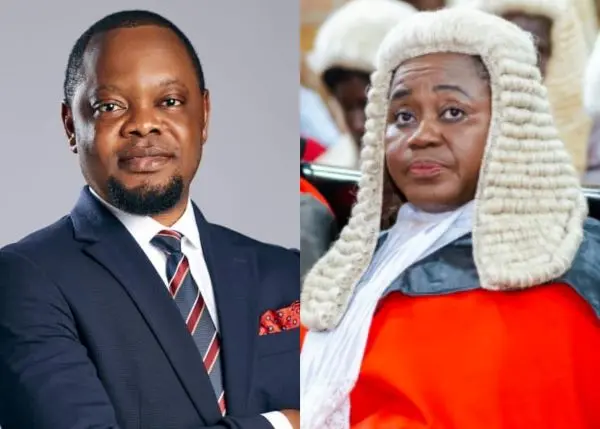
See details of the state's defence in Torkornoo's ECOWAS case
Ghana urges ECOWAS court to dismiss Torkornoo's case - but what's at the heart of this legal battle?
10h ago•2 min read
FULL TEXT: Read Ghana's UN resolution on slavery that defied the West
Ghana's UN resolution on slavery faced strong opposition - what issues did the US, UK, and EU have with it?
12h ago•2 min read
'Why not?' - COP Donkor opens up on possibility of becoming IGP
Could Ghana soon have a new Inspector General of Police - and what would that mean for the nation?
2h ago•3 min read
We'll continue to hold Lincoln University in high regard - Mahama says despite withdrawal of honorary degree
Mahama still holds the university in high regard - but recent events have cast a shadow. What could have happened?
8h ago•2 min read