President Mahama Announces Two-Day National Clean-Up For Seven Flood-Affected Regions
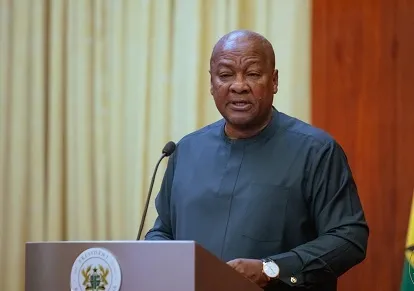
Image: GhanaFront Editorial
Government Responds to Devastating Floods with Mass Mobilization
In a decisive move to address the catastrophic aftermath of the recent devastating floods and to proactively prevent future occurrences, President John Dramani Mahama has officially designated Friday, July 10, and Saturday, July 11, 2026, as National General Cleaning Days. This intensive, two-day environmental exercise will take place exclusively within the seven regions that were most severely impacted by the unprecedented torrential rains that recently swept across the nation.
The initiative is being strategically spearheaded by the newly formed Post-Flood Mitigation Committee. The primary objective is to urgently rally Ghanaian citizens, local authorities, and national security services to aggressively clear blocked drainage systems and remove accumulated debris across their respective communities. By systematically removing the physical bottlenecks that exacerbate water pooling and restrict free flow, the central government hopes to significantly reduce the vulnerability of these regions to any subsequent heavy rainfall during this wet season.
Operating under the official and poignant theme, "Our Actions, Our Future: Cleaning Ghana after the floods," the administration has framed this upcoming weekend not merely as a knee-jerk reaction to a crisis, but as a critical, long-term intervention. It is designed to protect both human life and the broader ecosystem. The statement formally announcing these dates was officially issued to the press on Monday, July 6, highlighting the absolute urgency of the environmental situation confronting the nation.
Unprecedented Directives for Public Officials and State Agencies
In a significant departure from standard bureaucratic procedure, President Mahama has explicitly mandated that all government appointees must actively participate on the ground, leading by example. This executive directive comprehensively covers Ministers of State, Members of Parliament, Chief Executive Officers of state-owned enterprises, and Metropolitan, Municipal, and District Chief Executives (MMDCEs). Rather than issuing instructions from the comfort of their air-conditioned offices in the capital, these high-ranking officials are expected to abandon their desks, don protective gear, and personally lead the environmental remediation activities right within their local electoral areas and districts.
To ensure a highly structured, efficient, and impactful operation, the government has carefully divided the immense responsibilities across the two designated days. On Friday, July 10, the heavy lifting will officially commence. Personnel from various national security agencies -- including the police, military, and fire service -- will join forces with local MMDAs and professional waste management companies to lead the initial charge. This first critical phase will focus primarily on the most challenging logistical tasks that require specialized heavy equipment, coordinated manpower, and technical expertise.
On Saturday, July 11, the national campaign will broaden its scope to fully incorporate the general public. Ordinary citizens, community groups, and local associations across the seven affected regions are strongly encouraged to join the ongoing efforts to scale up the clearing and sweeping activities. The collective civic focus will be heavily directed toward desilting deeply choked gutters, sweeping major urban roads and rural highways to remove dangerous sand and weeds, and restoring sanitary order to vital public spaces. Special attention will be given to bustling commercial hubs, local markets, busy lorry parks, recreational areas, and communal waste collection points that have overflowed due to disrupted services.
Confronting the Root Causes of Urban Flooding
While the sheer volume of the recent heavy rainfall was the immediate natural trigger for the disaster, the official government statement firmly and honestly acknowledged that human behavior has played a massive, undeniable role in escalating the severity of the floods. Indiscriminate waste disposal practices, and in particular the pervasive, systemic issue of single-use plastic pollution, have severely compromised the structural integrity and maximum flow capacity of the nation's fragile drainage architecture.
"For far too long, indiscriminate littering and plastic pollution have clogged our drainage systems, contributing to devastating, preventable floods that destroy livelihoods and claim precious Ghanaian lives."
This stark, uncompromising admission by the state underscores a painful reality: heavy infrastructure investments alone cannot sustainably solve Ghana's recurring flooding crisis if public attitudes toward sanitation and waste management remain stagnant. Therefore, the upcoming National General Cleaning Days are being boldly positioned by the current administration as a necessary catalyst for a lasting, generational behavioral shift, rather than just another one-off emergency stopgap measure to be quickly forgotten.
To practically facilitate this massive logistical undertaking, all Metropolitan, Municipal, and District Assemblies have been firmly instructed to collaborate seamlessly with private waste management companies operating within their jurisdictions. Their joint, non-negotiable mandate is to ensure that adequate logistics and resources are deployed to every single corner of the affected regions. This includes the widespread, equitable distribution of essential cleaning tools such as heavy-duty gloves, shovels, wheelbarrows, and protective boots, alongside the strategic deployment of specialized waste collection compaction trucks.
A highly critical component of the presidential directive is the immediate, same-day evacuation of all collected refuse and excavated silt. Authorities have rightly recognized that the historical practice of leaving excavated, wet debris on the shoulders of roads often entirely defeats the purpose of the exercise, as the silt simply washes straight back into the open drains during the very next torrential downpour.
Economic Impacts and A Call for National Solidarity
The economic toll of the recent floods has been staggering, with countless small businesses destroyed, agricultural lands submerged, and vital local infrastructure severely damaged. The recovery process will undoubtedly take months, if not years, requiring immense financial resources. By actively preventing further flood damage through these cleaning days, the government aims to protect the fragile local economies of the seven regions from sustaining additional, crippling financial shocks.
The ultimate success of this ambitious two-day intervention will rely entirely on the willingness of ordinary Ghanaians to step out of their homes, roll up their sleeves, and take direct ownership of their immediate physical environment. The government is leaning heavily on the deeply ingrained, traditional Ghanaian values of communal labor -- often referred to locally as 'nnoboa' -- and mutual neighborhood support to drive the initiative.
The official state announcement, signed and authorized by Felix Kwakye Ofosu, the Spokesperson to the President and Minister for Government Communications, concluded with a passionate, unifying plea for national solidarity in the face of this severe environmental adversity.
"Let us rise together and show that the Ghanaian spirit of community, discipline, and unity is alive and well. Protect your home, protect your neighbour, and let us clean our beloved homeland. Clean Ghana, Save Lives."
As the designated action dates of July 10 and 11 rapidly approach, public health experts, civil society organizations, and prominent environmental advocates are uniformly urging all residents in the seven affected regions to heed the presidential call without hesitation. Traditional leaders, local chiefs, and influential religious figures have also been called upon to mobilize their respective congregations and subjects.
By working collectively hand-in-hand to permanently clear the pathways for storm water, local communities can take a deeply proactive, empowering stance in actively mitigating the devastating, life-threatening impacts of a rapidly changing global climate and increasingly unpredictable local weather patterns. The sincere hope within the corridors of power is that the tremendous civic momentum generated on these two National General Cleaning Days will permanently translate into a continuous, daily culture of strict environmental stewardship across the entire nation, ensuring a safer, cleaner Ghana for all future generations.
More from GhanaFront Editorial
Related Stories
More from Politics
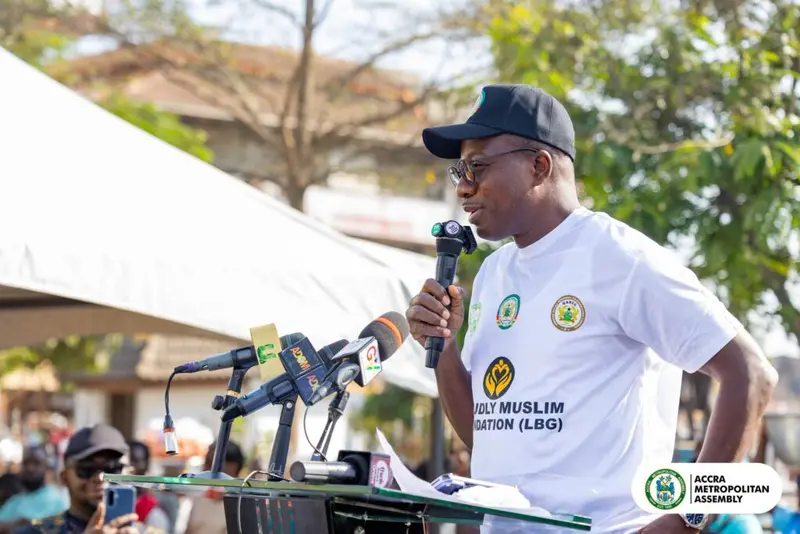
Mahama Ayariga gives MMDCEs 30-day deadline to secure land for waste transfer stations
A 30-day ultimatum could transform how Ghana handles its waste - but what happens next?
2d ago•