The Oti Region Security Crisis: Why Police Engagement Alone Cannot Solve a Structural Problem
The Oti Region Security Crisis: Why Police Engagement Alone Cannot Solve a Structural Problem
The Oti Regional Police Commander's community engagement in Nkwanta following renewed attacks is the right instinct. It is also, on its own, almost certainly not enough. The persistent security challenges in Ghana's Oti Region are not primarily a policing problem -- they are a development problem, a boundary problem, and a political neglect problem that has been building for decades.
Understanding the Context of Oti's Security Challenges
Oti Region was carved out of the Volta Region in 2019 under President Akufo-Addo's administrative reorganisation, which created six new regions and brought the national total to sixteen. The creation of Oti was intended, among other things, to address long-standing governance grievances among communities that felt under-served by a Volta Regional administration centred in Ho, more than 250 kilometres away for many Oti communities.
The administrative separation brought a new regional capital at Dambai and the promise of closer government. What it did not automatically bring was the infrastructure, the security presence, the economic investment, or the resolution of underlying land and resource disputes that have driven intermittent violence in the area for years. New administrative units require sustained investment to become genuinely functional governance arrangements. That investment has been uneven at best.
The Nature of the Attacks
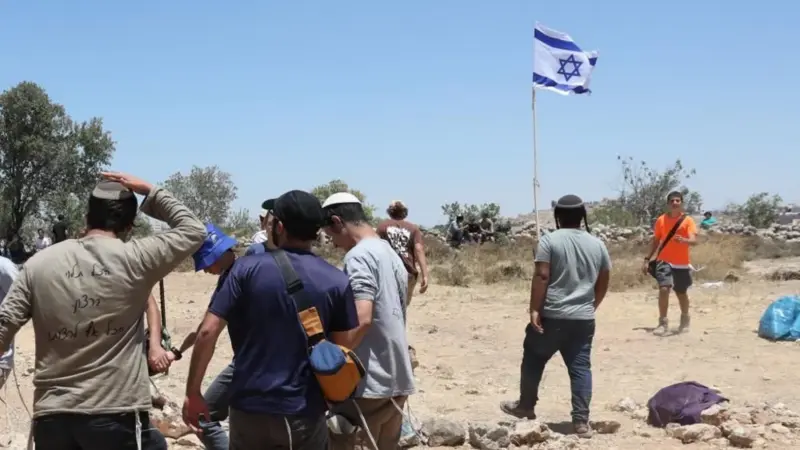
The renewed attacks in the Nkwanta area are part of a pattern of chieftaincy disputes, land conflicts, and farmer-herder tensions that have plagued northern and transitional-zone communities across Ghana for generations. The Nkwanta area sits at the intersection of several ethnic communities with overlapping land use claims, historical grievances about chieftaincy recognition, and economic pressures that have been intensified by climate change-driven shifts in agricultural viability.
Cattle herders -- often Fulani communities who have migrated southward as Sahelian conditions deteriorated -- have created new friction with settled farming communities across a broad belt of transitional-zone Ghana. This is not a uniquely Ghanaian phenomenon. The same dynamic is playing out from Senegal to Nigeria, and in several cases has escalated into large-scale violence that overwhelmed state security responses entirely.
Ghana has not reached that point in Oti, but the early warning signs have been visible for years. Community engagement by a police commander is a necessary and welcome step. It is not a substitute for the political, legal, and economic interventions that the underlying conflict drivers require.
What Community Policing Can and Cannot Do
Community policing -- the model of building trust relationships between security services and local communities, gathering intelligence through civilian cooperation, and resolving disputes before they become violent -- has a respectable evidence base when properly resourced and sustained. Ghana's GPS (Ghana Police Service) has experimented with community policing frameworks in various contexts, with mixed results.
The core limitation is resource-based. Effective community policing requires officers who are embedded long-term in specific communities, who speak local languages, who understand local power structures, and who have the time and mandate to attend community meetings, mediate disputes, and respond to early warning signals. It requires patrol vehicles that actually run, communication equipment that actually works, and supervision structures that reward prevention rather than just prosecution.
In a region as geographically large and as infrastructurally challenged as Oti, these requirements translate into significant sustained expenditure that the GPS's current budget allocations do not support. The police commander's engagement is likely being conducted with the resources available -- which means it is almost certainly less comprehensive than the situation requires.
The Land Dispute Resolution Gap
At the root of many of Oti's security incidents are land disputes that have not been formally adjudicated and are unlikely to be resolved through the existing court system in any reasonable timeframe. Ghana's customary land tenure system -- which vests land ownership in stools and skins (chieftaincies) rather than individuals -- creates a system of overlapping claims that formal courts are poorly equipped to resolve efficiently.
The Land Administration Project, supported by the World Bank and successive Ghanaian governments since the early 2000s, has made progress in systematising land records in urban areas. Rural and transitional-zone communities -- exactly the communities most affected by land-based conflict -- have benefited far less from these improvements. Cases that enter the formal court system can remain unresolved for ten, fifteen, or twenty years, during which the underlying tensions continue to simmer.
Alternative dispute resolution mechanisms -- customary arbitration, traditional authority mediation, community land boards -- can be more effective in these contexts but require formal recognition, training, and support that is rarely provided consistently. The National Peace Council, established in 2011, has played a useful role in some conflict hotspots but lacks the resources and local presence to be comprehensively effective across all of Ghana's conflict-prone areas.
The Political Economy of Regional Neglect
Oti Region's political economy is worth examining honestly. The region is one of Ghana's smallest by population and, as a new region, lacks the established political networks and patronage structures that tend to attract infrastructure investment. Its parliamentary representation is limited. Its communities are geographically dispersed and often lack the organised advocacy capacity that compels attention from Accra.
This creates a political economy of neglect that is self-reinforcing: limited political leverage means limited resource allocation, which means continued underdevelopment, which means continued conflict, which means continued insecurity, which deepens the region's economic marginalisation. Breaking this cycle requires deliberate, sustained policy attention of the kind that does not naturally emerge from electoral incentive structures.
The NDC government that took office in January 2026 has not yet articulated a comprehensive policy position on Ghana's interior security challenges, including Oti. The police commander's engagement -- visible, accessible, community-facing -- is the kind of on-the-ground work that deserves political backing and resourcing. Whether it will get that backing is the more important question.
A Multi-Pronged Response Is Not Optional
Reducing violence in Oti will require simultaneous progress on several fronts that no single institution can deliver alone. The police need resources and community trust. The courts need a way to process land disputes faster and more accessibly. Traditional authorities need support in mediating chieftaincy and boundary disputes. The agricultural development institutions need to address the economic pressures driving farmer-herder conflict. And the political system needs to give Oti communities a sense that their grievances are genuinely heard in Accra.
None of this is impossible. Several communities that once experienced regular violent conflict in Ghana have achieved sustained reductions through exactly this kind of coordinated, multi-agency approach. The work is slow, unglamorous, and requires consistent effort across political cycles. It rarely generates the kind of visible, dramatic outcomes that attract political attention.
That is precisely why it tends not to happen consistently enough. And that is precisely why the cycle of periodic attacks, followed by police engagement, followed by relative calm, followed by renewed attacks -- tends to persist year after year in places like Nkwanta.
The police commander deserves credit for showing up. Now the question is whether the system behind him will provide what is actually needed to turn a public engagement into lasting peace.
Keywords
Explore related tagsMore from GhanaFront Editorial
Related Stories
More from Regional
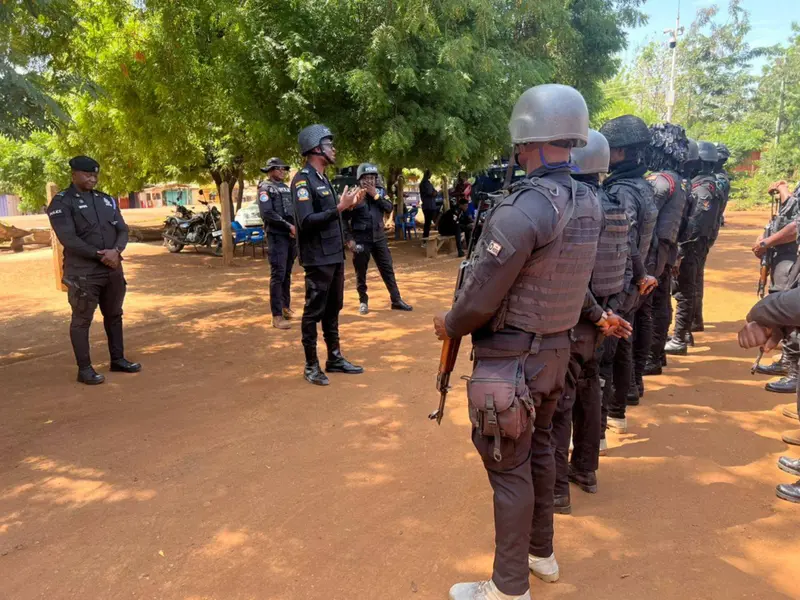
Oti Regional Police Commander engages Nkwanta residents amidst renewed attacks
Renewed attacks prompted a visit from the Oti Regional Police Commander - but what did they find?
3h ago•2 min read
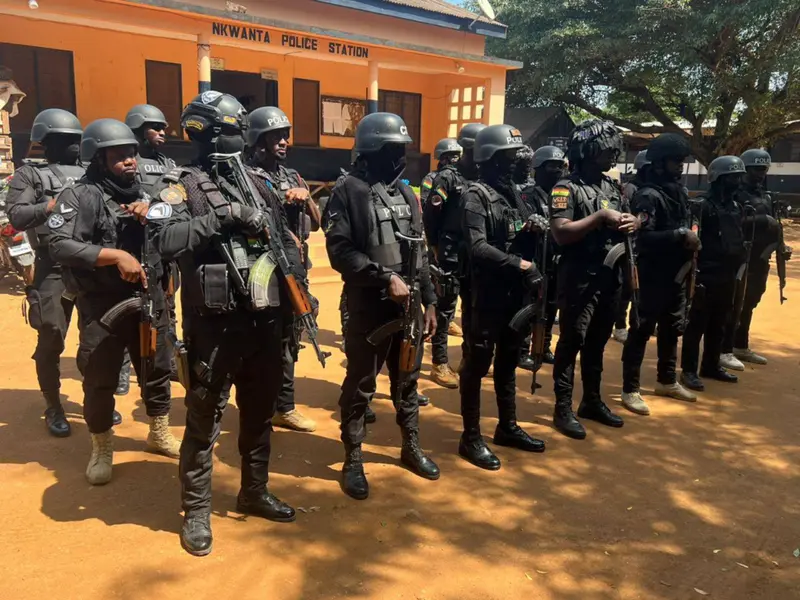
Oti Regional Police Commander engages Nkwanta Community, calls for calm after attacks
The Oti Regional Police Commander visited Nkwanta after recent violence - but what did he find?
8h ago•2 min read
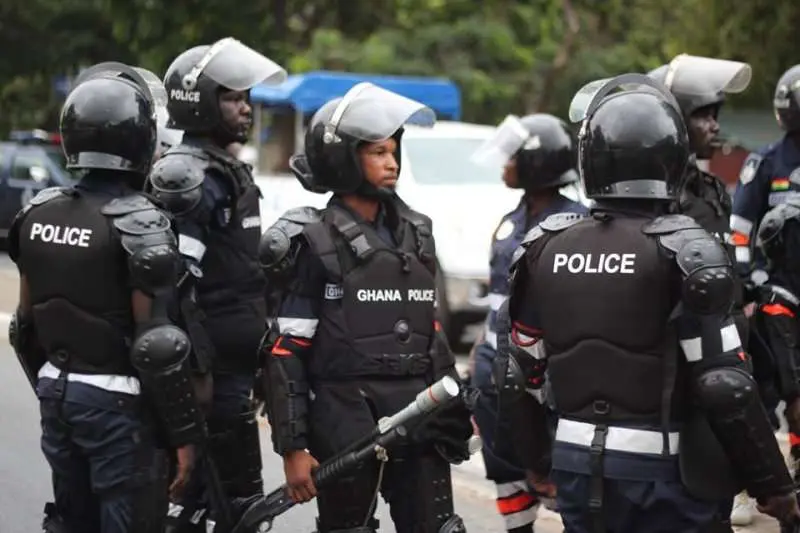
Nineteen arrested in Kumasi during police special operations
A police swoop in Kumasi targeted criminal hubs - but what did they uncover in Alaba and Thinker?
18h ago•2 min read

Tema aircraft crash: Father recounts final moments with sons before tragedy
A father's heartbreaking account reveals the final words shared with his sons - moments before a devastating incident.
3h ago•3 min read