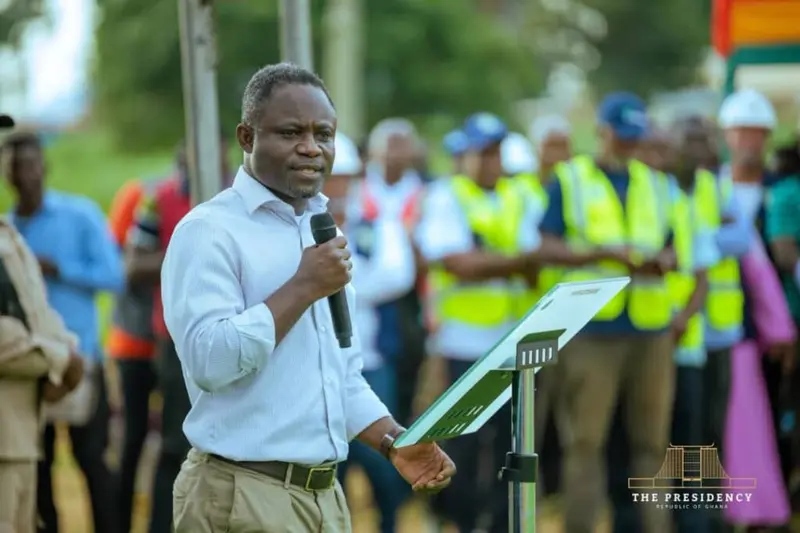
Mary Addah Defends OSP Progress Despite Structural Gaps
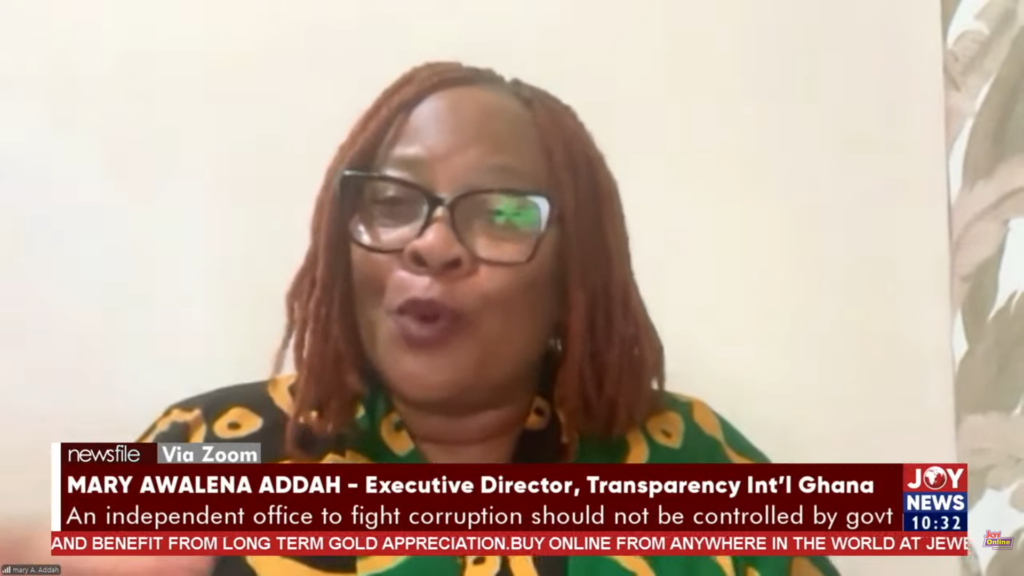
Image: GhanaFront Editorial
Ghana’s anti-corruption drive has delivered visible results through the Office of the Special Prosecutor, but governance advocate Mary Awalena Addah says the institution is still operating below what reformers originally envisioned because of structural and constitutional limits.
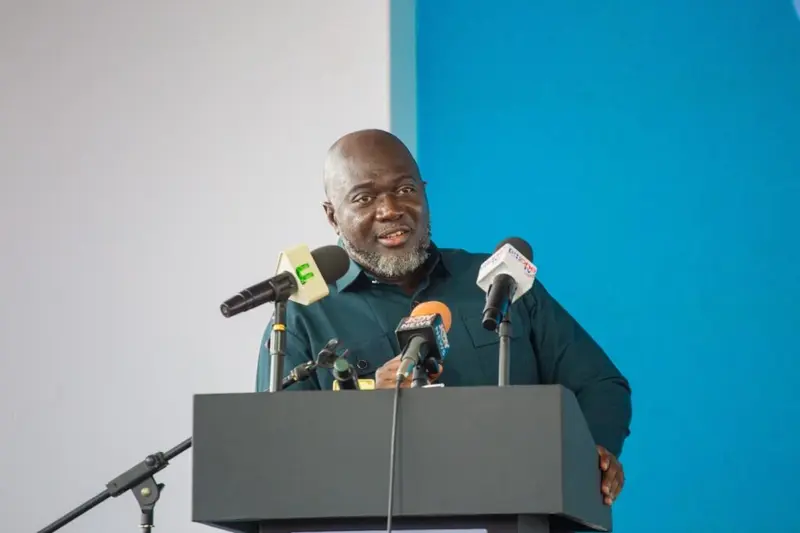
Speaking on JoyNews’ Newsfile programme on Saturday, April 18, the Executive Director of Transparency International Ghana said civil society groups had pushed for a stronger and more independent anti-corruption system long before the OSP was created. According to her, the preferred model was one that clearly separated investigation from prosecution to make the national response to corruption sharper, more credible and less vulnerable to interference.
“Civil society concluded that the fight against corruption could be strengthened if we separated investigatory and prosecutorial functions,” Mary Addah said.
That ideal, she explained, did not fully materialise. Constitutional constraints forced reform advocates and policymakers to settle for a structure that was not perfect, but still stronger than what existed before. In her view, the creation of the OSP represented a compromise worth backing, and civil society supported it with evidence-based recommendations because the alternative was to leave major weaknesses in Ghana’s anti-corruption architecture untouched.
Why civil society still backs the OSP
Addah’s argument was not built on sentiment. It was built on outcomes. She said the OSP has shown enough in recent years to justify continued support, even as calls for reform remain valid. For anti-corruption campaigners, that distinction matters. The office may not reflect the original ideal, but it has created movement in an area where public frustration often comes from stalled cases, weak enforcement and a perception that accountability is selective.
One of the clearest signs of that movement is the growth in the office’s caseload. Between 2024 and 2025, the OSP’s caseload rose from 27 to 167 cases involving corruption and related offences. That jump suggests an institution that is handling more matters, widening its scope and becoming more central to Ghana’s accountability system.
Addah also pointed to the financial impact of the office’s work. The OSP has recovered about GH₵35 million and prevented potential losses of more than GH₵7.18 billion. In a country where corruption regularly drains public resources and erodes trust in state institutions, those figures are not minor administrative details. They are evidence that enforcement has practical value for the public purse.
- Caseload increased from 27 to 167 between 2024 and 2025
- About GH₵35 million has been recovered
- Potential losses exceeding GH₵7.18 billion have been averted
These numbers also strengthen a broader point often made by governance advocates in Ghana: anti-corruption institutions should not be judged only by whether they secure dramatic headlines. They should also be assessed by whether they can investigate steadily, interrupt harmful transactions and recover value for the state. By that measure, Addah believes the OSP has registered gains that deserve acknowledgment.
Public trust gives the office political weight
Addah’s defence of the OSP was also reinforced by public opinion data. She referred to a recent survey showing that 77.7 percent of citizens support anti-corruption bodies operating independently of government control. That level of backing matters because it reflects a public appetite for institutions that can act without political pressure hanging over every major case.
The survey results went further. According to Addah, 55.2 percent of respondents identified the OSP as the most credible institution to investigate and prosecute corruption cases. That placed it ahead of constitutionally mandated bodies such as the Commission on Human Rights and Administrative Justice. In practical terms, this means the OSP is not just visible. It is trusted, and trust is one of the few forms of political capital an anti-corruption body cannot afford to lose.
Recent survey findings cited by Mary Addah show 77.7 percent support for independent anti-corruption bodies, while 55.2 percent named the OSP as the most credible institution for corruption investigations and prosecutions.
That trust did not emerge in a vacuum. Ghanaians have watched anti-corruption conversations cycle through promises, probes and political arguments for years. When a single institution begins to stand out in public perception, it usually means people believe it is at least trying to do the job with seriousness. Addah’s comments suggest that civil society sees this credibility as one of the OSP’s strongest assets and one that should be protected rather than weakened.
At the same time, credibility creates pressure. The higher public confidence rises, the more intense expectations become. The OSP is therefore in a difficult but important position: it must keep producing results while defending its independence in an environment where powerful interests may prefer a slower or more predictable system.
Political resistance remains a live threat
Addah did not present the OSP as an institution working in calm conditions. She said attempts to undermine the office have come under both previous and current administrations. That point is significant because it frames the challenge as systemic rather than partisan. In other words, the danger is not tied to one government alone. It is tied to the political discomfort that serious anti-corruption enforcement can generate.
“The office has been subject to attempts to undermine it, both in previous and current administrations. These distractions risk impeding the OSP from fulfilling its mandate of investigating corruption, overseeing procurement-related offences, and recovering misappropriated assets,” she said.
Her warning cuts to the heart of Ghana’s accountability debate. Institutions created to police public wrongdoing often face resistance precisely when they begin to matter. Pressure can come in many forms, including public attacks, procedural obstacles, political distractions and attempts to dilute authority. Addah’s concern is that such interference can divert the OSP from the core work it was established to do.
That mandate is not narrow. It covers investigating corruption, dealing with procurement-related offences and pursuing the recovery of misappropriated assets. Each of those responsibilities touches sensitive areas of public administration and political power. If the office is weakened, the effect is not only institutional. It can also reduce deterrence across the wider system.
Addah’s position is that Ghana should not confuse institutional imperfection with institutional failure. The OSP, in her assessment, has clear limitations, but it has also demonstrated value. That combination should push policymakers toward strengthening the office, not sidelining it.
She further linked the OSP’s experience to a larger reform trajectory within Ghana’s governance framework. Ongoing proposals, including the idea of a national ethics and anti-corruption office, show that the conversation is still evolving. For reform advocates, this signals that the country has not reached the end of the anti-corruption debate. It is still negotiating what kind of enforcement architecture can best serve the public interest.
- Protect the OSP from political interference
- Preserve its operational independence
- Build on evidence from its recent results
- Pursue wider reforms that close structural gaps
Addah closed on a measured but firm note. The OSP is not flawless, she said, but the evidence points to real progress. For civil society, that is reason to keep pressing for reforms that improve effectiveness and independence without dismissing the gains already made.
That is the balance Ghana now has to strike. The country needs honesty about the weaknesses built into its anti-corruption institutions, but it also needs the discipline to preserve what is working. On the evidence presented by Mary Addah, the OSP has earned that chance.
More from GhanaFront Editorial
Related Stories
More from Technology
Ghana cannot build an inclusive digital economy by leaving girls behind - Sam George
Why are 14 female graduates being told they have a 'front-row seat' in Ghana's digital future?
2d ago•