How Ovey Friday Beat Brutality and Reached University
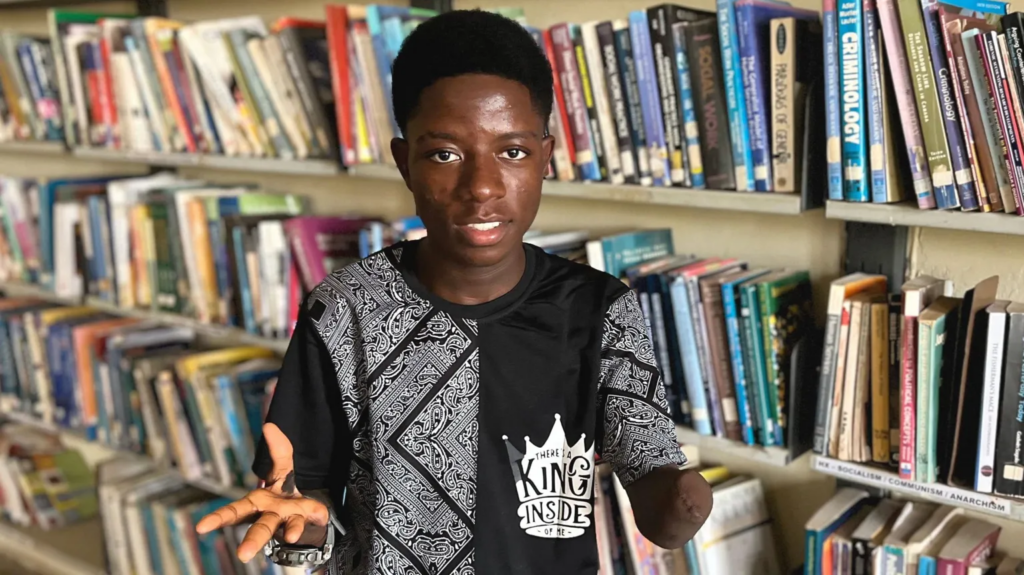
Image: GhanaFront Editorial
For Ovey Friday, the fight for an education in Nigeria began long before he ever stepped into a university lecture hall. It began in pain, rejection and survival.
At 13, Friday was accused of witchcraft by his stepmother and taken to a traditional shrine in Nasarawa State, where he says he was tortured. By the time police intervened after a neighbour raised the alarm, his injuries had become catastrophic. Doctors later amputated his left hand, while the fingers on his right hand were either removed or left permanently scarred.
Now 19, he is studying English and literary studies at a university in Nasarawa, becoming the first person in his family to reach that level. His path, however, exposes a wider truth across Nigeria: for many persons with disabilities, the hardest barrier is not ambition or ability, but systems built without them in mind.
A childhood trauma that shaped an adult struggle
Friday still remembers the violence in harrowing detail. He said the herbalist used charcoal, applied substances to his hands, tied his limbs, added pepper to the charcoal and covered him with a bedsheet. The injuries were so severe that doctors had to sedate him before operating.
"I cried, and I cried," Friday recalled after waking to discover that his left hand had been amputated.
The physical damage was only one part of the ordeal. In the years that followed, he said people stared at him in public and mocked him. That social reaction deepened the emotional wounds, turning a childhood trauma into a daily reminder of exclusion.
Even so, he refused to surrender his future. That resolve was tested again when he sought admission to university through Nigeria's Joint Admissions and Matriculation Board, better known as JAMB.
Biometric verification, now central to many official processes, became another wall in his way. The fingerprint system could not properly capture his scarred thumbprint or the prints of his other damaged fingers. Without intervention, a student who had already survived extraordinary violence could have been locked out of higher education by a machine that had no place for his body.
He eventually gained clearance after a guardian and disability rights advocates pressed officials to accept his toe print instead.
"Not everyone has someone to push for them. Some people will just stop trying," Friday said.
That single statement cuts to the heart of the problem. Access in Nigeria often depends not on rights guaranteed by law, but on whether a person can find someone powerful or persistent enough to fight for basic accommodation.
Millions face the same exclusion in different forms
Friday's story is not an isolated one. Across Nigeria, millions of people living with disabilities face similar barriers in education, communication, transport and public services.
Scarlett Eduoku, a radio presenter based in Kano, said identity verification apps regularly fail to scan her face. She lost her left eye when she was 18 months old. The failure of digital systems has practical consequences. In one case, she could not remotely upgrade her SIM card from 3G to 5G and had to travel physically to her provider's headquarters in Kano city centre.
For Opeyemi Ademola, a Lagos-based project manager living with mixed hearing loss, the barriers are less visible but no less exhausting. He says every meeting demands intense concentration and noisy environments drain him mentally. People often assume fluent speech means there is no communication difficulty, an assumption that erases his real needs.
"Accessibility is not about ability. It is about support," Ademola said.
Simple workplace adjustments, he argues, would make a significant difference:
- written summaries after meetings
- captions on video calls
- communication tools designed for different hearing needs
In Ibadan, author Abiose Falade describes another layer of exclusion. A wheelchair user, she said she only began to understand how society treated persons with disabilities after starting school at age 10. Since then, daily movement has involved constant calculation: where she can go, where she cannot, and when she needs someone beside her to shield her from the stares and pointing.
That reality is reinforced by the physical design of many Nigerian towns and cities. Pavements are often broken, uneven or interrupted by open drainage gaps. Dropped kerbs are rare. Public buildings frequently lack ramps. In rural areas, the absence of proper walkways leaves wheelchair users to navigate unsafe or unpaved roads.
The consequences are severe. Banks, hospitals and government offices, institutions that should serve every citizen, remain difficult or impossible for many disabled Nigerians to access without help.
Laws exist, but enforcement remains painfully slow
Nigeria is not without legal protections. In 2019, parliament passed landmark legislation prohibiting discrimination against persons with disabilities and guaranteeing them access to public services. That law also led to the creation of the National Commission for Persons with Disabilities, or NCPWD.
Yet implementation has lagged badly. Ayuba Burki-Gufwan, executive secretary of the commission, says progress has moved at what he described as "snail's speed".
His estimate of the scale involved is striking. More than 35 million Nigerians, around 15 percent of the population, are believed to be living with some form of disability.
That figure alone should have made inclusion a national priority years ago. Instead, much of the country still treats accessibility as optional, charitable or secondary. It is none of those things. It is a matter of citizenship.
There have been modest gains. JAMB has reduced examination fees for persons with disabilities and established dedicated centres for students with different support needs. The Federal University of Lafia in Nasarawa has waived up to 75 percent of fees for students living with disabilities, a move Burki-Gufwan says triggered a sharp increase in enrolment.
"All of a sudden, the university witnessed a huge upsurge in enrolment because every person with a disability wanted to benefit," he said.
That response carries an important lesson. Demand is not the problem. When systems lower barriers, people come forward. They study, work, participate and contribute. The idea that persons with disabilities are somehow absent from national life collapses the moment access becomes real.
But isolated improvements cannot substitute for broad structural reform. Special educator Chukwuemeka Chimdiebere says inclusion must be understood far beyond ramps and entrances. It includes sign-language interpreters in classrooms, accessible learning materials for visually impaired students, trained teachers and digital platforms designed from the beginning for a range of users.
"Inclusion is not a favour. It is a responsibility," Chimdiebere said.
He is right. The deeper failure in Nigeria is not simply the presence of disability. It is the repeated design of institutions that assume only one type of body, one type of face, one type of hearing and one type of movement deserves easy passage.
The economic dimension is serious too. Burki-Gufwan notes that Nigeria imports every wheelchair, hearing aid and mobility device in use. If the overwhelming majority of persons with disabilities require some form of assistive device and none are produced locally, then affordability and supply will remain major obstacles.
Advocates are now calling for one percent of government budgets at every level to be set aside for persons with disabilities. That proposal reflects both the scale of need and the cost of continued neglect.
- Stronger enforcement of the 2019 disability law
- Dedicated budget lines for accessibility and assistive devices
- Inclusive digital systems for identity verification and public services
- Accessible schools, campuses and public buildings
- Routine workplace accommodations across public and private sectors
Friday's presence on campus today is a victory, but it is also an indictment. It should not take a guardian's intervention, a campaigner's pressure and a workaround using a toe print for a young Nigerian to sit an entrance examination.
He is now learning how to write again, adjust to independent living and build friendships away from home. His story carries courage, but it also delivers a warning. A country that leaves access to luck is wasting human potential on a massive scale.
Nigeria already has the law, the testimony and the numbers. What it lacks is urgency. Until that changes, millions of citizens will continue fighting battles they should never have been forced to fight in the first place.
More from GhanaFront Editorial
Related Stories
More from Technology
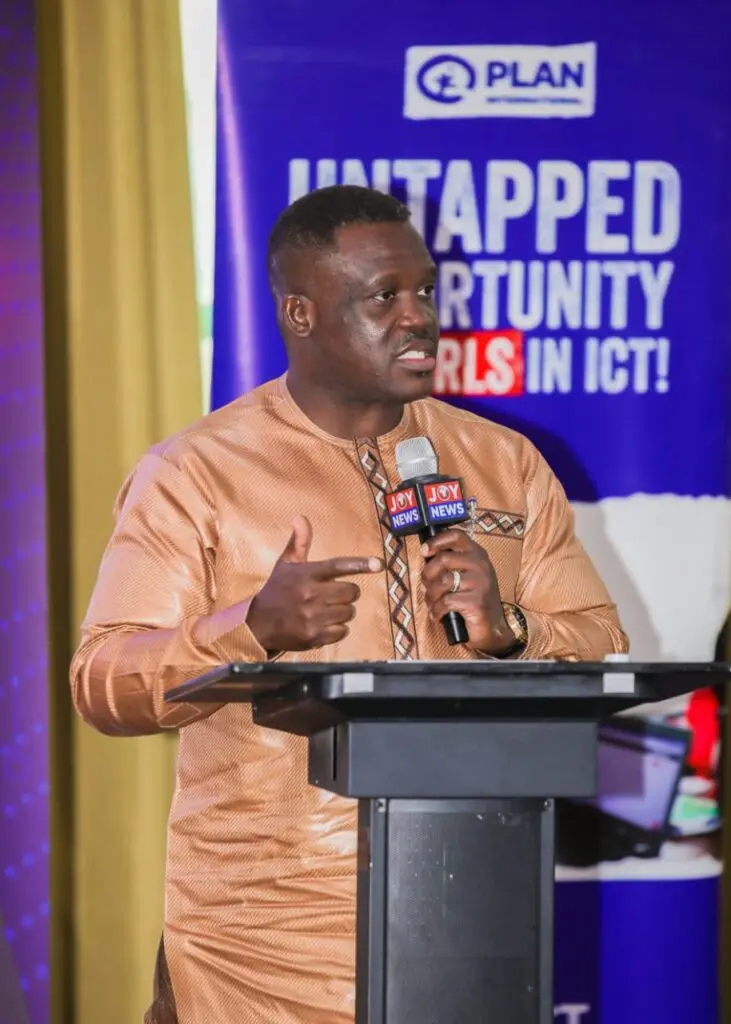
Ghana cannot build an inclusive digital economy by leaving girls behind - Sam George
Why are 14 female graduates being told they have a 'front-row seat' in Ghana's digital future?
3d ago•