Ashanti Minister Presses for Faster Delivery on Atwima Kwanwoma Projects
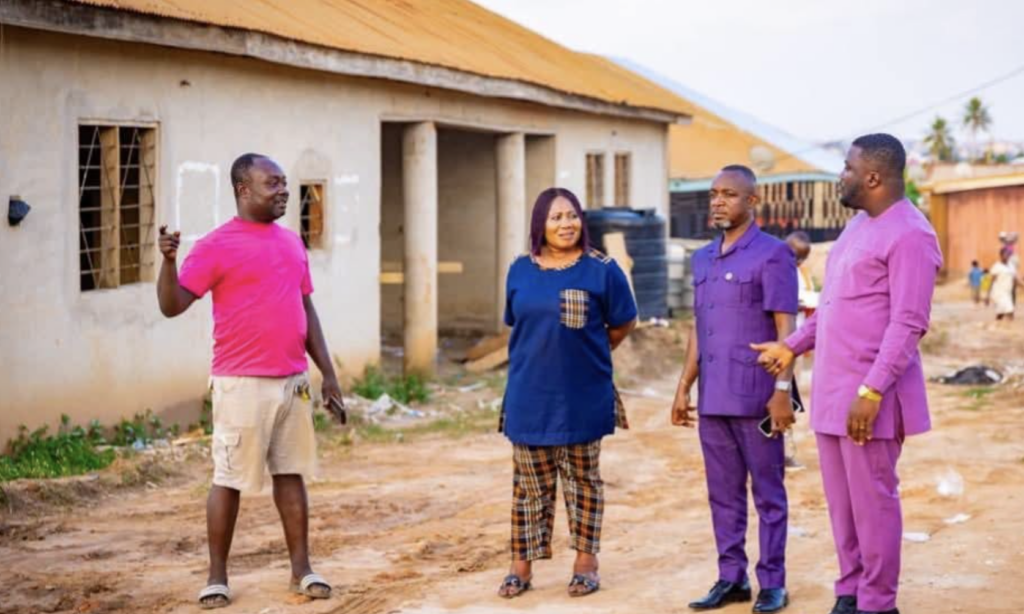
Image: GhanaFront Editorial
The Ashanti Regional Coordinating Council has stepped up oversight of District Assemblies Common Fund projects in Atwima Kwanwoma, with Regional Minister Dr. Frank Amoakohene personally touring key sites to test progress on the ground and press for stronger delivery.
The inspection, conducted at the Atwima Kwanwoma District Assembly, brought the region's development priorities into sharp focus. It was not just a ceremonial visit. It was a field check on whether public projects are moving at the pace residents expect and whether state funds are producing visible value in classrooms, health facilities, water systems and roads.
Dr. Amoakohene's tour formed part of a broader monitoring push by the Regional Coordinating Council to track government interventions across the Ashanti Region. At the centre of that effort is one clear question: are local projects being executed properly, on time and in line with the needs of the communities they are meant to serve?
The minister inspected education, health, water, office and road projects during the working visit to Atwima Kwanwoma.
Schools, clinics and water projects under the spotlight
The minister's route through the district covered projects at different levels of completion, giving a practical snapshot of development activity in the area. In the education sector, he inspected a three-unit classroom block at New Adwampong and a six-unit classroom block at Afasiebon D/A Basic School. Both projects reflect the continued demand for improved learning infrastructure in growing communities where access, space and quality conditions remain central to educational outcomes.
Health delivery was another major focus of the inspection. Dr. Amoakohene visited Community-based Health Planning and Services compounds at Nweneso No. 1, Nweneso No. 3 and Asaago. CHPS facilities remain one of the most important entry points for primary healthcare in many Ghanaian communities, especially where distance and transport costs can delay treatment. Their completion and effective use can directly affect access to maternal care, routine treatment and preventive health services.
Water access also featured prominently in the minister's assessment. He inspected the drilling of 16 mechanised boreholes across communities in the constituency, a project aimed at improving access to potable water. In many districts, water remains one of the most immediate indicators of whether local development is touching everyday life. A functioning borehole does more than supply water. It reduces the time families spend searching for it, supports sanitation and gives communities a basic level of security and dignity.
The scope of the visit also extended to planned institutional infrastructure at Foase, where the minister inspected the site for an office complex intended to house the Ministry of Food and Agriculture and the National Service Scheme. Such a facility could strengthen coordination among public agencies operating in the district and improve administrative support for agriculture and service-related programmes.
- Three-unit classroom block at New Adwampong
- Six-unit classroom block at Afasiebon D/A Basic School
- CHPS compounds at Nweneso No. 1, Nweneso No. 3 and Asaago
- Office complex project for MOFA and NSS at Foase
- Sixteen mechanised boreholes across communities
Road conditions and district priorities take centre stage
Beyond vertical infrastructure, Dr. Amoakohene also turned attention to road networks in the district, especially roads reported to be in poor condition. He stressed the need for urgent rehabilitation and expansion, linking transport infrastructure directly to mobility and local economic activity. That message matters. In districts like Atwima Kwanwoma, road conditions shape everything from access to markets and schools to emergency response and movement of farm produce.
When roads deteriorate, the cost is never abstract. It shows up in transport fares, travel delays, pressure on traders and reduced ease of access to social services. By highlighting the poor state of portions of the district's roads, the minister put transport firmly on the list of development bottlenecks requiring fast attention.
The visit also created room for engagement with assembly staff and community leaders. Those conversations focused on development priorities and the challenges facing the district. That aspect of the trip is as important as the physical inspection itself. Local leaders are often the first to see where implementation is slowing, where contractors are lagging and where community expectations are rising faster than delivery.
Monitoring visits can easily become routine if they are not tied to decisions, follow-through and consequences. What gives this one significance is the signal that implementation standards still matter. Public projects are not judged by contract awards or foundation ceremonies. They are judged by whether communities can use them and whether they solve the problems they were funded to address.
Roads in deplorable condition were identified as needing urgent rehabilitation and expansion to improve movement and economic activity.
Accountability, local governance and the politics of delivery
Dr. Amoakohene used the visit to commend the District Chief Executive, Mrs. Grace Asamoah Agyemang, for what he described as her commitment and diligence in supervising projects and ensuring that contractors comply with timelines and specifications. In local governance, supervision is often the difference between a project that drifts and one that is completed to standard. That acknowledgement placed responsibility squarely where it belongs: on leadership that stays engaged after contracts are signed.
The minister argued that this kind of oversight is essential to accelerating development and improving living conditions for residents. That view is hard to dispute. The Common Fund is one of the state's core tools for grassroots development, but its real credibility depends on visible outcomes in communities. Citizens do not experience policy through budget lines. They experience it through classrooms, clinics, roads, water systems and the quality of local administration.
He also expressed appreciation to President John Dramani Mahama for strengthening local governance through the Common Fund, describing it as a critical instrument for development at the grassroots. The political point was clear, but so was the administrative one. If the Common Fund is to retain public confidence, projects financed through it must be inspected, completed and maintained.
Dr. Amoakohene further assured the district assembly that the Regional Coordinating Council would continue to support efforts to resolve challenges identified during the inspection and push for timely completion of the ongoing projects. That assurance will be measured against action in the weeks ahead. Communities across the region have heard many promises over the years. What they now demand is delivery that can be seen, used and sustained.
His final message was a call for effective collaboration among stakeholders to sustain progress and promote equitable development across districts. That is the right closing note, but collaboration alone is not enough. It must come with urgency, discipline and public accountability. Atwima Kwanwoma's project list already shows where the needs are. The next test is whether implementation keeps pace with those needs.
- Track project completion timelines closely
- Enforce contractor compliance with specifications
- Address road rehabilitation as a district priority
- Ensure borehole and CHPS projects move quickly into active use
For residents of Atwima Kwanwoma, the inspection offers one encouraging sign: the region's political leadership is paying attention to what is happening beyond the office. But inspections alone do not build districts. Completion does. Maintenance does. Accountability does. That is the standard these projects must now meet.
More from GhanaFront Editorial
Related Stories
More from Regional
Togo Navy alerted as Ghana works to secure return of seven missing fishermen
Seven fishermen are missing, but their location has been found - will they make it home?
4d ago•2 min read