Energy Takes Centre Stage As Ghana Pushes 24-Hour Economy Plan
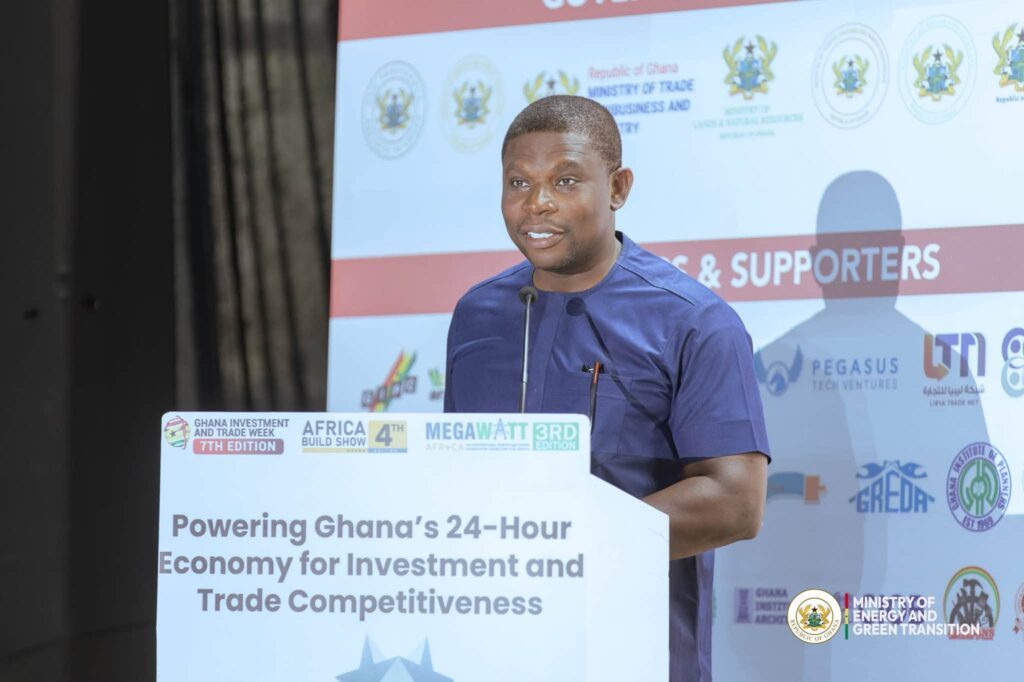
Image: GhanaFront Editorial
Ghana's push for a 24-hour economy will depend heavily on steady power, stronger infrastructure and targeted private investment, Deputy Minister for Energy and Green Transition Richard Gyan-Mensah has said.
The Deputy Minister made the point after representing the sector minister, Dr John Abdulai Jinapor, at the Ghana Investment and Trade Week Conference 2026 in Accra. The event was held at the Palms Convention Centre under the auspices of the Ghana Chamber of Construction Industry.
In a Facebook post on Wednesday, July 8, Mr Gyan-Mensah said energy must be treated as a central pillar of Ghana's next phase of economic transformation, especially as government works to implement its 24-hour economy policy.
Energy placed at the centre of the 24-hour economy agenda
The conference was organised under the theme, "Powering Ghana's 24-Hour Economy: Integrating Infrastructure, Energy, Mobility, and Sustainable Real Estate for Investment and Trade Competitiveness." The theme brought together several sectors that are expected to shape the country's ability to run businesses, transport systems and industrial activity beyond conventional working hours.
Mr Gyan-Mensah said reliable energy supply is not just a utility concern, but a competitiveness issue. For factories, logistics firms, construction businesses, real estate developers and service providers to operate efficiently around the clock, the country must guarantee dependable electricity and the supporting systems that keep economic activity moving.
Reliable energy, modern infrastructure, sustainable real estate and strategic investment are among the key foundations needed to unlock Ghana's economic potential, the Deputy Minister indicated.
His remarks connect the government's 24-hour economy agenda to the practical conditions businesses need before they can expand working shifts, increase production and serve wider markets. Without predictable power and coordinated infrastructure, the policy risks becoming an ambition without the basic operating environment required to sustain it.
The Deputy Minister also highlighted the importance of mobility and sustainable real estate development. These areas are closely tied to the broader policy because workers, goods and services must move safely and efficiently if businesses are to remain active at different hours of the day. Commercial spaces, industrial parks and residential areas will also need planning that supports longer operating cycles and safer urban activity.
Government points to reforms and public-private partnerships
According to Mr Gyan-Mensah, the government remains committed to creating a stable and competitive business environment through ongoing reforms and stronger public-private partnerships. He said these partnerships will be important in attracting the investment needed to modernise infrastructure and support economic growth.
The 24-hour economy policy has been presented as a vehicle for expanding productivity, creating employment and making Ghana more competitive in regional and international trade. At the GITW Conference, the Deputy Minister linked those goals to the energy sector's ability to provide the confidence investors need before committing capital to long-term projects.
For investors, energy reliability affects cost, planning and risk. Frequent supply challenges raise operating costs and discourage expansion, while stable power gives manufacturers and service providers room to run additional shifts, meet export orders and improve delivery timelines. Mr Gyan-Mensah's message placed energy reform squarely within that investment conversation.
He also noted that quality infrastructure will be needed to raise industrial productivity and open new opportunities for employment. Roads, power systems, mobility networks and real estate developments are expected to work together if Ghana is to build an economy that can support more activity at night and across extended business hours.
- Reliable power supply is expected to support industrial productivity and business expansion.
- Modern infrastructure will be critical for mobility, logistics and investor confidence.
- Sustainable real estate development is seen as part of the planning needed for longer operating hours.
- Public-private partnerships are expected to help deliver projects that government cannot finance alone.
Investment competitiveness comes into focus
The Ghana Investment and Trade Week Conference gave government officials and industry stakeholders a platform to discuss how infrastructure and energy choices affect trade competitiveness. The involvement of the Ghana Chamber of Construction Industry also underlined the construction sector's role in delivering the physical assets required for economic transformation.
Mr Gyan-Mensah said the critical sectors discussed at the conference will play a central role in improving Ghana's attractiveness to investors. He also said they can help create jobs and strengthen the country's position in regional and international trade.
The message is timely as Ghana seeks to move beyond policy slogans into implementation. A 24-hour economy will require power systems that businesses can trust, urban planning that supports safe movement, and investment frameworks that give private partners confidence to build. It will also require coordination between ministries, regulators, industry groups and local authorities.
For the energy ministry, the task is clear: align power sector reforms with the wider national development agenda. If the government can deliver reliable supply while encouraging infrastructure investment, the 24-hour economy could become a practical route to higher productivity and job creation rather than another campaign promise competing for attention.
Mr Gyan-Mensah's comments suggest that the administration wants energy policy to be judged not only by generation capacity or grid performance, but by its impact on businesses, workers and investors. That is where the 24-hour economy will either gain traction or face its toughest test.
More from GhanaFront Editorial
Related Stories
More from Business & Economy
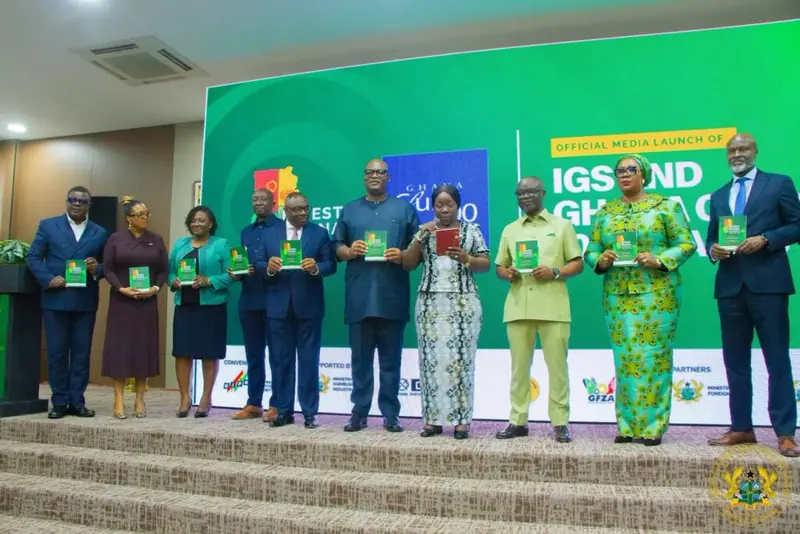
Trade Minister launches Invest Ghana Summit, Ghana Club 100 to drive Ghana's new economy
A new push to transform Ghana's economy - but what concrete steps will be unveiled at the summit?
13h ago•2 min read
BRICS membership won't transform Ghana's economy without domestic reforms - Bokpin
Will BRICS membership really boost Ghana's economy? An economist's warning suggests otherwise.
19h ago•5 min read
Ghana's clean cooking drive gets boost with Asharami's new LPG terminal in Tema
A new LPG terminal in Tema could reshape Ghana's clean cooking future - but what does it really mean for supply and prices?
14h ago•3 min read
GIPA CEO calls for investment to support Ghana's economic transformation
Why is GIPA's CEO pushing for capital and expertise now, and what could it mean for Ghana's future?
16h ago•2 min read