Breaking the Cycle: Why Ghana Must Stop Blaming History and Start Changing Habits

Image: GhanaFront Editorial
The Illusion of Inherited Crises: Moving Beyond the Blame Game
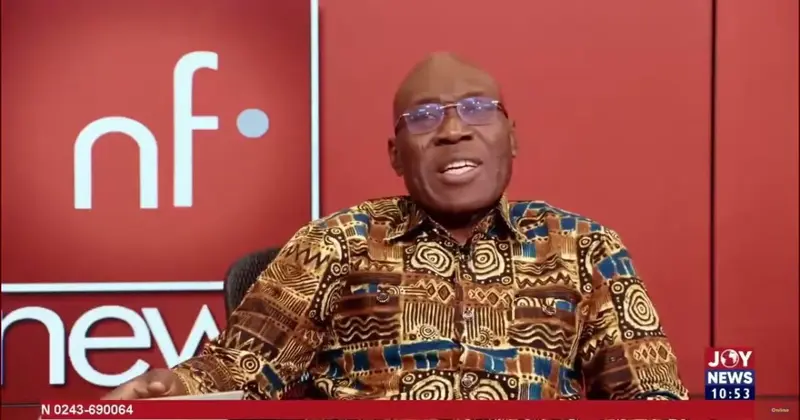
For decades, a comforting narrative has dominated the discourse surrounding national development in Ghana and across the African continent. This narrative suggests that our present socioeconomic struggles are merely the lingering shadows of historical injustices and past leadership failures. We have conditioned ourselves to believe that we are victims of circumstances inherited, rather than architects of crises repeated. However, a piercing analysis by Ing. Professor Douglas Boateng, a globally recognised industrial and supply chain engineer, shatters this comfortable illusion.
Professor Boateng, who holds the distinction of being Africa's first appointed Professor Extraordinaire in Supply Chain Management, argues that history does not actively return to punish nations. Instead, nations quietly recreate their own tragedies through the daily choices they make, the lessons they refuse to learn, and the compromises they constantly excuse. His assessment forces a deeply uncomfortable mirror onto society: our tendency to blame yesterday for the very problems we are actively manufacturing today.
History is not a visitor that knocks on the door. It is a mirror that reflects the habits we refuse to change. -- Ing. Professor Douglas Boateng
When we adopt the posture of historical victims, we absolve ourselves of present responsibilities. Yet, history is demanding. It reflects the values we embrace, the corruption we tolerate, and the civic indiscipline we normalise. When governments change and new political promises are made, the underlying patterns often remain identical. Short-term thinking and poor planning merely adopt new vocabularies while the fundamental issues persist.
The Anatomy of Disaster: When Indiscipline Meets Nature
Perhaps no phenomenon illustrates this systemic failure of habit better than the perennial floods that devastate urban centres. Year after year, properties are destroyed, businesses are ruined, and lives are tragically lost to floodwaters. When the inevitable occurs, the immediate reaction is to direct public anger towards climate change, abnormal weather patterns, or the ruling government. While these factors are part of the conversation, they obscure the deeper, more actionable truth.
The foundation for tomorrow's flood is laid years before the heavy rains begin. The disaster starts with the single piece of plastic waste thrown into a drainage system. It continues with the urban planning regulation that local authorities fail to enforce. It is cemented when wetlands and natural waterways are sold off and sacrificed for short-term commercial or residential developments, with communities watching in silence.
The flood that arrives tomorrow often begins as a compromise nobody challenged yesterday.
Nature remains remarkably consistent. Water will always seek the lowest ground, and gravity will always operate as it always has. What has shifted is human behaviour. There is a growing, flawed expectation that nature should somehow adapt to human indiscipline. Sustainable development cannot be achieved by attempting to negotiate with the boundaries of nature; it requires absolute respect for them.
The Long Road to Prosperity: Production Versus Consumption
This widespread culture of indiscipline and short-term thinking extends deeply into the economic foundation of the state. There is a passionate national discourse about industrialisation and economic independence, yet the reality on the ground tells a story of intense consumption over production. Society enthusiastically celebrates foreign finished products while paying minimal attention to the foundational industries required to manufacture them domestically.
It is, therefore, no surprise that unemployment remains stubbornly high and productivity fails to align with national aspirations. A look at the economic trajectories of nations like Singapore, South Korea, Germany, and Japan provides a stark contrast. These countries did not achieve their global economic dominance through miraculous political speeches or sheer luck. Their prosperity was built through deliberate, cross-generational planning, immense patience, and an unwavering commitment to engineering and education.
These successful societies understood a fundamental truth that many developing nations continue to ignore: genuine transformation cannot be achieved within a single four-year political cycle. A housing deficit, a struggling educational sector, or a degraded environment did not materialise overnight, and the solutions to these deeply rooted issues will equally require time and sustained effort.
Confronting the National Character
One of the most significant barriers to progress is the collective refusal to look inward. Society is quick to identify problems in leadership but heavily resistant to acknowledging the exact same flaws within the general populace. Citizens fiercely condemn corruption in high office, yet readily offer bribes to bypass bureaucratic inconveniences. We complain bitterly about the state of public services, yet treat punctuality as an optional suggestion rather than a professional requirement.
Professor Boateng likens this dynamic to a football team that has suffered a defeat. The defenders blame the midfielders, the midfielders blame the strikers, and the strikers blame the weather conditions. Everyone points a finger, but very few are willing to look in the mirror. It is an easy escape to declare that every problem is somebody else's responsibility.
- We return to familiar habits because they feel comfortable.
- We return to familiar shortcuts because they appear convenient.
- We return to familiar excuses because they protect us from uncomfortable self-examination.
Governments are ultimately a reflection of the societal values they inherit. When the broader culture deteriorates, institutional integrity naturally weakens. While this reality does not excuse poor governance or a lack of political accountability, it highlights that sustainable national growth begins with individual character, not just the passing of new laws.
Charting a Future-Oriented Course
If the trajectory of a nation is to change, the remedy must involve a profound shift in collective behaviour. A future-oriented society is one that weighs every single decision against its long-term consequences. This requires an educational system that moves beyond rote memorisation to actively promote critical thinking, environmental stewardship, civic duty, and strict ethical standards.
Institutions must be fortified to outlast the personalities that briefly lead them. More importantly, accountability must be redefined as a universal duty. It is not just the responsibility of the central government; it is the duty of the corporate sector, faith-based organisations, local communities, families, and individuals. The actions that truly transform a nation rarely make the evening news headlines. They are found in the quiet, disciplined acts of paying taxes, avoiding littering, rejecting corrupt practices, and pursuing excellence in daily tasks.
Tomorrow is rarely destroyed by tomorrow. It is usually damaged by what today refuses to confront.
The ultimate question facing society is not whether history will return to repeat itself. History is stationary. The critical question is whether the citizens have the wisdom, the courage, and the discipline to stop revisiting the same historical mistakes. True prosperity and national development are not one-off events; they are the sum of millions of disciplined choices, repeated long enough to forge a new national character.
More from GhanaFront Editorial
Related Stories
More from Politics

Ghana, Cote d'Ivoire jointly commission newly constructed boundary pillars
Two nations unveil new border markers - but what does this mean for regional unity and future ties?
3d ago•4 min read