Accra Flood Crisis: Expert Blames Reactionary Management Despite Decades Of Predictable Rainfall Cycles

Image: GhanaFront Editorial
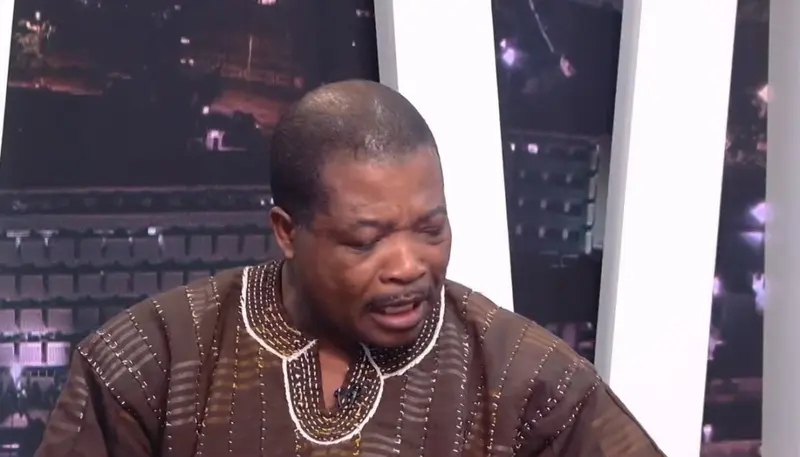
The devastating floods that consistently paralyse Ghana's capital have drawn sharp criticism from risk management professionals who argue that the state is failing to learn from decades of clear, predictable data. Speaking on the prominent current affairs programme, Newsfile on JoyNews, this Saturday, July 4, Operational Governance and Risk Management Expert ED Andrews delivered a comprehensive critique of how the nation handles its perennial flooding crisis.
According to the expert, disaster management in Ghana remains dangerously skewed toward reactionary emergency response rather than long-term prevention and proactive mitigation. For a capital city that is routinely submerged under floodwaters, this approach continues to expose critical weaknesses in state planning, structural rescue preparedness, and continuous mitigation efforts.
For far too long, the national response to severe flooding has only been activated after homes have been destroyed, residents displaced, and lives lost to the raging waters. This reactionary cycle, Andrews argues, contradicts the very foundations of disaster management.
The Predictable 10-Year Flood Cycle
The core of the expert's argument rests on the absolute predictability of Accra's heavy rainfall patterns. The recurring disasters are not random acts of nature that catch state agencies off guard, but rather a well-documented cycle that can be traced back over three decades.
By examining historical rainfall figures, a distinct pattern emerges. According to Andrews, Ghana experiences a cycle of major, high-impact rainfall events roughly every 10 years. Drawing a timeline from 1990 up to the current crises of 2026, he noted that the country consistently records massive volumes of rainfall on a similar scale at the end of every decade-long cycle.
"The data points to some cycles of event, and it's like a 10-year cycle. So if we go back to 1990, we take it from 1990 up to 2026, like every 10 years, we experience some volume of rainfall on this scale every 10 years. So it's a cycle." -- ED Andrews
With this predictability firmly established, the failure of state agencies and disaster planners to prepare adequately for the most recent floods becomes even more glaring. From a purely risk management perspective, the data has always been available. The severity of the recent floods should not have triggered the level of chaos and unpreparedness witnessed across the capital.
Startling Rainfall Statistics of 2026
To contextualise the scale of the threat that Accra continues to face, one only needs to look at the staggering rainfall figures recorded over the past few weeks in 2026. The data paints a picture of intense, concentrated downpours that the current infrastructure is simply incapable of handling without continuous mitigation strategies.
- June 3: 212.8mm of rainfall recorded.
- June 9: 182.5mm of rainfall recorded.
- June 29: 169.2mm of rainfall recorded.
- July 3: A massive 243.9mm of rainfall recorded in just one hour.
The July 3 figure is particularly alarming, representing a massive deluge within a highly compressed 60-minute timeframe. Yet, Andrews stresses that acknowledging this data does not require sophisticated early warning systems or complex scientific meteorological forecasting. It is pure, accessible historical data that should have been the baseline for all state planning and infrastructure development.
"This one, I'm not even being scientific. I'm not talking about early warning systems. I'm just looking at pure data for those who plan for these things to have worked with." -- ED Andrews
Institutional Failures and The Absence of Rescue Simulations
Perhaps the most damning critique delivered during the Newsfile discussion was the total lack of practical preparedness for a mass casualty event. Mitigation is the first step in the disaster management cycle, followed closely by preparedness, yet Ghana appears to bypass both in favour of post-disaster response.
Preparedness extends far beyond merely reacting when a disaster strikes. It demands rigorous, practical planning, coordinated simulations, and routine rescue drills so that state institutions can act swiftly and effectively when lives hang in the balance.
However, an assessment of the current disaster management framework reveals a void where these proactive measures should be. Andrews noted that there is no evidence to suggest that the National Disaster Management Organisation (NADMO) engages in practical rescue simulations or coordinates flood response practice exercises with key security agencies like the military.
When state institutions do not practice how to save people before a disaster occurs, the inevitable result is a chaotic and inefficient response when the floodwaters eventually rise. This lack of coordination and simulation leaves the most vulnerable populations at the mercy of the elements, highlighting a massive structural failure in the country's approach to civilian protection.
The GARID Project: A Glimmer of Hope?
Despite the grim assessment of the current disaster management landscape, there are existing frameworks that could alter the trajectory of Accra's flood crises, provided they are properly executed. The discussion brought attention to the Greater Accra Resilient and Integrated Development (GARID) project, a major initiative aimed at addressing flooding and solid waste management in the Odaw River basin.
When shifting the focus from immediate emergency response to long-term mitigation, the GARID project presents a strong blueprint. The detailed intentions and structural plans laid out within the GARID framework are highly promising. According to the risk management expert, the project contains fantastic ideas that, if fully and rigorously implemented, should lead to a substantial reduction in the flooding that plagues the capital.
The challenge, however, remains the transition from project documentation to continuous, on-the-ground mitigation. Ghana has rarely suffered from a lack of comprehensive policies or well-drafted project proposals. The persistent failure lies in the execution and the political will to sustain these projects beyond their initial launch phases.
Shifting the Paradigm from Response to Prevention
The recurring floods in Accra serve as a harsh annual reminder that the current strategy is fundamentally flawed. Treating disaster management primarily as a logistical exercise in distributing relief items after the fact is neither sustainable nor humane. It is a cycle of reaction that drains state resources and continuously jeopardises human lives.
Disaster management must be understood as an ongoing cycle. It begins with mitigation -- the continuous structural and policy efforts to reduce the severity of the hazard. It moves into preparedness -- the simulations, inter-agency coordination, and rescue planning. Only then should it move to response and recovery.
Until state agencies, particularly NADMO and city planners, fully embrace this cycle, the capital will remain highly vulnerable to the predictable 10-year rainfall events. The data is clear, the historical patterns are undeniable, and the rainfall figures of June and July 2026 prove that the threat is escalating in intensity. The time for ad-hoc reactions has passed; Accra requires a continuous, deeply integrated strategy for flood mitigation.
More from GhanaFront Editorial
Related Stories
More from Politics

Government redeems pledge to complete abandoned projects - Kofi Buah
A 1973 project finally completed - but what does this mean for future government spending and technical education?
3d ago•3 min read