US Students Engage in Breast Cancer Care Exchange at Kumasi Hospital
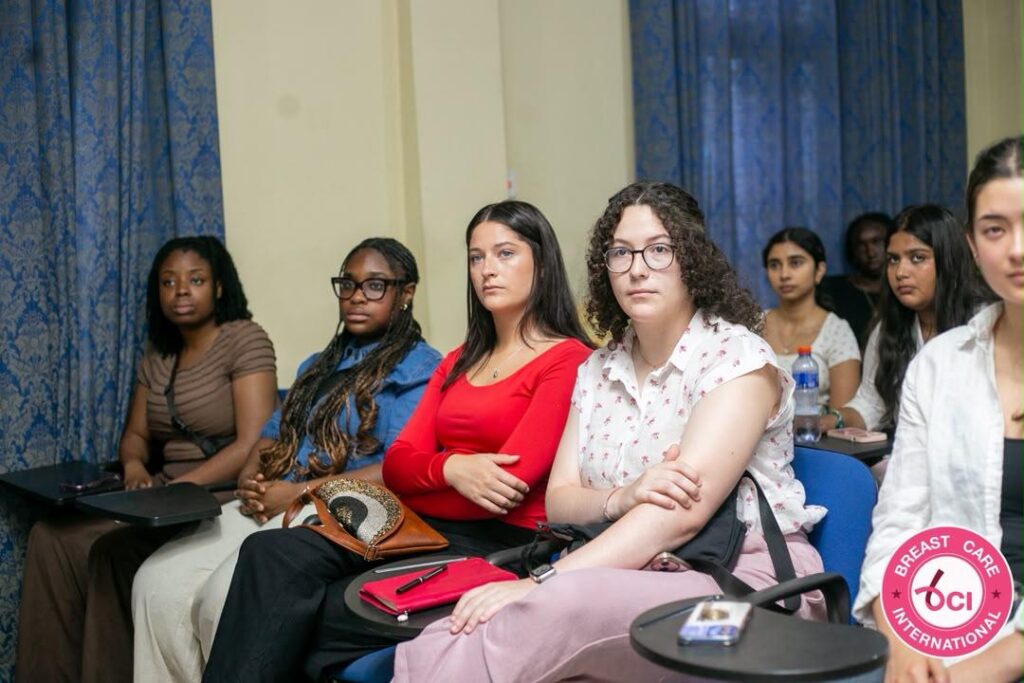
Image: GhanaFront Editorial
Strengthening Global Health Ties in the Heart of Kumasi
A specialized delegation of promising students from Northeastern University, located in Boston, United States, has successfully concluded an insightful and comprehensive academic exchange programme at the esteemed Peace and Love Hospital situated in the bustling city of Kumasi. The primary objective of this significant international visit was to enhance global learning regarding breast cancer care and to critically examine the effective, community-driven models of healthcare delivery currently operating within Ghana's medical framework.
During their comprehensive and immersive engagement at the medical facility, the American scholars undertook extensive, guided tours of the hospital's specialized departments and wards. They received detailed, technical briefings on the current methodologies employed for breast cancer diagnosis, as well as the latest therapeutic treatments and surgical interventions available locally. Furthermore, the students engaged in robust, sustained interactions with seasoned health professionals, including doctors, nurses, and administrative personnel. These critical discussions were specifically designed to provide the visiting academic cohort with a deeply nuanced understanding of the broader Ghanaian healthcare framework, with a particular and sustained emphasis on the community-based approaches utilized to optimize holistic patient care and significantly improve long-term recovery outcomes for women facing health challenges.
Building Sustainable and Enduring International Partnerships
This successful academic exchange also served to consolidate and deepen the highly valuable collaborative relationship existing between Northeastern University and Breast Care International, a leading non-governmental organization in the region. Over recent years, Breast Care International has consistently established itself as a premier destination for hosting various international student groups, actively providing scholars with practical, hands-on experience in specialized African healthcare settings that cannot be replicated in a standard classroom environment.
Dr. Vanessa Dianna Johnson, a distinguished Associate Professor of Applied Psychology at Northeastern University, highlighted the fundamental origins and enduring importance of this international partnership. She recounted that her initial exposure to the profoundly impactful work being conducted at the Peace and Love Hospital occurred during a professional visit to Ghana approximately three years ago. The impact of that initial, eye-opening visit was profound enough to prompt immediate action upon her return to the United States, ultimately leading her to passionately advocate for the hospital's formal integration into the university's structured academic study programme.
"I was fascinated by the work they were doing here. I knew it was an important lesson for my students to learn about healthcare in Ghana, and we wanted to find ways to contribute and work together," stated Dr. Johnson, reflecting on her motivation for establishing the exchange program.
Dr. Johnson further indicated that the remarkable dedication, professional rigor, and unwavering compassion exhibited by the hospital's medical and administrative staff provided her with strong confidence that Ghana will continue to achieve significant milestones in the advancement of specialized breast cancer care on the African continent.
A Two-Way Street of Shared Medical and Psychological Knowledge
Dr. Beatrice Wiafe Addai, the respected President of Breast Care International and a leading figure in breast cancer advocacy, warmly received the academic delegation from Boston. She emphasized to the students and faculty that the exchange programme serves a critical, dual purpose: it actively prepares the next generation of global health professionals for complex environments while simultaneously fostering a collaborative space where institutions across the globe can engage in mutual learning, resource sharing, and essential capacity building.
Highlighting the complex and multifaceted nature of modern medical treatment, Dr. Wiafe Addai outlined the comprehensive, interdisciplinary approach consistently adopted by her organization to ensure complete and holistic patient recovery, moving beyond mere physical intervention.
"Healthcare is not only about surgery or giving medication. It also includes psychological care and many other disciplines. Knowledge is not with one person. They have things they can learn from us, and we also have things we can learn from them," Dr. Wiafe Addai remarked, underscoring the philosophy that drives the hospital's success.
She pointed out that Breast Care International has recently hosted several diverse groups of students from various international universities, viewing these steadily expanding global partnerships as a critical and necessary step toward elevating the standard of cancer care globally through the continuous, open sharing of vital knowledge, emerging research insights, and practical clinical experience across borders.
Transformative Student Perspectives on Patient-Centered Care
For the visiting Northeastern University students, the intense immersion at the Kumasi-based medical facility provided a deeply transformative perspective on breast cancer management, extending significantly beyond standard clinical and pharmaceutical treatments. Yuna Kang, a dedicated fourth-year student specializing in public health, expressed her profound admiration for the hospital's deeply patient-centered operational model, which she felt prioritized human dignity alongside medical efficacy.
"Breast cancer care here is not just about medicine. It's about making women feel empowered. Everyone is treated as a person with a story, not just as a patient," Kang thoughtfully observed, highlighting the emotional intelligence embedded in the hospital's practices.
This holistic and empathetic approach resonated strongly with the entire student delegation throughout their stay. Fanta Kébé, who recently earned her bachelor's degree in Psychology and Data Science from Northeastern University, characterized the exchange as an exceptionally valuable service-learning experience. She noted that every local professional and patient the group encountered served as a profound source of inspiration, substantially broadening their academic comprehension of both specialized healthcare delivery mechanisms and broader, interconnected Ghanaian cultural dynamics.
The visiting academic delegation from Northeastern University, who actively participated in this rigorous learning exchange at Peace and Love Hospital, included the following scholars:
- Sonia Kripalani
- Melody Meyerovich
- Fanta Kébé
- Yuna Kang
- Aishani Gupta
Ultimately, this successful and impactful visit represents a core component of the ongoing, strategic collaboration securely linking Northeastern University, the pioneering Peace and Love Hospital, and Breast Care International. Together, these forward-thinking institutions are actively working in tandem to promote robust knowledge exchange, fortify comprehensive global health education frameworks, and provide tangible, long-term support for critical initiatives aimed at fundamentally improving comprehensive breast cancer care and awareness across the nation of Ghana and beyond.
More from GhanaFront Editorial
Related Stories
More from Health

UHAS VC urges early cancer screening as Ho Teaching Hospital enrols 33 patients under Mahama Cares
Why are women being urged to screen early, and what does the new fund mean for patients at Ho Teaching Hospital?
3d ago•