Telecel Foundation Rescues Kumasi South Hospital Neonatal Unit with Critical Equipment and 2-Year Adoption MoU
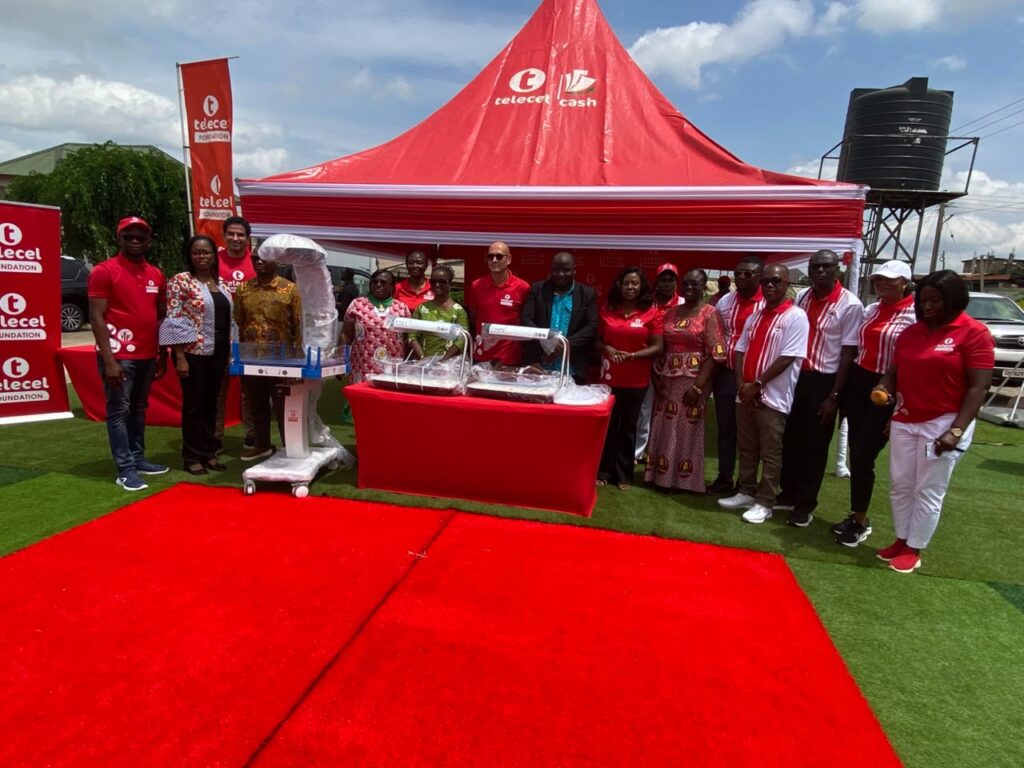
Image: GhanaFront Editorial
In a decisive move to address a critical healthcare deficit in the Ashanti Region, the Telecel Foundation has delivered a major intervention to the Pediatric Unit of the Kumasi South Hospital. The foundation handed over essential newborn care equipment and formally signed a two-year Memorandum of Understanding (MoU) to adopt the facility's Neonatal Department. This intervention promises to reverse a troubling trend of inadequate care for premature and jaundiced infants in the Asokwa Municipality.
The donation, which forms a core part of the Telecel Foundation's "Ashanti Month" activities, includes two brand-new Firefly phototherapy machines, a radiant warmer, and a digital infant weighing scale. For a hospital that records over 1,200 deliveries every single month, this equipment represents the difference between life and death for its most vulnerable patients.
Responding to a Healthcare Crisis
The urgency of this corporate intervention was triggered by a media report in April that exposed the dire conditions within the hospital's maternity and neonatal units. The investigation revealed that the facility's only radiant warmer had broken down, leaving medical staff overstretched and unable to provide adequate thermal support for premature babies. Chronic supply gaps were putting the lives of jaundiced and underweight newborns at severe risk.
Operating as one of the busiest secondary healthcare providers in the Kumasi Metropolis, the hospital was forced into a compromised position. Medical professionals had to improvise treatments or constantly refer critical neonatal cases to larger tertiary facilities, such as the Komfo Anokye Teaching Hospital. These delays in specialized care often reduced the survival chances of fragile infants.
Ing. Patricia Obo-Nai, Chief Executive Officer of Telecel Ghana, emphasized that the corporate sector cannot remain passive when basic healthcare infrastructure is failing.
"We were deeply moved by the report and could not sit unconcerned while newborns in Ashanti lacked access to basic, life-saving equipment. These are not just machines. They are lifelines for mothers and their babies who depend on this facility daily," Ing. Obo-Nai stated during the mini durbar held on the hospital premises.
The Anatomy of the Two-Year Adoption MoU
While the immediate delivery of equipment provides instant relief, the Telecel Foundation's commitment extends far beyond a one-off donation. The newly signed Memorandum of Understanding establishes a two-year adoption framework for the Neonatal Department. Under this binding agreement, the telecommunications giant will fund and oversee a comprehensive renovation of the unit.
The MoU dictates that Telecel will not only upgrade the physical infrastructure but also supply any additional medical equipment required to bring the department up to modern standards. This systemic approach aims to eliminate the environmental and operational deficits that have plagued the hospital's neonatal care delivery.
"The MoU we have signed today means the Telecel Foundation will adopt this Neonatal Department for the next two years. This will enable us to renovate the facility and provide the medical equipment needed at the unit to improve the environment of care and ensure that babies receive treatment in a more dignified and functional space," Ing. Obo-Nai explained.
The Medical Impact of the Donated Equipment
To understand the magnitude of this intervention, one must look at the specific functions of the donated machinery. Neonatal jaundice is a common but potentially devastating condition that, if left untreated, can lead to permanent brain damage. The two new Firefly phototherapy machines are specifically designed to treat this condition efficiently, breaking down bilirubin in the infant's blood using targeted light therapy.
Furthermore, premature and low-birth-weight babies lack the body fat necessary to regulate their own temperature. The newly installed radiant warmer acts as an artificial thermal environment, stabilizing the infant's core temperature and preventing hypothermia. Coupled with the digital infant weighing scale, which ensures highly accurate medication dosing based on exact weight, the pediatric team now possesses the fundamental tools required for advanced neonatal intensive care.
Dr. Rita Fosu Yeboah, the Clinical Care Coordinator of Kumasi South Hospital, described the equipment and the accompanying long-term agreement as transformative for maternal and child health in the region.
"With two new Firefly phototherapy units and a radiant warmer now in place, we can keep and treat more babies here instead of referring them to tertiary hospitals. This will reduce delays and give jaundiced and premature newborns a better chance of survival," Dr. Fosu Yeboah noted.
Reducing Referrals and Improving Survival Rates
The ripple effects of a fully functional and well-equipped Neonatal Intensive Care Unit (NICU) at Kumasi South Hospital will be felt across the entire regional healthcare network. By treating more critical cases in-house, the hospital will significantly reduce the referral burden on the Komfo Anokye Teaching Hospital. This decentralization of critical care means faster response times and less transit risk for fragile infants.
Hospital management anticipates a drastic reduction in waiting times for emergency neonatal care. The combination of the immediate equipment injection and the impending structural renovations will create a safer, more hygienic, and more efficient recovery environment for both the infants and the healthcare professionals attending to them.
Dr. Fosu Yeboah assured the benefactors that the hospital's administration is fully committed to the maintenance and preservation of the newly acquired assets.
"We will take ownership of these tools and make sure they serve generations of babies to come," she pledged.
The Broader Context of Maternal and Neonatal Care in Ghana
The challenges previously faced by the Kumasi South Hospital are reflective of a wider systemic issue within secondary healthcare facilities across Ghana. While tertiary hospitals often receive the bulk of government funding and international medical aid, district and municipal hospitals frequently struggle with chronic underfunding, dilapidated infrastructure, and broken-down essential machinery. This imbalance creates a severe bottleneck in the healthcare delivery chain, forcing local facilities to act merely as transit points for patients requiring critical care, rather than definitive treatment centers.
In maternal and neonatal healthcare, the golden hour -- the immediate period following birth -- is crucial for identifying and treating life-threatening conditions like asphyxia, hypothermia, and severe jaundice. When a secondary facility like Kumasi South Hospital lacks the necessary equipment to stabilize an infant during this critical window, the time lost during referral and transportation to a tertiary hospital can be fatal. The Telecel Foundation's intervention disrupts this dangerous cycle by equipping the municipal hospital to handle complex neonatal emergencies immediately and effectively.
By empowering the medical staff at Kumasi South Hospital with the right tools, this corporate partnership not only saves lives but also boosts the morale and clinical capacity of the healthcare workers. Doctors and nurses who were previously frustrated by the lack of resources can now focus entirely on delivering high-quality medical care, knowing that their facility is fully equipped to support their expertise. This holistic improvement in the working environment is exactly what the two-year MoU aims to solidify, ensuring that the hospital remains a beacon of hope and healing for the Asokwa Municipality and beyond.
A Corporate Model for Healthcare Intervention
The Telecel Foundation's initiative serves as a robust model for corporate social responsibility in Ghana. By transitioning from mere philanthropic donations to structural adoption and long-term facility management, the company is directly investing in community resilience and human capital development. The foundation has confirmed that it will actively monitor the impact of its intervention and maintain continuous engagement with the hospital's administration to identify and address further support needs throughout the two-year period.
This comprehensive approach ensures that the Kumasi South Hospital will eventually operate a state-of-the-art Neonatal Department, setting a new standard for maternal and child healthcare delivery within secondary medical facilities in the Ashanti Region.
More from GhanaFront Editorial
Related Stories
More from Health

He entered at eight. He is now 16: Ghana's children growing up in prayer camps
Why do some Ghanaian families choose prayer camps over clinics for children with mental health issues?
14h ago•4 min read