PAC Vice Chairman Pushes Recovery Drive After GH¢38.99bn Audit Flag
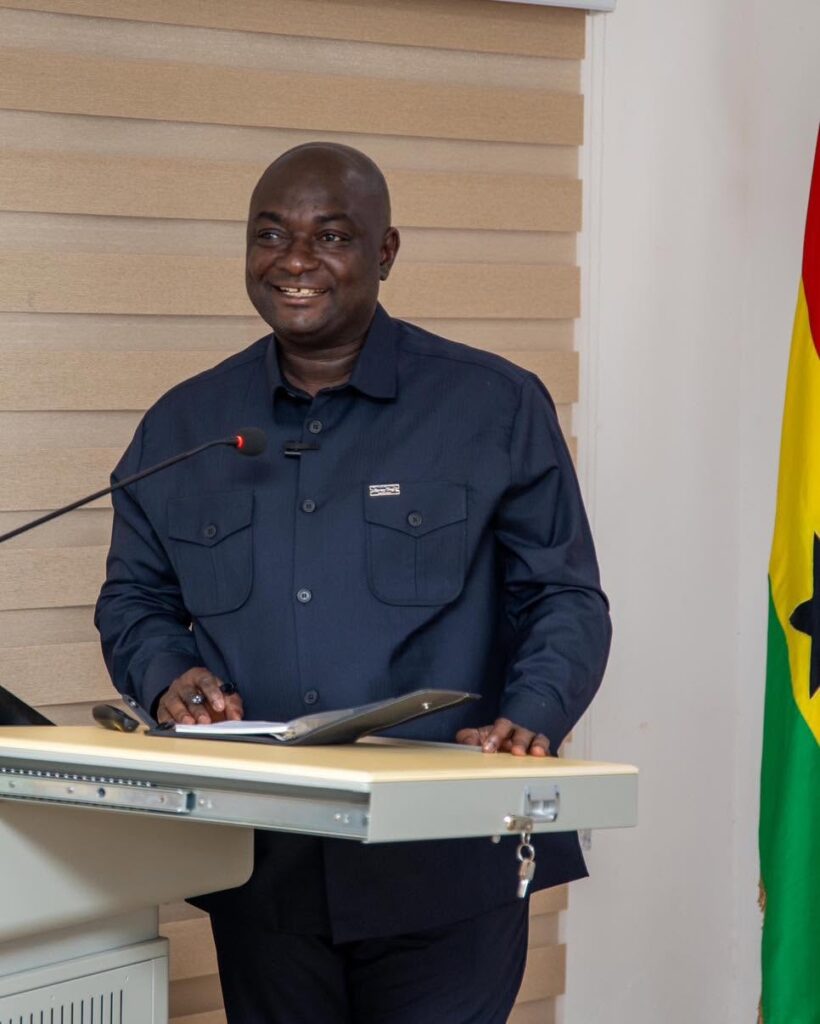
Image: GhanaFront Editorial
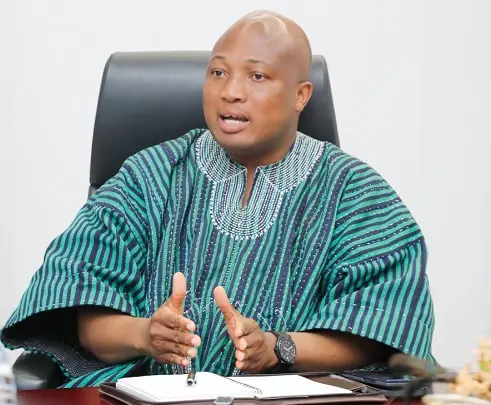
Ghana's struggle to recover public funds flagged in audit reports has returned to the centre of the accountability debate after the Vice Chairman of Parliament's Public Accounts Committee, Davis Ansah Opoku, disclosed that less than half of identified recoverable amounts between 2020 and 2023 has so far been retrieved.
Mr Opoku, who is also the Member of Parliament for Mpraeso, said the Auditor-General identified GH¢38.99 billion for recovery over the four-year period, but actual recoveries stood at GH¢12.72 billion. The figures point to a recovery gap of more than GH¢26 billion, raising fresh questions about how Ghana moves from audit findings to enforcement, sanctions and reform.
"Discovery is not our weakness -- follow-through is," Davis Ansah Opoku said, as he called for stronger systems to convert audit findings into recoveries and institutional change.
Audit findings are not translating into enough recoveries
The PAC Vice Chairman made the remarks while chairing a panel discussion at the National College of Defence Studies at Burma Camp. The discussion was held under the theme, "Beyond External Audit and Oversight: Rethinking Strategic Options for Safeguarding the Public Purse in Ghana."
The event brought together senior officers of the Ghana Armed Forces, officers from Malawi, Namibia, Nigeria, Rwanda and Zambia, and senior civilian officials. The composition of the audience gave the discussion a wider governance and security dimension, rather than treating public finance leakages as a narrow accounting problem.
Mr Opoku's central point was direct: Ghana has systems that can detect irregularities, but the country still struggles to ensure that money identified for recovery is actually returned to the public purse. Audit reports have repeatedly exposed weaknesses in financial administration, procurement, payroll controls and institutional compliance. The harder test, however, comes after the reports are issued.
For citizens, the numbers are stark. If GH¢38.99 billion was identified for recovery and GH¢12.72 billion has been retrieved, then a substantial portion of money flagged through audit processes remains outstanding. That gap matters because it represents resources that could support public services, infrastructure, debt management and social investment.
The concern also goes beyond the size of the outstanding amount. When audit findings do not lead to firm recovery action, the deterrent effect weakens. Public officers and institutions may come to see adverse audit findings as reputational discomfort rather than a serious accountability trigger. That is the culture Mr Opoku appeared to challenge in his remarks.
Safeguarding public money as a national priority
Mr Opoku argued that protecting public resources should not be treated only as a technical exercise for accountants, auditors and parliamentary committees. In his view, the ability of the state to secure its finances is linked to its ability to protect citizens and deliver on national priorities.
"A country that cannot secure its budget cannot fully secure its people," he said.
That statement places financial accountability within a broader national security frame. Public funds lost through irregularities, weak controls or poor enforcement reduce the state's capacity to provide services, maintain institutions and respond to development pressures. In practical terms, every cedi not recovered after being flagged is a cedi unavailable for public use.
The setting of the discussion at the National College of Defence Studies also reinforced that wider interpretation. Ghana's public purse is not only a matter for annual reports and committee hearings. It is tied to confidence in state institutions, fiscal discipline and the credibility of government commitments.
The Public Accounts Committee has traditionally played a central role in examining audit reports and questioning public officials over financial infractions. But the committee's work is only one part of the chain. The Auditor-General identifies issues. Parliament scrutinises them. Institutions must respond. Where recoveries are required, the relevant authorities must ensure that the money is paid back and that weaknesses that allowed the losses are corrected.
Mr Opoku's comments suggest that Ghana's accountability architecture needs tighter links between these stages. Detection without recovery leaves the public purse exposed. Hearings without enforcement can create public frustration. Reports without reform risk becoming routine paperwork.
The recovery gap Ghana must close
The figures cited by the Mpraeso MP provide a clear basis for policy reflection. Between 2020 and 2023, the Auditor-General identified GH¢38.99 billion for recovery. Of that amount, GH¢12.72 billion has been recovered. The remaining gap shows why Ghana's debate on public financial management must move beyond producing audit reports to demanding measurable outcomes.
- Amount identified for recovery from 2020 to 2023: GH¢38.99 billion
- Amount recovered so far: GH¢12.72 billion
- Main concern raised: weak follow-through after audit findings
- Venue of remarks: National College of Defence Studies, Burma Camp
- Speaker: Davis Ansah Opoku, Vice Chairman of PAC and MP for Mpraeso
The recovery challenge also raises questions about coordination among state institutions. If an audit report identifies an amount for recovery, there must be clarity on who is responsible for pursuing the funds, what timelines apply, what sanctions follow non-compliance and how the public will be updated on progress. Without such clarity, recoveries can become slow, fragmented or quietly abandoned.
Ghana does not lack public concern over misuse of state resources. What has often been missing is sustained institutional pressure after the first wave of headlines. Mr Opoku's intervention speaks to that gap. It is not enough for irregularities to be discovered and debated. The state must recover what is recoverable, fix the systems that failed and make non-compliance costly.
His message was therefore less about the existence of audit mechanisms and more about the discipline needed after those mechanisms have done their work. The Auditor-General can identify losses and irregularities, but the full value of the audit process is realised only when findings produce action.
For Ghana, the implication is simple and uncomfortable: the country has become better at seeing the cracks in public financial management than sealing them. Closing that gap will require stronger enforcement, clearer institutional responsibility and a public sector culture where audit findings trigger consequences, not just conversations.
More from GhanaFront Editorial
Related Stories
More from Politics

NPP GOES AFTER KOFI ADAMS OVER VISA SCANDAL
Why is the NPP insisting one dismissal is not enough in the visa scandal?
1d ago•4 min read