Fuel tanker overturns At Wassa Kwabeng; GNFS prevents explosion
The Western Region of Ghana, known for its rich natural resources and vibrant communities, often sees heavy vehicular traffic due to the transportation of goods and materials. The Asankrangwa-Sefwi Bekwai road, a crucial artery connecting several towns, is particularly busy. This road serves as a vital link for transporting agricultural produce, timber, and minerals, contributing significantly to the region's economic activity. The constant flow of traffic, however, also presents inherent risks, especially when large vehicles carrying hazardous materials are involved.
Ghana's fuel transportation sector faces ongoing challenges related to safety and infrastructure. The country relies heavily on road transport for fuel distribution, making it vulnerable to accidents that can have devastating consequences. Over the years, there have been several incidents involving fuel tankers, highlighting the need for stricter regulations, better road maintenance, and improved driver training. The potential for environmental damage and loss of life in such incidents is considerable, prompting continuous efforts to enhance safety protocols and emergency response capabilities. The Ghana National Fire Service (GNFS) plays a crucial role in mitigating these risks, often being the first responders in such emergencies. Their ability to quickly contain and manage hazardous situations is paramount to protecting communities and preventing large-scale disasters.
The incident at Wassa Kwabeng underscores the delicate balance between economic activity and public safety in Ghana. The community, like many others along major transportation routes, faces the daily reality of living alongside potentially dangerous cargo. The stakes are high for residents, local authorities, and emergency services alike. For residents, the immediate concern is the safety of their families and property. Local authorities are responsible for ensuring the well-being of their constituents and managing the aftermath of any incident. The GNFS is tasked with preventing a potential catastrophe, while police personnel must maintain order and prevent opportunistic behavior. The economic impact of road closures and disruptions to transportation can also be significant, affecting businesses and livelihoods.
Several key questions remain unanswered following this incident. What factors contributed to the vehicle's instability on the Asankrangwa-Sefwi Bekwai road? What specific measures are being taken to prevent similar incidents in the future? Are there plans to improve road safety infrastructure along this critical stretch? And how are the affected residents coping with the disruption and potential trauma caused by the event? The answers to these questions will be crucial in assessing the long-term impact of the incident and informing future policies and practices related to fuel transportation safety in Ghana.
Quick Summary
A fuel tanker overturned in Wassa Kwabeng in the Western Region - sparking immediate concern. The Ghana National Fire Service (GNFS) responded swiftly, but the potential consequences loomed large.
Summary - read the full story for complete context.
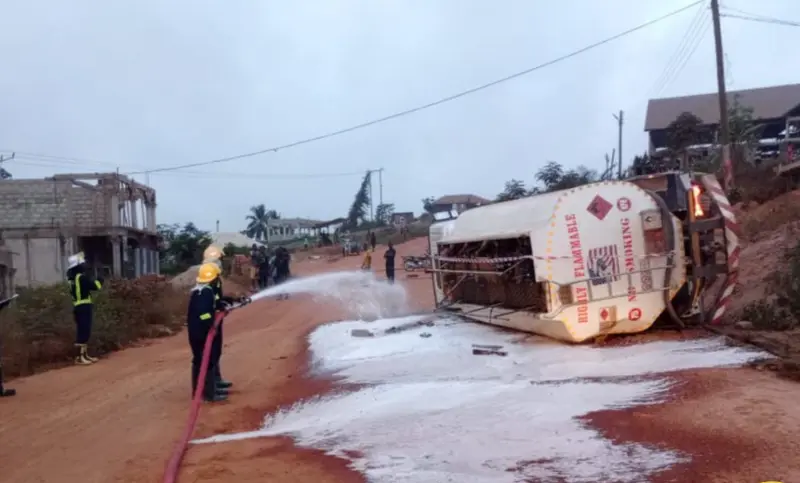
Image: Adom Online
GhanaFront aggregates news from trusted sources. Click to read the original article.
Keywords
Explore related tagsMore from Adom Online
Related Stories
More from Regional

Driver fined for dumping concrete on Madina-Adenta Highway
What happened when a concrete mixer truck stopped on a busy highway - and why the driver now faces the court?
1d ago•2 min read