Ellembelle Coin Rejection Sparks Legal and Consumer Concerns
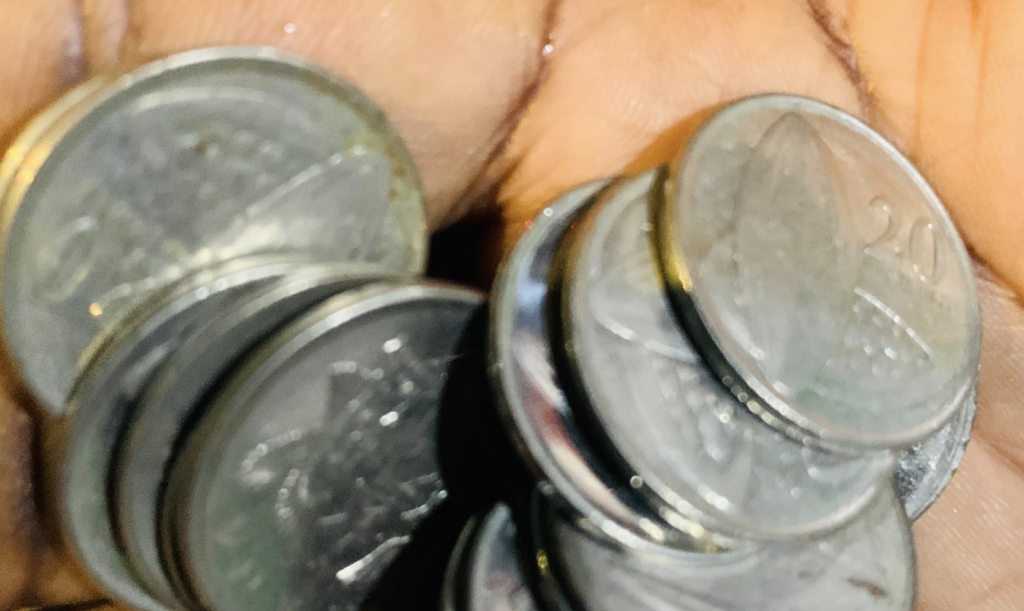
Image: GhanaFront Editorial
Traders in parts of Ellembelle are refusing to accept 10 and 20 pesewas coins in daily transactions, creating a quiet but serious breach of Ghana's currency rules and putting extra pressure on ordinary consumers who rely on small change.
The practice has surfaced despite the absence of any directive from the Bank of Ghana to withdraw or reject those coins. Instead, the central bank says the coins remain valid legal tender and warns that no individual trader has the authority to decide otherwise.
What is unfolding in the district is more than a simple market inconvenience. It is a direct challenge to the rules that govern cash transactions in Ghana. When lawful currency is treated as optional, disorder enters the smallest parts of the economy first, then spreads quickly through habit.
BoG Says the Coins Remain Legal Tender
Checks by the Ghana News Agency found that some sellers in the Ellembelle District had stopped taking the coins, with some arguing that they are inconvenient to store and easy to misplace. Others claimed the denominations carry little practical value in business.
That position is directly at odds with the law. A source at the Bank of Ghana head office in Accra told GNA that the central bank has issued no instruction for the rejection of any Ghana cedi denomination. The source added that complaints have been reaching the bank from members of the public over the refusal of some businesses to accept 10 and 20 pesewas coins.
Rejecting any denomination of Ghana's currency is an offence punishable by law, according to the Bank of Ghana source cited by GNA.
The warning matters because currency acceptance is not meant to be optional. Once a note or coin remains in circulation under the authority of the central bank, businesses are expected to honour it in normal transactions. The law does not create room for traders to decide that a coin is too small to matter.
To address growing confusion, the Bank of Ghana has begun a public sensitisation exercise to remind people that the 10 and 20 pesewas coins are still valid for payments and change. That campaign is necessary because public habits can shift faster than official communication, especially when traders adopt a practice that others copy without questioning the consequences.
Consumers Bear the Real Cost
For many shoppers, the rejection of lower coin denominations does not end at the counter. It often leads to a familiar and frustrating outcome: instead of receiving the exact balance from a purchase, buyers are pushed to accept a sweet, a sachet of water, or another low-value item in place of proper change.
That may look minor on the surface, but across repeated daily purchases it shifts the burden from traders to consumers. In a period when households are already managing tight budgets, even a few pesewas matter. What disappears in one transaction becomes meaningful when multiplied over a week, a month, or an entire community of buyers.
The scale of the issue also undercuts the argument that the coins are meaningless. In the latter part of 2024, 20 pesewas coins alone accounted for GH¢120 million in circulation, a clear sign that they remain relevant in Ghana's retail economy, especially in markets, transport stops, and small cash transactions.
- Some traders say the coins are difficult to keep.
- Others claim they have little value in real transactions.
- The Bank of Ghana says both coins remain valid legal tender.
- Consumers often lose out when exact change is replaced with lower-value items.
This is why the issue cannot be dismissed as a local trading habit. It affects price fairness, trust in cash transactions, and the credibility of the national currency system. It also exposes a wider problem in the informal economy, where convenience can override rules unless institutions step in firmly.
There is also a practical contradiction in the rejection itself. Traders who refuse the coins today may still depend on exact pricing tomorrow when they buy stock, pay transport fares, or settle transactions further up the supply chain. Small denominations are part of how pricing works in real life, not an abstract detail printed by the mint.
Police Want Offenders Reported
The Ghana Police Service has now asked the public to report anyone who refuses to accept any denomination of Ghana's currency to the nearest police station. That instruction raises the stakes for businesses that have treated the practice as harmless discretion.
It also sends a broader message. When traders independently decide that part of the national currency is no longer welcome, they create confusion in the marketplace and weaken a rule that should be uniform from one district to another. Lawful money cannot be valid in one shop and rejected in the next.
Ellembelle may be the focus of the latest report, but the complaints reaching the Bank of Ghana suggest the problem is not isolated. If enforcement and public education do not take hold, the rejection of low-value coins could spread further and normalize a culture where legal tender is accepted only when convenient.
That cannot stand. A functioning cash economy depends on public confidence that every valid denomination will be honoured as issued. The 10 and 20 pesewas coins may be small, but the principle behind them is not. Once that principle is weakened, the cost is measured not only in coins but in public trust.
- The Bank of Ghana has not withdrawn the 10 and 20 pesewas coins.
- Rejecting them is unlawful.
- Police want the public to report offenders.
- Consumers are the ones paying the price when traders ignore the rules.
The immediate fix is straightforward: accept the coins, educate the public, and enforce the law where necessary. Anything less rewards disorder in everyday commerce. For a country that depends heavily on cash for daily trade, that is a dangerous habit to excuse.
More from GhanaFront Editorial
Related Stories
More from Business & Economy

Fitch revises Access, Zenith, UBA, GT, 5 others outlook to positive
What does a positive outlook from Fitch mean for Nigeria's major banks and their future creditworthiness?
14h ago•2 min read