Wa West expands clean water access with 10 new boreholes
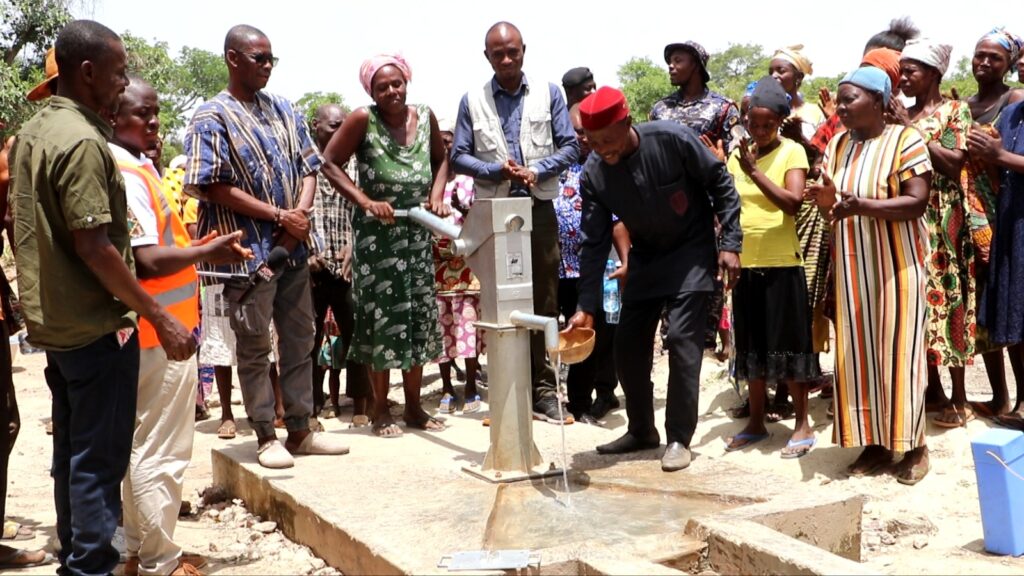
Image: GhanaFront Editorial
The Wa West District Assembly has stepped up efforts to ease persistent water shortages across parts of the district, commissioning ten newly constructed boreholes for communities that have struggled for years with unreliable and unsafe water sources.
The project, funded through a dedicated 10 per cent allocation from the District Assembly Common Fund, cost nearly GH¢500,000 and covered both rural communities and a key emergency service installation in Wechiau.
District Chief Executive Richard Wulo and Wa West Member of Parliament Peter Toobu Lanchene led the commissioning tour, formally handing over the facilities to residents and local officials.
Ten new water facilities delivered across the district
Nine hand-pump boreholes were provided for Jaglu, Ponyamayiri, Yokoroteng, Nadizier, Diesi, Polee, Loorteng, Wherekobo and Dakpalateng. A separate fully mechanised borehole was installed at the Ghana National Fire Service station in Wechiau, where water shortages had affected daily operations.
The intervention addresses a problem that goes beyond household inconvenience. In several of the beneficiary communities, residents had been relying on streams and other limited water points, especially during the dry season, exposing families to poor sanitation conditions and long hours spent searching for water.
Project cost: nearly GH¢500,000, financed through a 10 per cent District Assembly Common Fund allocation.
For many households, the arrival of the boreholes marks a basic but important shift in daily life. Access to safe water directly affects health, school attendance, time use and the ability of families to manage domestic work without constant disruption.
That impact is particularly visible in communities where women and children have traditionally carried the heaviest burden of water collection. Long walks to low-yielding or contaminated sources have shaped routines for years. Local leaders say the new facilities should reduce that pressure significantly.
Fire service gains critical support for emergency response
At the Wechiau Fire Station, the mechanised borehole is expected to strengthen operational readiness by giving personnel more reliable access to water. The facility responds to a direct request from the fire command, which had raised concerns about the effect of shortages on emergency work.
District Fire Officer Memuna Bayeaba welcomed the intervention and said the station had long operated under difficult conditions because of inadequate water supply. In a service where response time and preparedness are everything, that kind of shortage creates obvious risk.
Richard Wulo said the Assembly moved on the request because dependable water access is not optional for a fire station. It is a core operational need. Without it, emergency response capacity is weakened before an incident even begins.
Peter Toobu Lanchene backed that position and called for a further GH¢20,000 allocation to construct a protective shed for the fire tender, which remains exposed to harsh weather and extreme temperatures.
- Nine hand-pump boreholes were commissioned for beneficiary communities.
- One mechanised borehole was installed at the Wechiau Fire Station.
- The MP urged an extra GH¢20,000 for a shed to protect the fire tender.
The message from officials was clear: infrastructure for public safety cannot be treated as an afterthought. Water access and equipment protection both determine how effectively emergency teams can serve the district.
Community leaders welcome relief, but push for maintenance and more development
Assembly members from several of the beneficiary areas described the boreholes as a major relief for residents. At Yokoroteng, Assembly Member Manan Zumoruh said the community had previously depended on streams also used by animals, a situation that exposed residents to health risks and left them vulnerable when water levels dropped.
At Wherekobo, Assembly Member for the Sanwor Electoral Area, Claudius Darekuuyore, praised the District Chief Executive for responding quickly to the community’s needs. But he also stressed that the responsibility does not end with commissioning. Residents, he said, must protect and maintain the facilities if they want the gains to last.
That warning matters. Rural water projects often fail not because the initial investment was wrong, but because maintenance systems collapse, spare parts are delayed or local ownership weakens over time. Community care will now be a major test of whether these new boreholes deliver lasting value.
At Polee, Assembly Member Mahama Abdul Fataw pointed to the social toll of the old situation, saying women in particular had spent long hours trying to secure water from weak and unreliable sources. The new borehole should restore time, reduce stress and improve safety for households that had normalised hardship.
District Engineer Abdul-Razak Ibrahim said the Ghana Water Company Limited tested all the boreholes and confirmed the water is safe for human consumption.
District Engineer Abdul-Razak Ibrahim said all ten facilities underwent quality checks by the Ghana Water Company Limited, with results confirming the water is safe to drink. According to him, the test findings have already been shared with community leaders, an important step in building trust around the new sources.
Wulo linked the success of the project to Ghana’s decentralisation framework, arguing that direct disbursement of 80 per cent of the District Assembly Common Fund to assemblies gives local authorities room to act on urgent development needs without waiting for distant solutions.
That point lands because the project reflects what decentralised governance is supposed to achieve: local money addressing local problems with visible results. In Wa West, the issue was not abstract. Communities needed water, and the Assembly used available resources to respond.
Even so, local leaders say the district’s development needs remain wider than water alone. Community representatives used the occasion to call for improved electricity access and better roads, arguing that water infrastructure should form part of a broader push to strengthen livelihoods and public services across the district.
For now, though, the commissioning of the boreholes stands as one of the more practical interventions residents can immediately measure. Cleaner water, shorter collection times and stronger support for emergency response are not symbolic wins. They are direct improvements to everyday life.
In a district where infrastructure gaps still shape opportunity, projects like this matter most when they solve real problems. Wa West’s latest investment does exactly that. The next challenge is to protect the facilities, build on the momentum and ensure that access to safe water remains a right residents can count on, not a struggle they are forced to endure.
More from GhanaFront Editorial
Related Stories
More from Regional
NAIMOS vows decisive action over reported Atewa Forest illegal mining
What will NAIMOS do next in the Atewa Forest after new illegal mining reports?
1d ago•2 min read