24-Hour Economy Is A Productivity Agenda, Goosie Tanoh Says
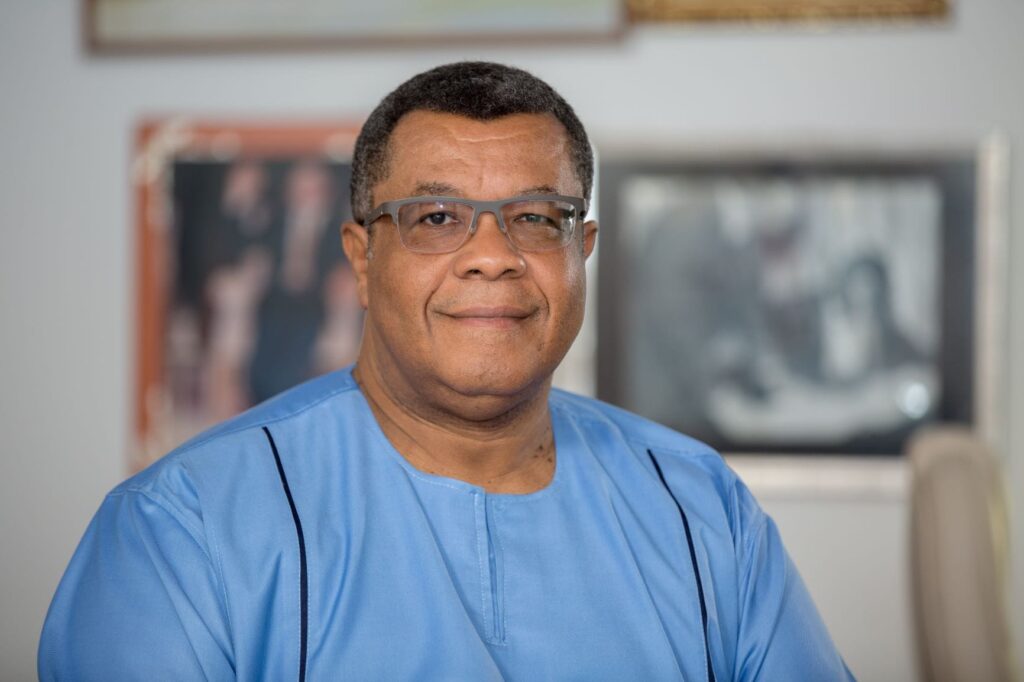
Image: GhanaFront Editorial
Ghana's 24-Hour Economy programme is being framed by government advisers as a productivity and industrialisation agenda, not a simple call for businesses to keep their doors open all night.
Goosie Tanoh, Presidential Adviser at the 24-Hour Economy Authority, said the policy is intended to help Ghana use its productive capacity more effectively, build stronger industries and create better-paying jobs through value addition. His remarks were delivered on his behalf by Ishmael Nii Amanor Dodoo, Director of Partnerships at the Authority, during the Made-in-Ghana Business Summit in Accra on Friday, July 10.
The summit, convened by the Entrepreneurs Foundation of Ghana, brought together public officials, business executives, investors, diplomats and development partners to discuss how Ghana can spread investment and economic opportunity beyond Accra. It was held under the theme, "Unlocking Regional Potential: Driving Industrialisation, Youth Entrepreneurship, Job Creation and Made in Ghana Prosperity".
"A 24-hour economy is not merely about extending business hours. It is about transforming Ghana into a nation where opportunities are continuously created, industries operate efficiently, technology drives productivity, and every citizen has the opportunity to contribute to national development," Mr Tanoh said.
Value addition at the centre of the policy
Mr Tanoh said Ghana's long-term growth depends on shifting from a raw-material export model to an economy that manufactures, processes and sells higher-value goods for both local and international markets. He argued that the country cannot build durable prosperity by remaining mainly a supplier of cocoa, bauxite, timber and raw agricultural produce.
He cited familiar examples that continue to define Ghana's development challenge. Cocoa should lead to premium chocolate production. Bauxite should feed aluminium manufacturing. Timber should support furniture production. Agricultural produce should be processed into export-ready foods. In his view, the 24-Hour Economy agenda must therefore be understood as a production strategy tied to industrial upgrading.
That message speaks directly to a central weakness in Ghana's economic structure. The country has long earned foreign exchange from commodities, but much of the value is captured elsewhere after processing and branding. A serious industrialisation drive would seek to retain more of that value locally, create factory jobs, deepen supplier networks and strengthen regional economies.
Mr Tanoh said industrialisation remains the foundation for lasting prosperity because it creates value, increases incomes, supports innovation and generates quality employment. He said government policy should encourage investment in sectors that can expand production, absorb labour and improve Ghana's competitiveness.
- Manufacturing and agro-processing
- Pharmaceuticals and renewable energy
- Digital technologies and textiles
- Automotive assembly and mineral beneficiation
Youth enterprise and regional opportunity
The 24-Hour Economy Authority also sees young entrepreneurs as central to the success of the programme. Mr Tanoh noted that more than 60 percent of Ghana's population is below the age of 35, making youth participation not just a social priority but an economic necessity.
He said a successful 24-hour economy must deliberately support young entrepreneurs with affordable financing, practical skills development, incubation centres, digital infrastructure, simpler regulations and strong collaboration among government, academia and industry.
Those measures matter because many young business owners face the same barriers year after year: limited access to patient capital, high operating costs, weak market access, regulatory friction and gaps in technical support. If the 24-Hour Economy is to move beyond a political slogan, it will need to address those constraints in a practical way.
The summit's focus on regional potential also widened the discussion beyond the capital. Ghana's industrial future cannot be concentrated only in Accra and Tema. Agro-processing, light manufacturing, logistics, tourism services, digital work and local value chains all have room to grow in other regions if infrastructure, finance and skills are aligned.
For many businesses, the phrase "24-hour economy" has raised questions about security, transport, electricity supply, labour arrangements and market demand. Mr Tanoh's remarks suggest the Authority wants the policy to be judged less by night-time activity alone and more by whether it increases output, improves efficiency and expands opportunity across sectors.
GRA reports stronger revenue performance
The summit also heard an update from the Ghana Revenue Authority. Elsie Appau-Klu, Technical Advisor to the Commissioner-General of the GRA, said the authority had recorded a strong start to the second half of the year, collecting GH¢22.71 billion against a target of GH¢22.48 billion.
According to her, the performance was supported by both the Domestic Tax Revenue Division and the Customs Division. Customs, she said, exceeded its monthly target for the first time in several months, helping the authority beat its overall revenue target.
"This is a genuine team effort, with both our Domestic Tax Revenue Division and our Customs Division crossing the finish line together," Mrs Appau-Klu said.
She said the GRA's responsibility is to help create an environment where businesses compete fairly, investors can plan with confidence, entrepreneurs formalise and grow, and government has the resources needed to invest in long-term national development.
Mrs Appau-Klu cautioned, however, that the June result is only one step toward the broader goal of meeting the annual revenue target. She commended taxpayers and GRA staff for the performance, describing it as the product of collective effort across the tax system.
The revenue update added a fiscal dimension to the summit's industrialisation discussion. Ghana's ambition to support manufacturing, youth entrepreneurship and regional investment will require public resources, private capital and credible institutions. Stronger tax collection can help fund infrastructure and services, but the burden must be balanced with a business climate that encourages investment and formal growth.
For the 24-Hour Economy agenda, the test will be execution. The policy will need to show that it can help firms produce more, process more, employ more and sell more -- not simply operate for longer hours. If government can connect industrial policy, youth enterprise, regional investment and fair revenue mobilisation, the programme could become a serious productivity agenda rather than a slogan waiting for proof.
More from GhanaFront Editorial
Related Stories
More from Business & Economy
The illusion of a good deal: Why some everyday money-saving habits may be costing you more
Your 'free' extra fuel or gas could be triggering expensive repairs and safety risks.
2d ago•