Weta Chiefs Warn Against Social Media Trial in EOCO Matter

Image: GhanaFront Editorial
Traditional leaders in Weta have stepped into a growing public controversy involving Council of State member Dr. Gabriel Tanko Kwamigah-Atokple and the Economic and Organised Crime Office, calling for lawful restraint and warning against the dangers of trial by social media.
In a statement released on Thursday, April 2, the Weta Traditional Council said it was speaking not only as a leadership body but on behalf of the people of Weta and the wider traditional area. Its intervention did not seek to determine guilt or innocence. Instead, it focused on the importance of preserving due process, protecting institutional credibility and preventing public commentary from distorting an active matter.
The issue has drawn attention because it concerns both a member of the Council of State from the Volta Region and his company, Sesi-Edem Company Limited. With EOCO already in the spotlight over the matter, the Council used its statement to urge a more measured national conversation, one grounded in legal principles rather than online speculation.
"We express concern over the growing circulation of unverified information and commentary across social media platforms, which risks undermining due process and damaging reputations prematurely," the Council said.
Weta leaders raise alarm over social media pressure
A major theme running through the Council’s statement is the belief that public debate has become too heated and too loosely sourced. Traditional leaders said unverified claims and online commentary can create a parallel court of opinion, one that often reaches conclusions long before investigators or the law do.
That concern reflects a wider pattern in Ghana’s civic and political life, where major investigations quickly attract partisan commentary, selective leaks and emotional reactions on digital platforms. In such an atmosphere, institutions can come under pressure to appear forceful, while the individuals at the centre of a case may face reputational damage before any formal decision is made.
By urging an end to what it described as social media trials, the Weta Traditional Council is effectively asking the public to slow down. For the chiefs and elders, the issue is not whether institutions should investigate allegations. It is whether those investigations can proceed without being overshadowed by a flood of commentary that encourages prejudice and public hostility.
The statement also suggests that premature narratives do not only affect the subject of an investigation. They can shape how state bodies themselves are perceived, especially if their actions appear to unfold in a climate of noise, pressure and suspicion.
That is why the Council placed equal emphasis on two audiences: the public and EOCO. Members of the public were urged to exercise restraint, while the anti-graft office was called upon to ensure that its procedures are carried out in a way that does not deepen bias or create the impression of malice.
"Justice must not only be done but must be seen to be done without prejudice," the statement stressed.
Support for a local figure tied to development concerns
Although the statement is framed around process and fairness, it is also unmistakably a declaration of solidarity. The Weta Traditional Council described Dr. Kwamigah-Atokple as a distinguished son of the area and credited him with contributing to socio-economic development in the community and across the Volta Region.
That endorsement matters because it frames the controversy not simply as a legal or political story, but as one with local emotional weight. To the traditional authority, the man at the centre of the matter is also someone whose work and identity are tied to the area’s broader development story.
The Council said his contributions to enterprise growth and community advancement remain significant and widely acknowledged. Even without listing specific interventions, the statement positions him as a figure whose public reputation carries meaning beyond official office.
This explains another important line in the statement: the caution that society should avoid actions that inadvertently discourage people who contribute meaningfully to development. Traditional leaders appear worried that when influential figures become the subject of aggressive public scrutiny without visible fairness, others may become reluctant to invest, serve or associate themselves with local development initiatives.
At the same time, the Council was careful not to present development work as a shield against accountability. Its message repeatedly returns to the need for fairness within accountability, not in place of it.
- The Council said it respects EOCO’s mandate and the role of state institutions.
- It urged professionalism, fairness and adherence to the rule of law.
- It warned that unverified digital commentary can prejudice public understanding.
- It appealed for an immediate stop to social media trials.
- It reaffirmed its support for Dr. Kwamigah-Atokple as a son of Weta.
This balancing act is central to the Council’s position. It wants institutions to work, but it also wants communities to believe that those institutions are acting fairly. In the current climate, that may be as important as any eventual finding.
Institutional credibility at the centre of the appeal
Perhaps the strongest part of the Council’s intervention is its emphasis on institutional integrity. The statement asks EOCO to conduct all actions and procedures in a manner that protects the credibility of the process and avoids creating undue public bias before any formal determination is reached.
That choice of words is significant. It points to a concern that procedure is not just a technical matter for lawyers and investigators. It is a public-facing test of trust. If citizens believe a process is tainted by selective pressure, media frenzy or reputational targeting, confidence in the institution itself may suffer.
For that reason, the Council’s statement can be read as both a defence of an individual and a plea for the preservation of confidence in public authority. Traditional bodies often step in at moments like this to cool tensions, interpret events for their communities and remind the wider public that law must remain above spectacle.
The statement concluded with a firm expression of confidence that state authorities will act within the remit of the law. That closing line reflects a careful posture: support for one of its own, but not rejection of the state’s authority to act.
"As a son of the land, the Weta Traditional Council solidly stands behind our subject, with the expectation that state authorities will act within the remit of the law," the statement declared.
The message was signed by Torgbuiga Akpo Ashiakpor VI, Paramount Chief and Overlord of the Weta Traditional Area, who also serves as President of the Weta Traditional Council. His signature gives the statement formal authority and signals that the intervention is not a casual comment but an official position of the area’s traditional leadership.
What happens next in the EOCO matter will be determined by investigators and the legal process. But the Weta Traditional Council has made clear that, in its view, the path forward must be shaped by professionalism, fairness and restraint. In a period when public controversies are often inflamed by rapid digital commentary, that message may resonate well beyond Weta itself.
The Council’s intervention serves as a reminder that national cases often have deep local consequences. For communities, the reputations of public figures are not abstract political talking points. They are bound up with identity, history, development and communal pride. That is why the demand for due process, in this case, is also a demand for dignity.
Whether one sees the statement as a defence, a caution or both, its central argument is clear: legal processes must be protected from prejudice, institutions must act in a way that sustains trust, and public debate must not outrun the facts.
More from GhanaFront Editorial
Related Stories
More from Regional
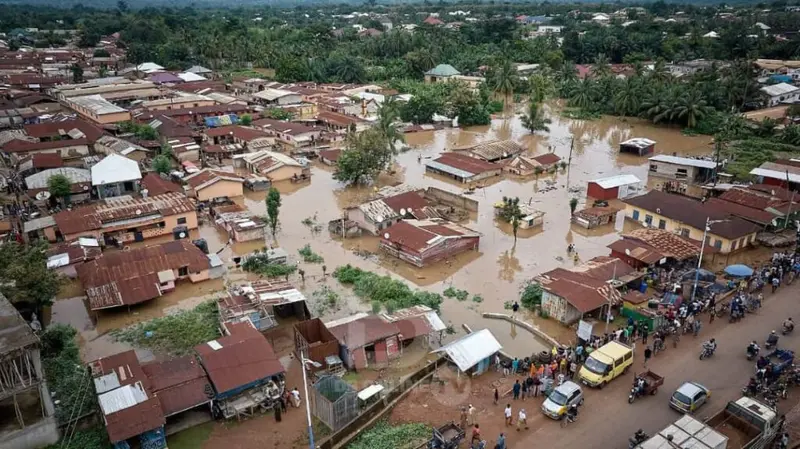
Dafeamekpor appeals for urgent support as Hohoe floods worsen
Homes and shops underwater in Hohoe - who will answer the call for urgent help?
4d ago•2 min read