US Demands Public Iranian Guarantees on Safe Maritime Passage in Strait of Hormuz
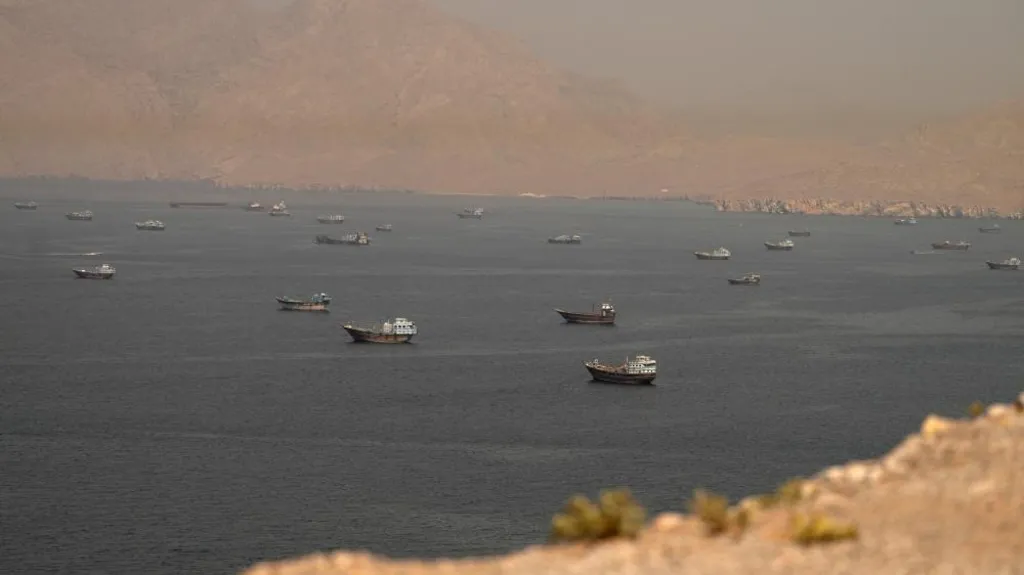
Image: GhanaFront Editorial
Washington Demands Clear Assurances Before Further Talks
In a bold diplomatic push to secure safe transit through one of the most heavily trafficked maritime corridors, the United States has demanded that Iran publicly declare the Strait of Hormuz open to international shipping. Furthermore, Washington expects Tehran to make a formal, binding pledge to halt all fire on commercial vessels. These strict demands form the core of the American negotiating position as critical high-level talks are scheduled to resume in Oman this Saturday.
The geopolitical standoff in the Gulf region carries serious implications for global supply chains and energy markets. Analysts and economic observers across the African continent, including here in Ghana, are monitoring the situation closely. The reliable and safe transit of commercial shipping through the Strait of Hormuz remains a foundational element for broader global economic stability and unhindered international trade.
Sources within the American media, citing unnamed United States officials, report that Iranian representatives have privately conceded to senior advisers of President Donald Trump that recent attacks on shipping vessels were a mistake. The Iranian diplomatic side reportedly attributed the hostile maritime actions to an errant internal sect of hardliners operating entirely outside of official state directives.
Behind Closed Doors: Acknowledging the Misstep
During these highly sensitive, closed-door interactions, Tehran actively attempted to distance its central government command from the recent maritime aggression. According to senior American officials who briefed their international partners, the Iranian delegation indicated that rogue elements were actively attempting to undermine the ongoing peace process by deliberately targeting commercial shipping routes.
"They came back to the table and said, 'We screwed up. We made a mistake. Let's keep talking,'" one US official disclosed to television networks regarding the private Iranian admissions.
This private admission has set the stage for the upcoming negotiations, although the White House insists that private apologies are entirely insufficient given the scale of the disruption to maritime commerce. The United States has leveraged regional mediators to convey a firm and uncompromising message to the Iranian leadership: a public statement confirming the absolute safety of the strait and the complete cessation of attacks on commercial shipping is now considered non-negotiable.
Failure to provide such a public guarantee, American officials warned during a media briefing on Friday, would definitively result in an unfavorable outcome for the Iranian side at the negotiating table. The White House has firmly requested that Iran formally and publicly acknowledge that the recent firing on shipping vessels was a mistake.
The Path to Diplomatic Resolution in Oman
The immense urgency of the situation is dramatically underscored by the high-profile delegation expected to lead the American negotiating team. United States Vice-President JD Vance and Secretary of State Marco Rubio are slated to spearhead the complex talks. They will be joined by special envoy Steve Witkoff and Jared Kushner, both of whom have been heavily and historically involved in Middle Eastern diplomatic efforts. The collective presence of such senior American figures highlights the highly critical nature of the Saturday talks in Oman.
Parallel to these direct bilateral efforts, regional actors are actively working to de-escalate the situation through their own diplomatic channels. A prominent diplomatic delegation from Qatar travelled to Iran on Friday. Their primary objective is to strategically mediate the rising tensions and to seamlessly facilitate smoother, unhindered navigation through the contested waters of the strait.
President Donald Trump confirmed the continuation of negotiations, noting publicly that the Islamic Republic of Iran had requested further talks. However, the American leader adopted a remarkably firm public stance regarding the ceasefire agreement that was originally signed in June.
"We have agreed to do so, but the United States has stated to them, in no uncertain terms, that the Cease Fire is OVER!" President Trump declared in a direct public statement posted to his Truth Social account early Friday.
Recent Escalations and Strategic Control
The recent breakdown in maritime security marks the most severe and highly dangerous exchange of hostilities between the United States and Iran since the interim ceasefire deal was established in June. Under that earlier diplomatic agreement, Iran had firmly committed to ensuring the safe passage of commercial vessels -- a core promise the White House now officially views as having been blatantly violated.
The security situation deteriorated rapidly earlier this week when three separate commercial ships were struck. These vessels were navigating a route strictly recommended by the United States through Omani territorial waters. In response to the troubling incidents, Iranian authorities have consistently maintained that the only genuinely safe passage requires transiting through a separate route entirely located within Iranian territorial waters.
The ensuing conflict has also rapidly reignited long-standing structural debates over the administration and strategic control of the vital waterway. Throughout the recent conflict, Iran has continuously sought to forcefully assert its sovereignty over the strait. This effort specifically included the proposed establishment of a "Persian Gulf Strait Authority," a newly conceived body which Tehran indicated would officially manage maritime traffic by strictly issuing mandatory safe passage permits.
According to reports originating from Iran's Fars news agency, the aggressively evolving diplomatic framework currently under discussion might ultimately see the strait managed jointly by Iran in close co-ordination with Oman. Such a bilateral arrangement could potentially include the formal introduction of specific service fees, which would be aggressively levied on all commercial ships seeking to safely transit the critical international waterway.
Global Implications of the Standoff
The ongoing complex negotiations in Oman undeniably represent a pivotal moment in the management of international maritime security and the preservation of commercial shipping routes. A comprehensive 14-point memorandum of understanding, which was successfully agreed upon just last month, was originally designed to powerfully extend the June ceasefire and definitively end the broader conflict across all fronts.
A central component of this highly established memorandum clearly mandates that Iran and Oman must hold constructive and continuous talks with other Gulf states. The core strategic purpose of these multi-party discussions is to meticulously define the future administration and to outline the specific maritime services that will actively govern the strait in the years to come.
As the international diplomatic community actively watches these high-stakes diplomatic developments unfold, the strict requirement for a public commitment from Tehran ultimately remains the primary stumbling block. The United States has made it explicitly and continually clear that behind-the-scenes admissions of rogue actions cannot and will not simply substitute for formal, highly public guarantees of safety for global commercial shipping. The definitive outcome of the critical Saturday negotiations will highly likely determine the near-term structural security framework for one of the most undeniably vital arteries of global commerce.
More from GhanaFront Editorial
Related Stories
More from Politics

PAC defers Ghana Water hearing; demands presence of Minister and MD over financial status
Why did PAC halt the hearing and what critical questions remain unanswered about Ghana Water's financial health?
1d ago•