NPP Raises Alarm Over Arrests, Claims Democratic Space Is Shrinking
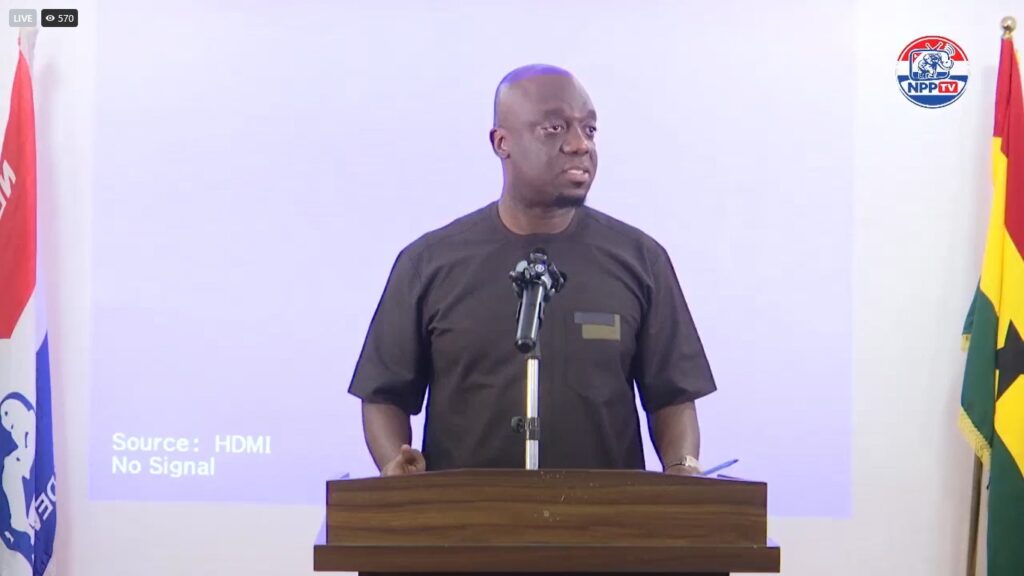
Image: GhanaFront Editorial
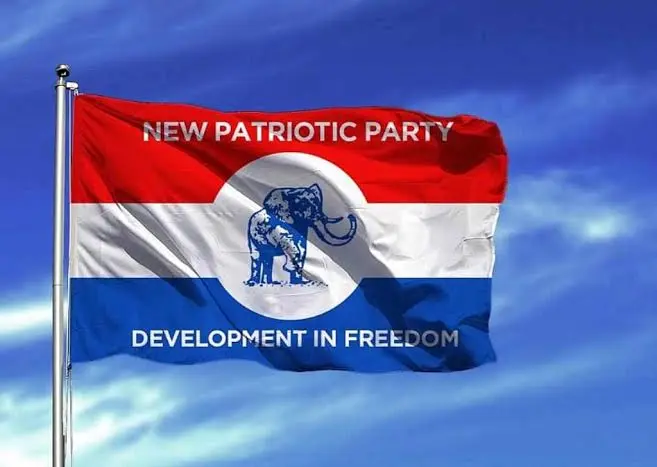
The New Patriotic Party has launched a sharp attack on the Mahama administration, accusing government of using state power to intimidate critics and shrink democratic space in Ghana.
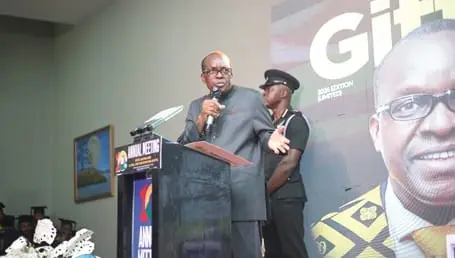
At a press engagement at the party's headquarters in Accra on Wednesday, April 15, NPP General Secretary Justin Kodua Frimpong said recent arrests and detentions involving outspoken government critics point to a troubling pattern. He argued that the trend should concern anyone invested in Ghana's democratic record and its long-standing commitment to free expression.
The opposition's latest charge comes in the wake of the arrest of Bono Regional Chairman Kwame Baffoe, popularly known as Abronye DC, who was picked up earlier this week to assist police investigations into a string of allegations tied to his public comments.
"President Mahama and the NDC want to return Ghana to the dark days of culture of silence," Justin Kodua Frimpong told reporters in Accra.
NPP says arrests are sending a dangerous signal
Kodua said the NPP is alarmed by what it sees as the increasing use of state institutions against people who openly challenge government decisions. According to him, several individuals who have expressed views on controversial national issues have faced arrest, detention, or court action.
For the opposition, the concern is larger than one individual case. The party says the cumulative effect of these incidents is to create fear in public discourse, especially when critics begin to believe that strongly worded commentary can trigger legal trouble.
The phrase "culture of silence" carries deep political meaning in Ghana, and the NPP is clearly deploying it to frame the current moment as more than a routine law enforcement matter. By invoking that history, the party is attempting to place the Mahama administration on the defensive over questions of tolerance, dissent, and the proper limits of executive power.
Kodua maintained that freedom of expression cannot thrive where citizens feel exposed for speaking forcefully against government policy. He said Ghana's democratic gains must be protected not only through elections, but also through restraint in the use of police and prosecutorial authority.
- Press engagement held at NPP headquarters in Accra on Wednesday, April 15
- Opposition alleges a clampdown on dissent under President John Dramani Mahama
- NPP links recent arrests of critics to a broader threat to democratic norms
Abronye DC arrest intensifies the political row
At the centre of the latest dispute is Kwame Baffoe, the Bono Regional Chairman of the NPP, whose blunt style has repeatedly drawn public attention and legal scrutiny. Police, through the Criminal Investigations Department, apprehended him on Monday, April 13, 2026, in connection with allegations that include offensive conduct conducive to the breach of the peace, false publication, and conduct likely to cause fear and panic.
Although a formal charge sheet had not been issued at the time of the report, sources close to the investigation said the matter is closely linked to alleged threats directed at a presiding judge at the Adenta Circuit Court.
That detail has added another layer of seriousness to the case. Questions touching on the judiciary, judicial independence, and the protection of judges are never treated lightly in Ghana's legal and political system. For that reason, the Abronye matter is unlikely to remain just a partisan talking point. It now sits at the intersection of politics, law, and institutional credibility.
Legal observers are likely to watch the next steps closely. If prosecutors proceed aggressively, the government will face more criticism from opponents who already believe dissent is under pressure. If the matter weakens under scrutiny, critics will argue that an arrest was used for political effect. Either way, the case has already become a national flashpoint.
Abronye DC was reportedly picked up on Monday, April 13, 2026, to assist investigations into offensive conduct, false publication, and conduct likely to cause fear and panic.
Why this confrontation matters beyond party politics
Ghana's democratic reputation has been built over decades through competitive elections, peaceful transfers of power, and an energetic media environment. That is why claims of shrinking civic space carry weight, even when they emerge from partisan exchanges between the NPP and the National Democratic Congress.
The government, for its part, will likely argue that criminal investigations must proceed wherever the law may have been breached, regardless of a suspect's political standing. That is a legitimate principle. No democracy can function if public figures are insulated from investigation simply because they are politically connected or outspoken.
But the opposition is pressing a different question: whether state institutions are being applied fairly, proportionately, and without political selectivity. That is the deeper issue now before the public. Ghanaian democracy is not tested only by whether arrests are legal on paper. It is tested by whether citizens trust that the law is being enforced evenly and without hidden motive.
The history surrounding Abronye DC also matters. This is not his first clash with the law. His latest arrest follows a similar detention in September 2025 on charges of offensive conduct. That record gives government defenders room to argue that the case fits an established pattern of controversial conduct. At the same time, the NPP will continue to insist that repeated legal action against outspoken figures creates a climate of intimidation.
What happens next will shape the public reading of this moment. If police provide clear evidence, follow due process, and avoid spectacle, some of the political temperature may drop. If the process appears opaque, selective, or overly punitive, the opposition's claims will gain traction.
For now, the NPP has chosen escalation. By directly accusing President Mahama and his administration of authoritarian tactics, the party has turned one arrest into a wider referendum on civil liberties, dissent, and the future tone of political contest in Ghana.
The country has been here before in different forms, and that is precisely why the argument resonates. Ghanaians understand that democracy is not only about the ballot box. It is also about whether critics can speak, whether institutions can act independently, and whether power is exercised with discipline. Those questions are now back at the centre of national debate.
- Police action against Abronye DC has become a major political issue
- The NPP says the pattern reflects an attempt to silence critics
- The broader public debate now focuses on free speech, due process, and judicial independence
In the days ahead, the burden will fall on both the state and the opposition to match rhetoric with substance. The government must show that the law is being enforced without fear or favour. The NPP must prove that its warning is grounded in facts, not only political strategy. Ghana's democracy is strong enough for scrutiny. What matters now is whether its institutions are strong enough to earn trust.
More from GhanaFront Editorial
Related Stories
More from Politics
NDC election: Ashanti NSA Director files nomination for Regional Organiser, vows to boost parliamentary seats
Can a new NDC organiser turn Ashanti's political tide? Find out his strategy.
1d ago•