Northern Region Faces Healthcare Crisis as Professionals Reject Rural Postings Over Poor Amenities

Image: GhanaFront Editorial
A Deepening Crisis in Rural Healthcare Delivery
The Northern Regional Health Directorate of the Ghana Health Service (GHS) has issued a dire warning regarding an escalating crisis that threatens to undermine the very foundation of healthcare delivery across the region's vast rural landscapes. An alarming and growing number of qualified health professionals are outright declining deployments to rural and underserved communities. The primary catalysts for this widespread reluctance are deeply entrenched structural deficits rather than a lack of professional dedication. Specifically, deplorable road networks, severe shortages of adequate staff accommodation, and an acute absence of basic social amenities are actively driving medical personnel away from the hinterlands.
This stark and uncomfortable reality was laid bare during the recent regional conference of the Union of Professional Nurses and Midwives, Ghana (UPNMG) held in Tamale, the regional capital. Delivering a sobering address on behalf of the Northern Regional Director of Health Services, Dr Chrysantus Kubio, the Medical Superintendent of the Northern Regional Hospital, Dr Richard Anthony, provided a comprehensive assessment of the region's increasingly fragile healthcare staffing dynamics.
According to the Directorate, the core issue is not necessarily a failure of deployment, but a systemic failure of retention. While the central government and the GHS continue their constitutional mandate to dispatch newly trained medical personnel to facilities scattered across the region, keeping those professionals in deprived communities remains a monumental hurdle. Health workers often arrive at their assigned duty posts only to be confronted with harsh living conditions that make their vital, life-saving work nearly impossible to execute effectively over the long term.
The Structural Deficits Driving Away Medical Staff
In rural Northern Ghana, the challenges of healthcare provision extend far beyond the walls of the clinic or the CHPS compound. The working environment is inextricably linked to the broader infrastructure of the district. The Directorate highlighted three primary bottlenecks that are consistently cited by professionals rejecting rural postings:
- Inadequate and Substandard Accommodation: Health professionals, many of whom are relocated from urban centers or different regions entirely, consistently struggle to find safe, decent, and affordable housing near their assigned facilities. In many instances, the available housing lacks basic structural integrity, forcing staff to commute long distances or live in precarious conditions.
- Deplorable Transportation Infrastructure: The road networks connecting many of these remote communities to major district capitals are often unpaved, deeply rutted, and highly susceptible to flooding during the rainy season. This poor infrastructure makes traveling to and from these communities a perilous and exhausting daily ordeal, severely hampering the referral of emergency cases and the personal mobility of the staff.
- Acute Absence of Social Amenities: The lack of fundamental modern services serves as a massive deterrent. Reliable telecommunications and internet connectivity, access to clean and safe drinking water, consistent electricity supply, and standard educational facilities for the children of health workers are frequently absent. For a modern professional, isolation from these basic societal pillars is a sacrifice too steep to make.
When nurses, midwives, and doctors are mandated to serve in areas lacking these fundamental human requirements, the natural and predictable consequence is a refusal to accept the posting or an immediate pursuit of an early transfer. This dynamic creates widening and dangerous staffing gaps, leaving highly vulnerable rural populations without equitable access to essential medical interventions.
"Retaining professionals in deprived communities remains a major challenge because many of the areas lack conditions that would encourage them to accept and remain at their duty posts," Dr Kubio noted in his candid address to the nursing and midwifery professionals.
The Ripple Effect on Maternal and Child Health
The implications of this staffing crisis are profound, particularly concerning maternal and child health outcomes in the Northern Region. Midwives and community health nurses are the backbone of rural healthcare, providing critical antenatal care, managing safe deliveries, and administering life-saving childhood immunizations. When these professionals refuse rural postings, expecting mothers are forced to rely on untrained traditional birth attendants or undertake dangerous journeys over the very same terrible roads that drove the medical staff away in the first place.
The absence of qualified personnel inevitably leads to preventable maternal mortalities and infant morbidities. A well-equipped rural clinic is rendered utterly useless if there is no skilled professional available to operate it. The GHS has spent years trying to reduce the infant and maternal mortality ratios, but these infrastructural deficits directly sabotage those hard-won public health gains.
The Economic Toll of Healthcare Brain Drain in Rural Districts
Beyond the immediate medical consequences, the reluctance of health workers to accept rural postings exacts a heavy economic toll on these developing districts. A healthy population is a fundamental prerequisite for local economic productivity, particularly in regions heavily dependent on labor-intensive agriculture. When easily treatable conditions -- such as malaria, waterborne diseases, or minor injuries -- escalate into severe medical emergencies due to the absence of clinical staff, the local workforce is decimated. Farmers lose crucial days in the field, and families are forced to liquidate their meager assets to fund expensive emergency transport to distant urban hospitals.
Furthermore, the physical presence of salaried professionals like nurses and doctors in a rural community often serves as a micro-economic stimulus. They purchase local goods, utilize local services, and contribute to the informal economy. When these professionals refuse postings, the community loses not only a vital healthcare provider but also a consistent economic participant. Therefore, investing in the amenities required to retain these workers -- good roads, decent housing, and reliable utilities -- yields dividends that extend far beyond public health, directly fueling rural economic resilience.
A Direct Call to Action for Local Stakeholders
Addressing this vast infrastructural and logistical disparity requires far more than just administrative directives or punitive measures from the Ghana Health Service headquarters in Accra. The crisis demands a highly robust, multi-sectoral approach that actively involves local leadership at the grassroots level.
In his address, Dr Kubio issued a direct and impassioned appeal to the bedrock of local governance: traditional authorities, religious leaders, Members of Parliament, and District Chief Executives. The Directorate stressed that these local stakeholders hold immense sociopolitical influence and must actively participate in making their communities more attractive and habitable for incoming health workers.
Local leaders are being strongly urged to initiate and champion community-led infrastructure projects. This includes mobilizing local resources to build dedicated staff quarters, aggressively lobbying the central government for urgent road repairs, and creating a generally welcoming, secure, and supportive environment for newly posted personnel. Experience has shown that when traditional leaders and community members take direct ownership of the welfare and security of their healthcare providers, retention rates naturally and significantly improve.
The Imperative for Equitable Healthcare Distribution
The current trajectory of healthcare staffing poses a severe and direct threat to Ghana's overarching goal of achieving Universal Health Coverage (UHC). The ongoing phenomenon where health workers overwhelmingly congregate in relatively comfortable urban centers -- such as Tamale -- at the direct expense of remote and underserved districts means that rural residents suffer disproportionately. This creates a two-tiered healthcare system defined not by medical need, but by geographic privilege.
Strengthening healthcare delivery in deprived communities is a collective national responsibility. As Dr Kubio eloquently emphasized, improving the overall welfare and living conditions of the health workers who brave these difficult terrains is directly and inextricably tied to closing the healthcare access gap across the Northern Region.
The necessity for seamless collaboration between local communities, municipal and district authorities, and the central government is no longer an optional policy goal -- it is a critical, immediate necessity. The government must view road construction and rural electrification not merely as economic projects, but as fundamental healthcare interventions. Until the glaring structural deficits in rural Ghana are comprehensively addressed, the severe shortage of skilled health personnel in hard-to-reach communities will remain a persistent, life-threatening challenge that compromises the health and dignity of the rural populace.
More from GhanaFront Editorial
Related Stories
More from Health
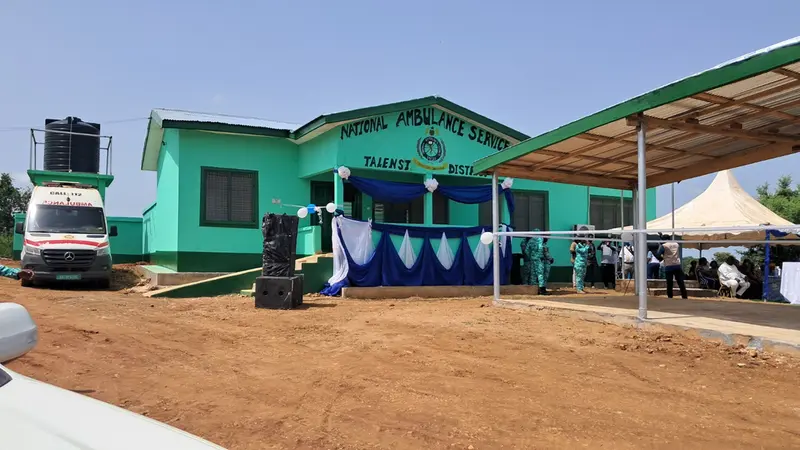
CRS, LDS hand over 6 renovated NAS facilities to strengthen emergency response
Why are six ambulance stations in northern Ghana getting a major upgrade? The answer could save lives.
1d ago•3 min read