Kantanka Succession Dispute: Legal Counsel Clarifies Kristo Asafo Mission Leadership Position

Image: GhanaFront Editorial
The Unfolding Succession Debate at the Accra High Court
The reading of the last will and testament of the late Apostle Dr Kwadwo Safo Kantanka at the Accra High Court has ignited significant public interest and intense speculation regarding the future leadership of his vast legacy. As the visionary behind both the sprawling Kantanka Empire and the deeply influential Kristo Asafo Mission, the late founder's final written directives were highly anticipated by congregants and the general public alike. However, the formal judicial reading of the document has not immediately settled the pressing questions of succession; instead, it has brought to the forefront a complex intersection between personal testamentary wishes and formal institutional governance.
Following the proceedings at the Accra High Court, widespread claims began circulating in the public domain. The central narrative among many observers and commentators was that the judicial reading had definitively confirmed Israel Kwadwo Safo Akofena as the singular successor to the entirety of the Kantanka legacy -- encompassing both the commercial enterprise and the religious mission. These assertions suggested a seamless transfer of total authority based solely on the contents of the will. Yet, the reality of the legal and constitutional framework governing the Kristo Asafo Mission presents a markedly different and far more nuanced picture, fundamentally challenging the popular narrative that has taken root in the aftermath of the court session.
Legal Clarifications on Church Leadership and the Will
In a bid to correct the emerging public narrative, private legal practitioner Kwame Akufo addressed the media directly following the high-profile reading of the will. His intervention was aimed at providing much-needed legal clarity and separating the emotional expectations of the public from the strict legal realities established by the late founder's documents. According to the legal counsel, a fundamental misunderstanding has clouded the public's reception of the proceedings at the Accra High Court.
Kwame Akufo categorically stated that the will, when examined strictly on its own legal merits, does not confer the ultimate leadership of the Kristo Asafo Mission upon any single individual. The legal practitioner emphasized that testamentary documents of this nature must be interpreted with precision, and in this specific instance, the document does not serve as an instrument for appointing a singular head of the religious institution. Instead of anointing a lone successor, the legal expert revealed that the will actually speaks to a broader collective.
"That the will does not confer leadership position on anybody; it speaks to a pool of people, but there's a point to be made there."
This critical distinction highlights the difference between the distribution of personal or corporate assets and the structured, constitutional governance required to lead a major religious organization. The legal counsel's breakdown of the situation indicates that relying solely on the will to determine the next head of the church is a flawed approach that ignores the institutional mechanisms put in place by the late Apostle prior to his passing.
The Timeline: Testamentary Wishes Versus Constitutional Amendments
To fully grasp the current leadership dynamics within the Kristo Asafo Mission, it is essential to understand the chronological sequence of events regarding the drafting of the will and the subsequent evolution of the church's governing documents. Kwame Akufo provided a crucial historical context that fundamentally alters the interpretation of the founder's intentions. The crux of the legal argument rests on the fact that the will read at the Accra High Court was drafted and formally signed before a series of pivotal amendments were made to the official constitution of the church.
This timeline is of paramount importance. Because the personal will predates the institutional constitutional changes, the directives within the will cannot supersede the updated legal framework of the church itself. The legal practitioner pointed out that any serious consideration of the succession issue must factor in these subsequent constitutional reforms, which represent the final and most authoritative structural decisions made by the late founder regarding his religious organization.
- The will was drafted and signed at an earlier period in the founder's life.
- Significant amendments to the Kristo Asafo Mission's constitution were enacted after the signing of the will.
- The constitutional framework at the time of the founder's death supersedes earlier testamentary implications regarding institutional leadership.
By establishing this timeline, the legal counsel effectively dismantled the argument that a static reading of an older will could dictate the current administrative reality of a dynamic, constitutionally governed religious body.
The Evolving Status of Israel Kwadwo Safo Akofena
The core of the public speculation has centered heavily on Israel Kwadwo Safo Akofena, and the legal clarifications provided a detailed account of how his position within the founder's plans evolved over time. Kwame Akufo did not deny that Akofena once held a position of supreme importance and favor. In fact, the lawyer confirmed that at the specific time the will was originally written, Akofena occupied a highly unique and deeply cherished place in the late founder's strategic vision for the future.
"At the time that the will was written, Akofena was clearly a man who sat in the bowels of the man's heart."
Building on this deep personal affection and trust, Akofena was subsequently given formal designation. He was explicitly appointed to exercise authority on behalf of the founder, essentially acting as his designated representative and presumed successor under the constitutional provisions that existed at that specific time. This historical fact is likely the root of the current public claims regarding his leadership status.
However, the legal practitioner revealed a definitive and irreversible shift in this trajectory. The very same founder who had initially elevated Akofena later took deliberate action to reverse that decision. According to the legal account, the late Apostle himself initiated a formal repeal of the specific constitutional provision that had empowered his former protégé. The result of this deliberate constitutional reform was absolute: Akofena was officially and legally removed as the designated leader of the Kristo Asafo Mission. Consequently, by the time the revered founder passed away, the institutional reality had completely transformed, and the previously designated successor no longer held that official capacity within the church's framework.
Addressing Public Misinformation and Commentary
In concluding his address to the media, private legal practitioner Kwame Akufo expressed deep concern over the prevailing public discourse surrounding the Kantanka legacy. The lawyer firmly criticized the widespread interpretations and speculative commentary that have dominated discussions since the reading of the will at the Accra High Court. For the legal counsel, the public narrative has been fundamentally flawed because it aggressively overlooks the vital constitutional developments that define the true state of the church's leadership.
The proliferation of claims crowning a singular successor based on an outdated reading of the situation is, according to the lawyer, a direct result of the public operating without the full scope of institutional facts. The deliberate constitutional repeal initiated by the late founder is the definitive action that governs the present reality, rendering earlier testamentary affections legally moot in the context of church leadership.
"It is unfortunate that people do not have the accurate information."
Ultimately, the legal clarifications provided outside the Accra High Court serve as a definitive correction to the public record. They establish that the succession of the Kristo Asafo Mission is a matter governed by the updated constitutional mandates of the church, rather than the isolated clauses of an earlier personal will, fundamentally reshaping the understanding of the late Apostle Dr Kwadwo Safo Kantanka's final institutional directives.
More from GhanaFront Editorial
Related Stories
More from Politics
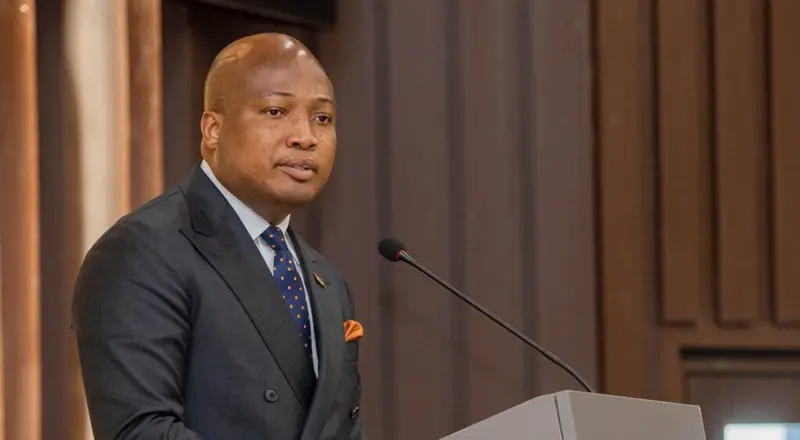
Foreign Affairs Minister warns embassies over long queues, 'inhumane' conditions for visa applicants
Minister inspects embassies and issues a warning - but which missions are on notice and what happens next?
21h ago•