Ghana's Missing Constitutional Committee Has Let PAC Recommendations Stall for Three Decades

Image: GhanaFront Editorial
Ghana's public accountability machinery faces a long-standing structural flaw -- one that a former parliamentary watchdog says has been quietly undermining financial discipline in the country since the return to constitutional rule in 1993.
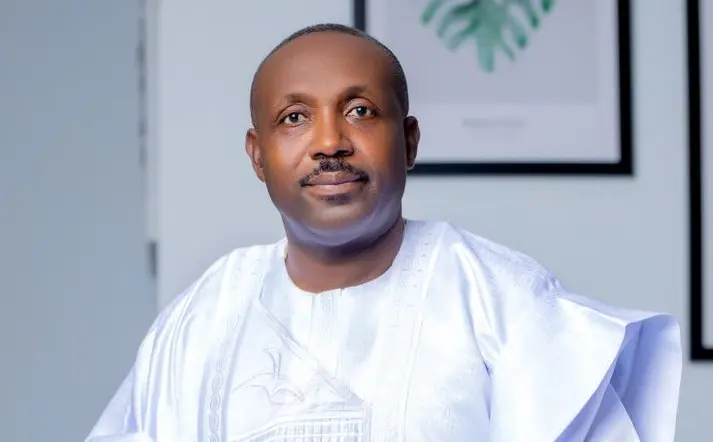
James Klutse Avedzi, former Chairman of Parliament's Public Accounts Committee (PAC), has pointed to the non-establishment of a constitutionally required Special Committee as the central reason why recommendations from the PAC rarely translate into meaningful consequences for public officials found culpable of financial misconduct.
Speaking on Joy FM's Super Morning Show on Thursday, April 2, Avedzi laid bare the institutional gap that he says allows audit findings to pile up without ever reaching the prosecution stage.
What the Constitution Demands -- And What Has Been Ignored
Under Article 187(6) of Ghana's 1992 Constitution, Parliament is required to establish a Special Committee tasked with ensuring that PAC recommendations, once adopted by the full House, are actually implemented. A key function of this committee would be to coordinate directly with the Attorney-General, compelling the nation's chief legal officer to act on referrals from the PAC.
Avedzi was unequivocal: that committee has never been formed.
"The constitution also makes a provision that, after all these, Parliament must set up a Special Committee in the interest of the public. That committee will ensure that the recommendations of the Public Accounts Committee which have been adopted by the entire House are implemented. That is what we are lacking -- that committee has never been set up. Since the inception of constitutional rule, we have never established that committee. That is where the problem is."
The revelation is significant. It means that for over three decades, a critical enforcement mechanism enshrined in the country's founding legal document has remained dormant -- not due to legal ambiguity, but simply due to institutional inaction.
The Prosecution Bottleneck
The PAC, which reviews the Auditor-General's annual reports and questions public officials over financial irregularities, does not operate in a vacuum. Its findings are presented before Parliament, debated, and when adopted, formally become resolutions of the entire House. From there, matters involving potential criminal liability are expected to be handed to the Attorney-General for prosecution.
In practice, however, that handover rarely leads anywhere. Avedzi explained that without the Special Committee to track and interrogate the Attorney-General's follow-up, the referrals simply disappear into a bureaucratic void.
"If that committee is there, it will ensure that the recommendations of the Public Accounts Committee which were adopted by the House are enforced. The Attorney-General -- you are to prosecute the people, what have you done? Go ahead and prosecute the people. Then the Attorney-General will know that after the Public Accounts Committee report has been adopted, there is another committee that calls them to question."
The logic is straightforward: accountability requires oversight at every stage. The PAC oversees public agencies; Parliament oversees the PAC's findings; but without the Special Committee, no one is formally overseeing whether the Attorney-General follows through. That final link in the chain has been missing for 33 years.
Why This Matters for Ghana's Financial Governance
Ghana's Auditor-General produces annual reports that consistently document hundreds of millions of cedis in financial irregularities -- from unretired imprests and double payments to outright procurement violations. The PAC is the primary forum where these findings are ventilated publicly, with officials summoned to explain discrepancies.
Yet despite years of high-profile PAC hearings, prosecutions of public officials for audit infractions remain rare. The absence of the Special Committee offers a structural explanation for this pattern. Without a mechanism that formally tracks what happens after PAC reports are adopted, accountability becomes episodic and performative -- confined to the drama of parliamentary hearings rather than extended into the courts.
- PAC identifies infractions through Auditor-General reports
- PAC adopts recommendations and refers cases to the Attorney-General
- Without the Special Committee, no body formally monitors prosecution follow-through
- Result: Recommendations stall; offenders face no legal consequences
Avedzi's comments come as Parliament's PAC is currently conducting sittings, drawing attention once again to the state of financial discipline in public institutions. The timing adds fresh urgency to his call for the long-delayed committee to finally be constituted.
A Call to Complete the Constitutional Framework
The former PAC chairman did not mince words about what needs to happen. His message to Parliament was clear: establish the Special Committee that the Constitution has always required, and give it the teeth to demand answers from the Attorney-General on pending prosecutions.
For governance advocates, the issue speaks to a broader challenge in Ghana's institutional landscape -- the tendency to build accountability frameworks on paper while leaving enforcement mechanisms underfunded, understaffed, or simply unestablished. The PAC itself has, at various times, been cited as one of Parliament's most effective committees. But even a functional oversight body can only achieve so much if the system downstream from it remains broken.
Establishing the Special Committee would not require new legislation. It would simply require Parliament to act on what the Constitution already mandates. Whether the current Parliament will take that step -- and whether the political will exists to create a body that would hold the Attorney-General to account -- remains to be seen.
What is clear, according to Avedzi, is the cost of continued inaction: a public financial management system where infractions are documented, debated, and ultimately forgotten -- and where those responsible for state resources face little risk of meaningful legal consequence.
More from GhanaFront Editorial
Related Stories
More from Technology
DVLA begins pilot of RFID-enabled number plates ahead of 2027 rollout
Ghana's DVLA tests high-tech plates that could change how every vehicle is tracked and verified.
1d ago•3 min read