Ghana Sets the Record Straight on Free Visa Policy for Africans: What You Need to Know
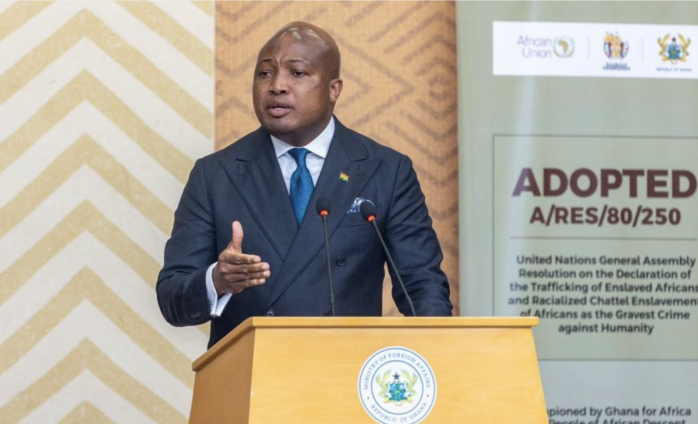
Image: GhanaFront Editorial
Ghana's Foreign Affairs Minister, Samuel Okudzeto Ablakwa, has stepped forward to set the record straight on the country's new free visa policy for African citizens -- a landmark initiative that has sparked both excitement and confusion across the continent.
Taking to social media platform X on Thursday, the Minister outlined what the policy actually means in practice, stressing that the removal of visa fees does not remove the requirement for proper vetting and application procedures.
What "Free Visa" Actually Means
At the heart of the Minister's clarification is a simple but important distinction: gratis does not mean unrestricted. While African travellers will no longer be required to pay any visa fees when applying to enter Ghana, they will still be expected to go through the same formal application process as travellers from other parts of the world.
"All applicants including Africans will have to apply for visas," Ablakwa stated, underscoring that the only change is the removal of the cost -- not the removal of the process itself.
The policy eliminates the financial barrier to entry, not the legal and security requirements. Every applicant will still be assessed and vetted before a visa is granted.
This means prospective visitors from across the continent must submit their applications through a new e-visa platform that the government is set to launch next month. Once operational, this digital portal will become the sole channel through which all visa applications into Ghana -- from any country -- must be submitted.
A Modern E-Visa System Built for Security
The free visa initiative is not a standalone gesture. According to Ablakwa, it is embedded within a broader and more ambitious digital overhaul of Ghana's immigration and border management framework.
Central to this overhaul is the electronic visa (e-visa) regime, which the government plans to roll out next month ahead of the policy's effective date. The system is designed to modernise the application experience while simultaneously hardening the country's ability to detect and turn away bad actors.
The e-visa platform will be integrated with Ghana's Advance Passenger Information and Passenger Name Record (API-PNR) infrastructure -- a system used widely by aviation authorities globally to identify potential risks before passengers even board a plane. In addition, the platform will be linked to international crime databases, enabling consular officers to conduct thorough background checks on all applicants.
"The novel e-visa system shall allow our officers to check the background of applicants and provide appropriate vetting to ensure Ghana's security is not compromised," the Minister explained in his post.
The Ministries of Foreign Affairs, Interior and Transport have together made significant financial and infrastructural investments to bring this system to life, resulting in what Ablakwa described as a "robust and technologically advanced architecture" capable of supporting both the e-visa platform and the free visa regime simultaneously.
No Automatic Entry -- Security Remains Paramount
Ablakwa was unequivocal on one point: the free visa policy does not create an open-door situation. Ghana's borders will not simply swing open for any African passport holder who turns up at an entry point.
"There shall be no automatic and unvetted entries," he stressed, making clear that national security continues to take priority even as the government moves to reduce barriers to intra-African movement.
Applicants who have criminal records or who are identified as security risks through the vetting process will be denied entry, regardless of which country they hold citizenship in. The Minister's remarks appear designed to pre-empt criticism that the policy could be exploited by individuals seeking to circumvent normal border security protocols.
Free visa does not mean a free pass. Ghana's screening systems will be in place to ensure that openness to Africa does not come at the expense of the safety and security of Ghanaians.
Why the Previous Attempt Fell Short
This is not the first time a Ghanaian administration has promised free visas for Africans. In 2024, then-President Nana Akufo-Addo made a similar announcement -- but the policy never got off the ground. According to Ablakwa, the reason was straightforward: the necessary mechanisms and security frameworks were simply not in place at the time.
"For clarity, though former President Nana Akufo-Addo announced a Free Visa for Africans policy in 2024, that could not commence because the mechanisms and security safeguards had not yet been put in place," the post read.
The current government, under President John Mahama, is positioning itself as the administration that finally delivered where its predecessor could not -- by pairing the political will to open Ghana's doors with the technical infrastructure needed to do so responsibly.
Africa Day as the Symbolic Launch Date
President Mahama originally unveiled the free visa policy as part of Ghana's growing commitment to the African Union's broader agenda of continental integration and free movement. The chosen launch date -- Africa Day, observed on May 25 -- carries clear symbolic weight, signalling that Ghana sees itself as a leader in realising the vision of a more connected Africa.
The policy emerged in part from bilateral discussions between President Mahama and Zimbabwean President Emmerson Mnangagwa during an African Union summit, reflecting the kind of high-level continental dialogue that is increasingly shaping national immigration policy across the region.
- The policy takes effect on Africa Day -- May 25, 2026
- All African citizens will be exempt from visa fees
- A new e-visa portal will be the exclusive channel for applications
- Vetting and background checks will still apply to every applicant
- Ghana's API-PNR system and international crime databases will support the screening process
- Applicants with criminal records or identified security risks will be refused entry
With the e-visa platform expected to go live before the end of the month, Ghana is preparing for what could be a significant surge in interest from African travellers eager to take advantage of the fee waiver. The success of the initiative, however, will ultimately rest on how effectively the new digital infrastructure can manage that demand without compromising the integrity of the country's border controls.
For now, the government's message to the continent is clear: Ghana welcomes Africa -- but it will do so on its own terms, with rigour, technology, and a firm commitment to security at every step of the process.
More from GhanaFront Editorial
Related Stories
More from Technology
DVLA begins pilot of RFID-enabled number plates ahead of 2027 rollout
Ghana's DVLA tests high-tech plates that could change how every vehicle is tracked and verified.
3d ago•3 min read