Ghana Moves To Split NITA Powers In Digital Governance Reset

Image: GhanaFront Editorial
Government is moving to redraw the mandate of the National Information Technology Agency as part of a wider push to strengthen Ghana’s digital governance system and sharpen accountability around public technology infrastructure.
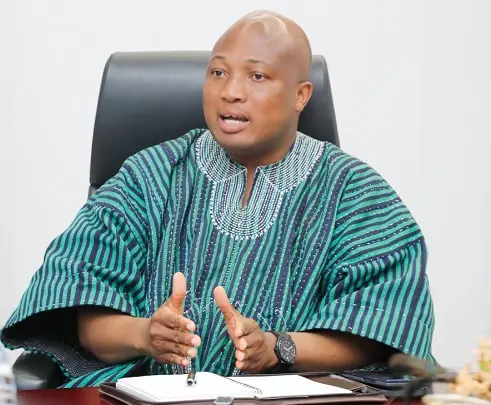
The planned changes include a new NITA Act that will separate the agency’s regulatory responsibilities from its commercial operations. The proposal was announced by the Minister for Communication, Digital Technology and Innovations, Samuel Nartey George, when Nana Yaw Amoah-Yeboah was introduced as the new Director-General of NITA on Wednesday, July 15, 2026.
The reform is aimed at ending the blurred lines that can arise when one institution is expected to regulate a sector while also handling commercial functions within that same space. For a country trying to build a stronger digital economy, the distinction matters. Regulation requires independence, clarity and trust. Commercial activity requires a different operating discipline. Government’s position is that NITA must now be structured to do both without weakening either side.
New law to separate regulation from commercial activity
According to Mr George, the proposed NITA Act will provide a stronger governance framework for the agency by clearly separating its regulatory mandate from its commercial role. The minister said the shift is intended to improve transparency, strengthen efficiency and position NITA as a more effective regulator in Ghana’s expanding digital economy.
The proposed reforms will separate NITA’s regulatory mandate from its commercial operations, creating a clearer governance structure for Ghana’s digital transformation agenda.
The announcement comes at a time when digital public services, cybersecurity needs, data systems, fintech platforms and state technology infrastructure are becoming central to how government operates. NITA’s role sits at the heart of that system. A stronger regulator will be expected to set clearer standards, protect public digital assets and support a technology environment that can serve both citizens and businesses.
Mr George also announced a new payment policy covering infrastructure managed by NITA. Under the directive, all payments relating to such infrastructure will now be made directly to the agency. The minister explained that the change is meant to protect public assets, strengthen accountability and improve the management of national digital infrastructure.
That payment directive is important because infrastructure revenue and infrastructure control often determine whether public technology systems are properly maintained. By routing payments directly to NITA, government is seeking to tighten oversight and reduce leakages around assets that are increasingly important to service delivery.
Amoah-Yeboah takes over at a pivotal moment
The reforms were announced as Nana Yaw Amoah-Yeboah formally stepped into the role of Director-General. Mr George described him as an experienced technology professional and urged him to lead with teamwork, keep an open-door management style and build on the agency’s existing achievements.
The minister’s message was direct: NITA is entering a transition period and its new leadership must help shape the institution into a stronger regulator. That means working with the board, management and staff while keeping the agency focused on the wider national vision for digital transformation.
Mr Amoah-Yeboah, in his acceptance remarks, pledged to work closely with the board, management and staff to deliver government’s vision of a secure, innovative and digitally inclusive public service. His task now includes guiding NITA through legal, operational and institutional changes that could redefine its place in Ghana’s technology landscape.
Board Chair Estelle Akofio-Sowah expressed confidence in the new Director-General’s ability to lead the agency through its next phase. She also assured him of the board’s full support as NITA prepares for the reform process.
- The planned NITA Act will split regulatory and commercial functions.
- Infrastructure-related payments will now go directly to NITA.
- The reforms are intended to improve transparency, efficiency and accountability.
- Nana Yaw Amoah-Yeboah has taken over as Director-General of the agency.
- The changes form part of Ghana’s wider digital transformation agenda.
Digital governance moves into sharper focus
The government is presenting the proposed reforms as part of a broader effort to modernise Ghana’s digital governance architecture. The aim is not only to restructure NITA, but also to create a better environment for innovation, digital public services and growth in the financial technology sector.
Ghana’s digital economy has expanded quickly in recent years, placing greater pressure on public institutions to regulate technology systems with speed and competence. State data platforms, online services, national infrastructure and private sector technology products all rely on a governance environment that is predictable and credible.
Separating NITA’s functions could help reduce institutional conflict and give the agency a cleaner regulatory identity. It also signals that government wants digital infrastructure treated as a strategic national asset, not just an administrative tool. That approach will require stronger rules, better internal systems and leadership capable of translating policy into execution.
Mr George also acknowledged the work of the outgoing Director-General, Dr Mark-Oliver Kevor, commending him for his contribution to strengthening the National Data Centre and advancing key digital government initiatives. The recognition places the new reforms within a longer institutional journey rather than a clean break from previous work.
The next test will be implementation. A proposed law can define the new structure, but NITA’s effectiveness will depend on how clearly the split is executed, how payments are managed, how staff adapt and how the agency earns trust as a regulator. For now, government has made its direction clear: Ghana’s digital transformation agenda will need a NITA that is more transparent, more focused and better equipped to regulate a fast-changing technology economy.
More from GhanaFront Editorial
Related Stories
More from Technology

One Million Coders Programme targets 100,000 digital jobs in two years - Sam George
A new government push aims to turn digital training into real jobs - but can it deliver 100,000 positions in just two years?
3d ago•