GEPA Launches Strategic Ghana Trade House in Philadelphia to Accelerate US Market Access
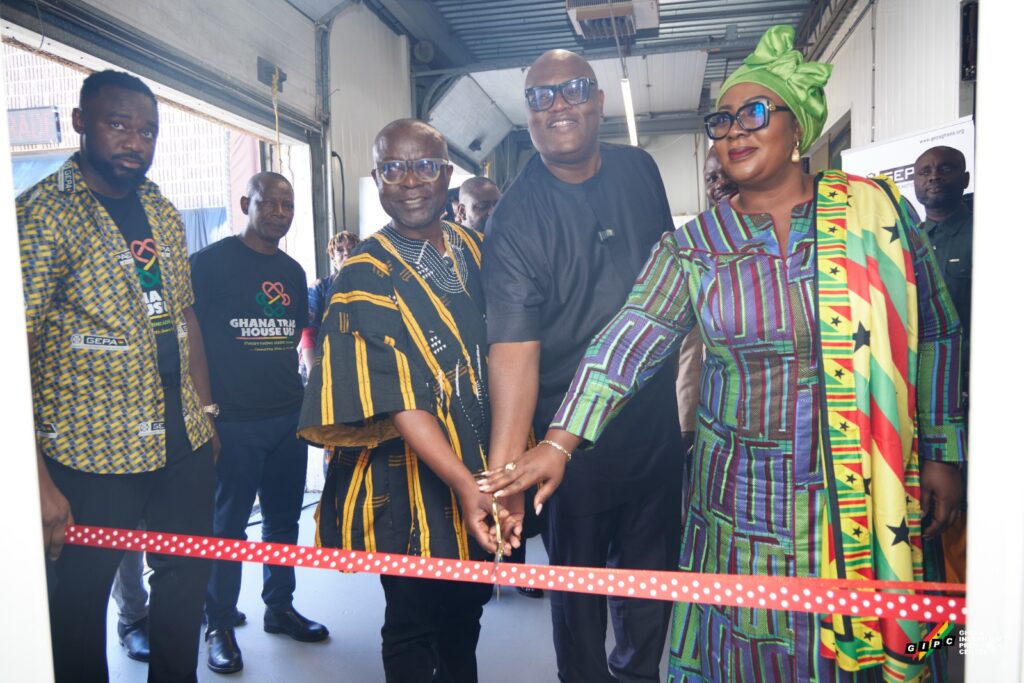
Image: GhanaFront Editorial
Ghana Deepens US Market Penetration with New Trade House in Philadelphia
In a decisive move to strengthen its commercial footprint on the global stage, the Government of Ghana, through the Ghana Export Promotion Authority (GEPA), has officially inaugurated the Ghana Trade House in Philadelphia. This landmark facility serves as Ghana’s premier dedicated commercial outpost on the United States East Coast, signaling a robust strategy to deepen bilateral trade and secure premium access to American consumer and industrial markets.
The inauguration took place on the margins of the Invest Ghana Business Forum and Exhibition in the United States. It represents a unified front by key state institutions, having been jointly organised by GEPA, the Ghana Investment Promotion Centre (GIPC), the Ghana Free Zones Authority (GFZA), and the Ghana Export and Import (EXIM) Bank. The core objective is clear: to establish a comprehensive, one-stop commercial facilitation centre for Ghanaian enterprises looking to expand into the vast American market.
Strategic Offerings and Export Targets
The Philadelphia facility is not merely a symbolic diplomatic mission; it is engineered to deliver tangible business outcomes. According to GEPA, the Trade House will offer specialized services including export matchmaking, comprehensive market intelligence, trade advisory, and direct product showcasing. Crucially, it will provide Ghanaian exporters with vital regulatory guidance on navigating the African Growth and Opportunity Act (AGOA), while facilitating access to essential trade financing through the Ghana EXIM Bank.
Beyond pure commerce, the Trade House is positioned to champion economic diplomacy. It will actively cultivate ties with the substantial Ghanaian diaspora resident in the United States, leveraging these connections to drive cross-border investment and trade. This operational focus aligns with GEPA’s ambitious target to elevate Ghana’s non-traditional exports to the US from a projected $405.6 million in 2025 to a staggering $1 billion by the close of 2026.
Maximizing the AGOA Framework and Diaspora Capital
Central to the operational strategy of the Philadelphia Trade House is its focus on the African Growth and Opportunity Act. For years, Ghanaian businesses have faced steep learning curves in navigating the rigorous compliance and standards required to access the US market duty-free under AGOA. The Trade House will serve as a permanent advisory center, demystifying United States Customs and Border Protection regulations for Ghanaian manufacturers. This proactive regulatory guidance is anticipated to significantly reduce trade barriers for local exporters.
Equally critical is the strategic mobilization of the Ghanaian diaspora. Historically viewed primarily as a source of remittance revenue, the diaspora is now being actively courted as a network of primary investors, trade facilitators, and brand ambassadors. The Philadelphia facility is designed to be a collaborative space where diaspora-owned businesses in the US can form joint ventures with indigenous enterprises back home. By strengthening these relationships, Ghana aims to create a self-sustaining ecosystem of bilateral commerce.
Surging US-Ghana Bilateral Trade
The establishment of the Philadelphia Trade House comes at a time when commercial relations between Accra and Washington are experiencing unprecedented growth. Recent data from the United States Trade Representative (USTR) and the US Census Bureau indicate that total bilateral goods trade between the two nations reached an estimated $2.5 billion in 2025.
The trade dynamic is increasingly robust. United States exports to Ghana rose by 32.6 percent to reach $1.3 billion, while US imports from Ghana stood firmly at $1.2 billion. This upward trajectory has accelerated into 2026. In March 2026 alone, bilateral goods trade surged by more than 96 percent year-on-year, underscoring that the structural conditions for deeper economic integration are firmly in place.
Ghana’s export portfolio to the US continues to be anchored by strong agricultural performance. In March 2026, cocoa beans and cocoa paste emerged as leading exports, valued at $52.8 million and $40.9 million respectively. Furthermore, Ghana retains its position as the world’s leading exporter of yams, with the United States serving as its largest consumer market. However, the overarching vision of the Trade House is to catalyze a structural transition from these primary commodities towards processed and semi-processed goods.
A Track Record of Global Expansion
The Philadelphia outpost is the newest addition to Ghana’s expanding network of overseas commercial platforms. It follows the successful launch of a similar facility in London in March 2026, and the pioneering Trade House established in Kenya in 2023. Together, these hubs form a strategic network designed to amplify Ghana’s commercial visibility across major regional and international markets.
Speaking at the inauguration ceremony, the Chief Executive Officer of GEPA, Mr. Francis Kojo Kwarteng Arthur, emphasized the strategic significance of the new establishment.
"Today, we formally establish our flagship Export Trade House here in Philadelphia, and as Ghana remains one of Africa’s most compelling destinations for doing business and investment, we are here to make entering global markets as smooth and achievable as possible," stated Mr. Kwarteng Arthur.
The GEPA CEO also highlighted the Authority’s recent string of high-impact trade promotion victories. In February 2026, GEPA led a delegation of Ghanaian horticultural producers to the Fruit Logistica exhibition in Berlin, Germany, securing purchase orders exceeding $350 million. Subsequent trade missions further proved the viability of Ghanaian products; a mission to Macfrut in Italy generated over $150 million in orders, while participation in the Salon International de l'Alimentation (SIAL) in Canada brought in an additional $100 million.
Institutional Synergy for Economic Growth
The successful launch of the Philadelphia Trade House is a testament to the collaborative approach being adopted by Ghana's state institutions. The event drew senior government and business figures, including GIPC CEO Simon Madjie, GFZA CEO Dr. Mary Awusi, and GoldBod Jewellery CEO Gertude Emefa Donkor.
Mr. Simon Madjie described the new Trade House as a vital national economic asset that will unlock fresh business opportunities and reinforce Ghana’s reputation as Africa's most competitive trade hub.
"When investors can see the quality of Ghanaian goods, understand the depth of local enterprise, and identify areas for partnership, they are more likely to move from curiosity to commitment," Mr. Madjie noted during the Invest Ghana Business Forum.
He reaffirmed the GIPC’s dedication to collaborating with GEPA, diplomatic missions, the private sector, and diaspora networks to transform this heightened trade visibility into concrete foreign direct investment.
Echoing these sentiments, Dr. Mary Awusi, CEO of the GFZA, articulated that the Trade House is perfectly aligned with the Authority's broader mandate. She stressed that the facility will play a critical role in driving export-led economic growth, bolstering investor confidence, and seamlessly integrating Ghanaian enterprises into global value chains.
With the physical infrastructure now in place in Philadelphia, the focus shifts to execution. By providing a structured pathway for market entry and leveraging inter-agency cooperation, the Government of Ghana is making a clear statement: the nation is open for premium international business, and local enterprises now have the dedicated support required to thrive on the global stage.
More from GhanaFront Editorial
Related Stories
More from Business & Economy
Access Bank, Visa launch 'Visa Accept' in Ghana
Could this smartphone-based payment solution finally bring Ghana's smallest traders into the digital economy?
18h ago•2 min read