FABAG Petitions President Mahama to Halt Costly Import Verification Scheme

Image: GhanaFront Editorial
Private Sector Sounds Alarm on New Trade Policy
The Food and Beverages Association of Ghana (FABAG) has issued a direct petition to President John Dramani Mahama, urgently demanding the immediate suspension of the newly introduced Ghana Easy Pass Programme. The policy, spearheaded by the Ghana Standards Authority (GSA), mandates a pre-export conformity verification regime for all imported products destined for the Ghanaian market.
According to the prominent business association, the introduction of this mandatory verification scheme represents an unnecessary layer of bureaucratic red tape that threatens to derail economic recovery efforts. FABAG argues that the policy will invariably trigger a sharp increase in the cost of conducting business across the country, a heavy financial burden that will ultimately fall on the shoulders of the ordinary Ghanaian consumer.
The policy requires that goods destined for Ghana undergo strict conformity checks and certification in their country of origin before they are shipped. While the stated goal is to prevent substandard goods from entering the local market, industry players view the mechanism as a deeply flawed approach that penalizes legitimate importers instead of directly targeting the porous borders and smuggling rings responsible for the influx of illicit products.
Duplication of Institutional Mandates at the Ports
In a strongly worded official statement released on Monday, July 6, the association condemned the GSA's sudden regulatory move, characterizing it as a redundant policy that duplicates the existing regulatory frameworks already managed by various well-funded state institutions. FABAG systematically questioned the rationale behind establishing another layer of compliance when the country already possesses mandated bodies designed and equipped to ensure product safety and quality assurance.
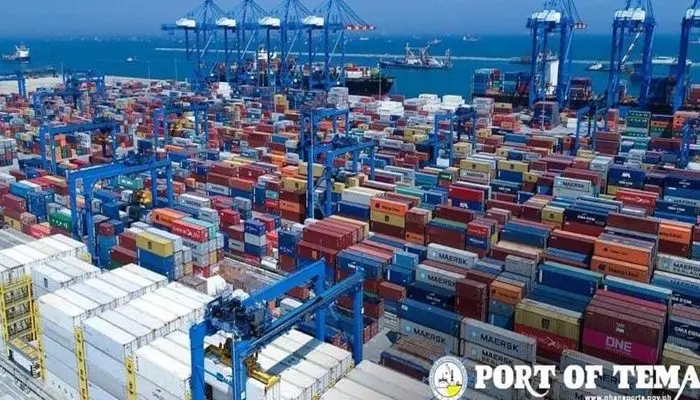
The association pointed out that multiple state agencies positioned at the primary ports of entry -- specifically the Tema and Takoradi harbours -- are already tasked with the rigorous inspection and testing of imported merchandise. These entities include the Food and Drugs Authority (FDA), the Ghana Revenue Authority (GRA) Customs Division, the Ghana Ports and Harbours Authority (GPHA), alongside the GSA itself.
For decades, importers have navigated a complex web of clearances from these very agencies. Adding an offshore clearance requirement, according to FABAG, implies a fundamental failure of these domestic institutions to execute their core mandates.
"If there are operational challenges within these institutions, they should be strengthened, not bypassed through the introduction of another costly programme," the association stated emphatically.
The Hidden Tax on Importers and Consumers
Business leaders across the commercial hubs of Accra and Kumasi view the Ghana Easy Pass Programme not as a genuine quality control measure, but as an indirect revenue-generation tool designed to extract more capital from private enterprise. FABAG did not mince words in its assessment, describing the policy as a hidden tax imposed on an already overburdened private sector.
Under the new pre-export conformity regime, importers will be forced to shoulder several additional financial and operational burdens before their consignments even leave the shores of the exporting countries in Asia, Europe, or the Americas. These stringent requirements include:
- Steep additional certification fees payable to foreign third-party verification agencies.
- Extra administrative and logistical expenses tied to organizing pre-shipment inspections.
- Significant delays in shipment schedules, disrupting tightly managed local supply chains.
- Elevated overall compliance costs that tie up essential working capital.
FABAG warned that these mounting offshore costs will inevitably be passed on to the local retail market. In an environment where purchasing power is already constrained, driving up the retail prices of essential food items, beverages, and industrial raw materials could trigger severe socioeconomic repercussions.
Harsh Economic Realities and Government Contradictions
The timing of the policy implementation has drawn severe, widespread criticism from diverse industry stakeholders. Ghanaian enterprises are currently navigating a highly volatile and turbulent economic climate, grappling continuously with the lingering negative effects of recent fiscal and regulatory overhauls. Businesses are actively fighting to stay afloat amid a barrage of economic headwinds.
Key among these challenges are rising utility tariffs that have escalated operational overheads, punishingly high commercial interest rates that stifle business expansion, and relentless exchange rate volatility that makes long-term procurement planning nearly impossible. Compounding these issues are soaring local transport costs and the generally prohibitive cost of borrowing in the domestic financial market.
The association highlighted a stark, glaring contradiction between the government's frequently stated economic objectives and the harsh realities of this new trade policy. While the current administration consistently champions the need to rapidly improve the ease of doing business and aggressively attract foreign direct investment, the reality on the ground -- marked by increasing regulatory friction -- tells a vastly different story.
"Government cannot genuinely speak about improving the ease of doing business while simultaneously introducing measures that make doing business more expensive," FABAG noted in its petition.
The business community had, in fact, previously rejected similar pre-shipment and conformity verification programmes following extensive stakeholder consultations in years past. FABAG expressed profound surprise and deep disappointment that the government would attempt to quietly resurrect a heavily contested policy framework without adequately addressing the fundamental structural concerns raised by the private sector during previous engagements.
A Direct Appeal to the Presidency for Immediate Action
With the operational implementation of the Ghana Easy Pass Programme looming dangerously close, FABAG has opted to bypass standard ministerial and agency-level channels, taking its urgent grievances directly to the highest office of the land. The association respectfully but firmly urged President Mahama to intervene decisively, leverage his executive authority, and halt the rollout of the controversial scheme immediately.
The coalition of business leaders explicitly reminded the President of his administration's repeated, public assurances to the private sector -- promises centered on building a business-friendly, competitive environment designed to stimulate local industrial production, attract sustainable cross-border investment, and create critical employment opportunities for the growing youth demographic.
The GSA's new directive, they argued passionately, sends the exact opposite message to both resilient local entrepreneurs and cautious international investors monitoring the Ghanaian market landscape. It signals an environment where regulatory unpredictability reigns supreme and where the cost of compliance constantly threatens to erode razor-thin profit margins.
FABAG concluded its comprehensive statement with a powerful, unifying clarion call directed at the entire private sector ecosystem. The association urged all chambers of commerce, domestic manufacturers, wholesale distributors, retail associations, and allied trade bodies to stand firmly together against the unilateral policy implementation. They are demanding that the state apparatus finally listen to the legitimate, evidence-based grievances of the business community.
"Our economy does not need more bureaucracy. Our businesses do not need more costs. Our consumers do not need higher prices," the statement concluded, capturing the frustration of thousands of enterprise owners. "Ghana needs forward-looking policies that encourage enterprise, not regressive policies that actively punish it. This is becoming too much!"
More from GhanaFront Editorial
Related Stories
More from Business & Economy
Duraplast assures customers of October 5 resumption after fire
A major Accra manufacturer faces an unexpected setback - but what does its recovery plan reveal?
2d ago•3 min read