Big Push Procurement Row: Deputy Roads Minister Pushes Back on Sole Sourcing Claims

Image: GhanaFront Editorial
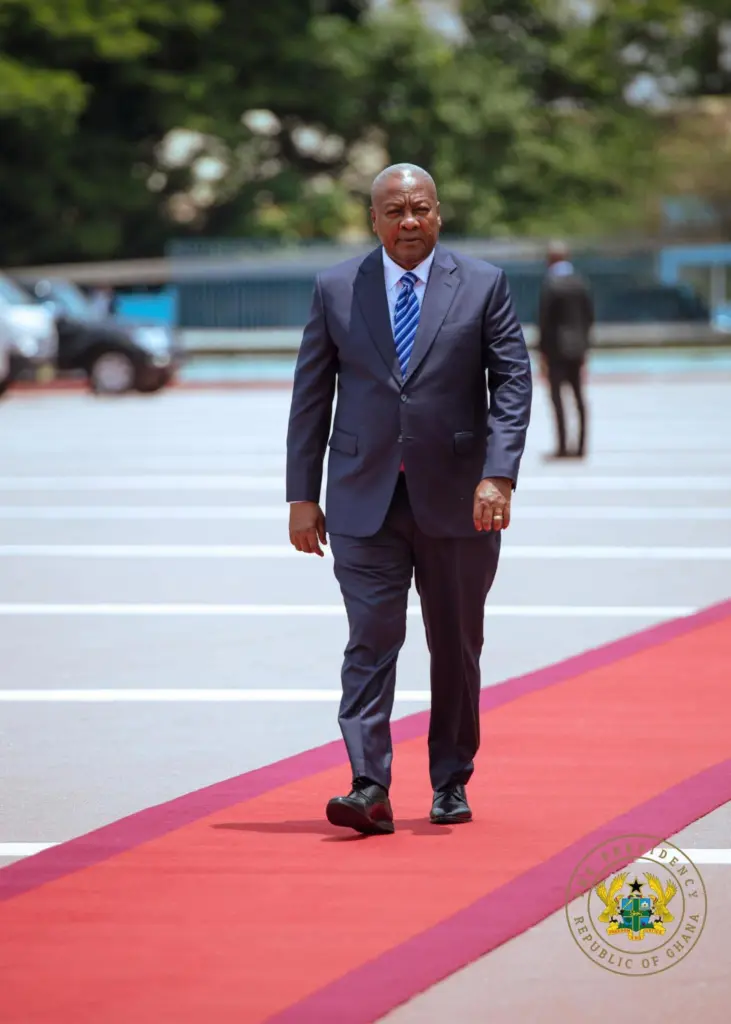
The Deputy Minister for Roads and Highways, Alhassan Suhuyini, has pushed back strongly against mounting allegations that the government's flagship Big Push infrastructure programme has been plagued by widespread sole sourcing, insisting that a considerable number of projects were competitively procured through transparent processes.
Mr. Suhuyini made these remarks during an appearance on JoyNews' Newsfile on Saturday, 28 March 2026, where he faced probing questions over procurement practices under the ambitious infrastructure initiative. The programme, which represents one of the current administration's most high-profile capital investment drives, has come under intense scrutiny after investigative reporting raised serious concerns about contracting irregularities.
The Deputy Minister's Defence
Speaking with evident frustration at what he described as an inaccurate characterisation of procurement under the Big Push, Mr. Suhuyini was direct in his rebuttal.
"Not all works are procured through sole sourcing, and the evidence is there," he asserted, urging critics to look beyond partisan talking points and engage with the facts on record.
He maintained that while sole sourcing had been used in select instances -- a procurement method that, under Ghana's Public Procurement Act, is permissible under defined circumstances -- the blanket claim that all or most Big Push contracts were awarded without competitive bidding was simply untrue.
"Secondly, under this Big Push, not all of them were procured under sole sourcing. In fact, by our estimate, they -- the NPP -- can disagree with it," he said, drawing a clear line between disputed figures offered by opposition critics and the government's internal assessment.
Mr. Suhuyini's comments signal a deliberate effort by the Roads and Highways Ministry to manage the narrative around the programme as public and parliamentary scrutiny intensifies.
What Is the Big Push Programme?
The Big Push is a large-scale infrastructure intervention aimed at addressing Ghana's persistent deficit in roads, bridges, and related public works. The programme targets both urban and rural communities, with a stated goal of stimulating economic activity and improving connectivity across the country.
Since its announcement, the initiative has generated significant attention -- both for its scale and for the questions it has raised about how contracts under it are being managed. At the heart of the controversy is whether the speed with which contracts have been awarded has come at the cost of procurement integrity.
The Fourth Estate Report
The controversy was significantly amplified by an investigative report published by The Fourth Estate, a fact-checking and accountability journalism project under the Media Foundation for West Africa (MFWA). The report made a series of pointed claims about procurement conduct under the Big Push.
According to the findings, at least 81 contracts valued at over GH¢73 billion were awarded through sole sourcing within a seven-month window. The report also alleged instances of cost inflation, raising questions about value for money and adherence to public financial management standards.
The Fourth Estate's investigation drew on procurement records and contract data, lending it a degree of documentary credibility that has made the government's task of dismissing it outright more difficult. Civil society organisations and opposition lawmakers have seized on the findings to demand greater accountability.
Roads Minister Disputes the Numbers
The Minister for Roads and Highways, Governs Kwame Agbodza, has previously addressed the controversy with his own set of figures. In prior public statements, he contested the framing of the Fourth Estate's data, arguing that the percentage of sole-sourced contracts had been overstated.
Minister Agbodza indicated that only 44% of major contracts under the Big Push were sole-sourced -- a figure that, while still substantial, is significantly lower than what critics have claimed. He has argued that in a number of cases, sole sourcing was applied within the bounds of the law, particularly for contracts that required specialised capabilities or where open tendering was not deemed practicable within the required timeframe.
Critics, however, have questioned whether the circumstances cited by the ministry genuinely met the legal threshold for sole sourcing under the Public Procurement Act, 2003 (Act 663) as amended, and whether adequate justification was documented in each case.
Procurement Law and the Sole Sourcing Question
Ghana's public procurement framework does permit sole sourcing -- technically referred to as "single source procurement" -- but only under specific conditions. These include situations where:
- The goods or works are available from only one supplier or contractor
- An emergency exists that makes competitive tendering impractical
- Standardisation with existing systems makes competitive bidding unnecessary
- The contract value falls below a prescribed threshold
Each instance of sole sourcing is expected to be accompanied by documented justification and, in many cases, approval from the Public Procurement Authority (PPA). It is this question of documentation and approval that investigators and critics are pressing the ministry on.
If a significant portion of the GH¢73 billion in contracts cited by The Fourth Estate were awarded without proper sole sourcing justification, it would represent not just a procurement irregularity but a potential breach of public financial management obligations.
Opposition and Civil Society Response
Members of the New Patriotic Party (NPP) -- referenced obliquely in Mr. Suhuyini's remarks -- have been among the loudest voices calling for a full audit of Big Push contracts. Opposition lawmakers have tabled questions in Parliament and filed requests for documentation from the Roads and Highways Ministry, seeking a full contract register for the programme.
Civil society groups have similarly urged the PPA to conduct an independent review of all Big Push contracts above a certain threshold to verify compliance with procurement law. Some advocates have called for the Ghana Audit Service to prioritise the programme in its upcoming work plan.
The public interest in the matter is substantial. With Ghana navigating a challenging post-IMF programme fiscal environment, questions about whether billions of cedis in public funds are being spent efficiently and lawfully carry significant political and economic weight.
What Comes Next
The back-and-forth between the ministry and its critics appears unlikely to be resolved by competing statistics alone. What transparency advocates are calling for -- and what would ultimately settle the debate -- is the release of full procurement documentation: contract award notices, sole sourcing justifications, PPA approvals, and cost breakdown data for each of the contested Big Push contracts.
Mr. Suhuyini's pledge that "the evidence is there" will need to be backed by documentary disclosure if the government is to convincingly rebut the Fourth Estate's findings and restore confidence in the programme's integrity.
For now, the Big Push remains one of the most closely watched infrastructure initiatives in Ghana's recent history -- not just for what it builds, but for how it is being built, and at what cost to the public purse.
More from GhanaFront Editorial
Related Stories
More from Technology

Court grants two persons bail in alleged GH₵127m cyber theft case
What happened when millions went missing from a corporate account - and why the court's decision matters.
5h ago•4 min read
Skills Bridge Ghana Foundation trains 50 professionals in solar energy
Why is Ghana investing in solar training now, and what gap does it aim to fill?
9h ago•3 min read

Jomoro MP introduces One Million Coders programme to equip youth with digital skills
Can Jomoro's youth turn coding into real economic opportunity?
9h ago•2 min read
Ecobank Group commits US$2.6bn to women-led businesses and agribusinesses across Africa
A major pan-African bank has unveiled bold lending targets - but what will it take to make them real?
2h ago•3 min read