Bawumia at LSE: Africa Must Build AI Together or Fall Behind Alone

Image: GhanaFront Editorial
Africa stands at a crossroads. As artificial intelligence reshapes economies, industries, and global power dynamics, the continent's future in this technological revolution hinges not on any single nation's ambition, but on its collective willingness to cooperate, connect, and co-create.
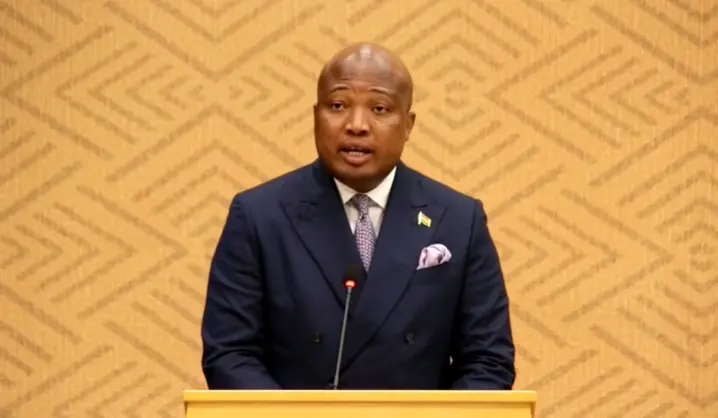
That was the central message from former Vice President Dr Mahamudu Bawumia when he addressed delegates at the London School of Economics Africa Summit 2026, making a compelling case for a continental approach to AI development that transcends national boundaries and builds a shared digital future.
A Vision Beyond Borders
Dr Bawumia, who served as Vice President under the Akufo-Addo administration and is widely regarded as one of Ghana's foremost digital economy advocates, told the summit that Africa must stop viewing artificial intelligence as a collection of imported tools handed down from Silicon Valley or Beijing. Instead, he urged African nations to treat AI as a shared continental capability -- one built here, governed here, and scaled here.
"Artificial intelligence can unite borders if Africa builds capability and then connects that capability across borders," he said, delivering what observers described as one of the summit's most forward-thinking addresses.
His message carried significant weight given his track record. During his tenure, Ghana became one of the few African nations with a comprehensive digital infrastructure strategy, pioneering initiatives in mobile money interoperability, a national identification system, and a digital address framework that has since been cited as a model across the continent.
The Danger of Isolated National Efforts
At the heart of Dr Bawumia's argument is a warning: countries that pursue AI development in isolation will find themselves outpaced and outmanoeuvred. The global AI economy rewards scale, and no single African nation -- not even the continent's largest economies -- has the market size, talent pool, or infrastructure to compete alone against the technological giants of the United States, China, and Europe.
He pointed to the fragmented nature of Africa's digital landscape as a critical vulnerability. With 54 countries operating under vastly different regulatory frameworks, data governance laws, and telecommunications standards, the continent effectively walls itself off from the network effects that have made AI transformative elsewhere.
"If we treat AI as a national and continental capability stack, we can become co-authors of the rules, the markets, and the benefits," he stated, drawing a distinction between passive consumption of AI technologies developed abroad and active participation in shaping the global AI ecosystem.
Infrastructure, Regulation, and Digital Sovereignty
Dr Bawumia outlined three pillars he believes are essential for Africa to realise its AI potential: shared digital infrastructure, harmonised regulations, and the protection of digital sovereignty.
On infrastructure, he called for the development of regional cloud systems and data centres that would reduce the continent's reliance on foreign platforms. Currently, a significant portion of Africa's data is stored on servers located in Europe, the United States, or Asia -- a reality that creates both economic and security dependencies that limit Africa's bargaining power in the digital economy.
Regional cloud infrastructure, he argued, would not only keep African data on African soil but also dramatically reduce the cost of digital services for businesses and governments across the continent. The economics of cloud computing favour consolidation, and a pan-African approach would allow countries to pool resources and achieve the critical mass needed to make such investment viable.
"Build foundations, govern trust, and then connect markets so African talent and AI solutions can scale across the continent." -- Dr Mahamudu Bawumia, LSE Africa Summit 2026
On regulation, he emphasised the urgent need for harmonised frameworks that govern cross-border data flows and digital trade. The patchwork of conflicting national laws currently creates significant friction for African technology companies trying to operate across multiple markets, giving an unintended advantage to foreign firms that are already established and can navigate regulatory complexity more easily.
The AfCFTA Connection
Dr Bawumia identified the African Continental Free Trade Area as a critical mechanism for enabling this digital integration. The AfCFTA, which entered into force in 2021 and has been gradually expanding its scope, is best known for its provisions on goods and services. However, Dr Bawumia argued that its real transformative potential may lie in the digital economy.
He called for the AfCFTA's digital trade protocols to be accelerated and deepened, creating a continental digital single market that would allow African-built AI solutions and platforms to scale across 1.4 billion people without hitting bureaucratic and regulatory walls at each border crossing.
The potential is enormous. Africa's young, digitally-native population represents one of the world's most significant untapped markets for technology products and services. A unified digital framework under AfCFTA would give African AI companies access to a consumer base that rivals those of the largest economies on earth.
Co-Authors, Not Consumers
Perhaps the most politically charged element of Dr Bawumia's address was his insistence that Africa must become a co-author of the global AI conversation -- not merely a consumer of decisions made elsewhere.
The world's major AI governance frameworks -- from the European Union's AI Act to proposed United Nations standards -- are largely being shaped by Western nations and major technology companies. Africa, despite being home to 17 percent of the global population, has had limited influence on these discussions.
Dr Bawumia argued that this is not simply a matter of fairness, but of practical consequence. AI systems trained predominantly on Western data and designed to serve Western contexts often perform poorly or produce biased outcomes when applied in African settings. Without African voices in the rooms where AI standards are set, the continent risks having technologies imposed upon it that do not reflect its realities, values, or priorities.
- African nations must develop shared AI ethics frameworks rooted in continental values and contexts
- Investment in local AI research institutions and talent pipelines is non-negotiable
- Governments must coordinate their positions at international AI governance forums
- Data collected in Africa must, where possible, be used to train AI systems that serve African needs
Ghana's Own Digital Journey
Dr Bawumia's remarks carry particular resonance in Ghana, a country that has positioned itself as West Africa's technology hub. Accra's growing startup ecosystem, the success of homegrown fintech companies like Zeepay and Hubtel, and the government's sustained investment in digital identity and payment infrastructure have earned the country a reputation as one of the continent's most digitally progressive nations.
Yet Ghana, like every other African country, faces the limits of national-scale ambition. Its market of roughly 33 million people, while significant by regional standards, is a fraction of the scale needed to build globally competitive AI companies. Cooperation with Nigeria, South Africa, Kenya, and other major economies is not merely desirable -- it is mathematically necessary for Ghanaian AI ventures to reach their potential.
A Practical Strategy, Not a Slogan
Dr Bawumia was careful to frame his vision not as an aspirational call to arms, but as a concrete strategic roadmap. "Uniting borders is not merely a slogan but a practical strategy," he said, acknowledging the long history of pan-African rhetoric that has produced more summits than outcomes.
The path he described is sequential and disciplined: first, build the foundational infrastructure and human capital; second, establish trust through sound governance and transparent regulation; third, connect markets and allow African talent and technology to scale freely across the continent.
It is a vision that echoes the ambitions of the African Union's Digital Transformation Strategy and the work of organisations like Smart Africa, which has been quietly building the plumbing of continental digital cooperation for over a decade. What Dr Bawumia adds is a sense of urgency -- the window for Africa to shape its own AI destiny is open now, but it will not remain open forever.
The Moment to Act
The LSE Africa Summit 2026 took place against a backdrop of accelerating global AI development. The past two years have seen the release of large language models capable of professional-level performance across dozens of domains, the deployment of AI systems in healthcare, agriculture, and financial services, and growing geopolitical competition between the United States and China for AI supremacy.
For Africa, each passing month of fragmentation and delayed cooperation is a month in which the continent falls further behind in a race that will define economic competitiveness for generations. The demographic dividend that has long been promised -- Africa's youth bulge translating into economic dynamism -- will only materialise if that young population has access to the tools, infrastructure, and opportunities of the AI economy.
Dr Bawumia's address at the LSE was, at its core, a reminder that Africa has the raw materials for success: the talent, the markets, the data, and increasingly the connectivity. What it needs now is the political will to build together rather than apart, to govern wisely rather than restrictively, and to claim a seat at the global AI table before the rules of the game are written without them.
The borders, he suggested, need not be obstacles. With the right frameworks, the right investments, and the right spirit of cooperation, they can become the very thing that gives Africa its competitive edge -- a vast, interconnected network of talent and markets that no single nation could build alone.
More from GhanaFront Editorial
Related Stories
More from Technology

The importance of technology and artificial intelligence in tourism
How are smart tools changing the way tourists explore Ghana? The answer may surprise you.
21h ago•4 min read