Youth unemployment remains critical issue, says Manhyia South MP
The issue of employment in Ghana has long been a subject of intense debate and policy interventions. Successive administrations have grappled with the challenge of providing meaningful economic opportunities for the country's burgeoning youth population. Promises of job creation often feature prominently in political campaigns, raising expectations among young Ghanaians eager to enter the workforce. The reality, however, has frequently fallen short, leading to frustration and disillusionment. This persistent gap between promise and delivery has fueled public discourse and prompted calls for more effective and sustainable solutions.
Ghana's demographic profile, characterized by a large youth cohort, underscores the urgency of addressing unemployment. The country has witnessed a significant increase in the number of graduates entering the job market each year, placing immense pressure on existing employment opportunities. Traditional sectors, such as agriculture, while still significant, are often unable to absorb the growing number of job seekers. The need for diversification into new industries and the development of a skilled workforce capable of meeting the demands of a rapidly changing global economy has become paramount. Furthermore, structural issues within the economy, including limited access to capital, inadequate infrastructure, and bureaucratic hurdles, continue to hinder job creation and exacerbate the unemployment problem. The situation is further complicated by the impact of global economic shocks, such as the recent COVID-19 pandemic, which have disrupted supply chains and led to job losses across various sectors.
The political landscape surrounding employment is characterized by a complex interplay of interests and priorities. The ruling party faces the challenge of fulfilling its campaign promises and demonstrating tangible progress in reducing unemployment. Opposition parties, on the other hand, often seize upon the issue to criticize the government's performance and offer alternative solutions. Key stakeholders, including labor unions, business associations, and civil society organizations, also play a crucial role in shaping the debate and advocating for policies that promote job creation and decent work. The stakes are high, as the perception of the government's ability to address unemployment can significantly impact its popularity and electoral prospects. Tensions often arise over the allocation of resources, the design of employment programs, and the transparency and fairness of recruitment processes.
Several key questions remain unanswered regarding the future of employment in Ghana. How will the government balance the need for fiscal austerity with the imperative to invest in job creation initiatives? What innovative strategies can be employed to stimulate entrepreneurship and support small and medium-sized enterprises (SMEs), which are vital engines of job growth? Will ongoing efforts to reform the education system and align curricula with the needs of the labor market yield positive results? And how can Ghana effectively leverage its natural resources and attract foreign investment to create sustainable employment opportunities for its youth? The answers to these questions will ultimately determine whether Ghana can overcome its unemployment challenge and unlock the full potential of its human capital.
Quick Summary
Manhyia South MP Nana Agyei Baffour Awuah says youth unemployment continues to plague Ghana. He notes that political promises raise hopes- but can they deliver?
Summary - read the full story for complete context.
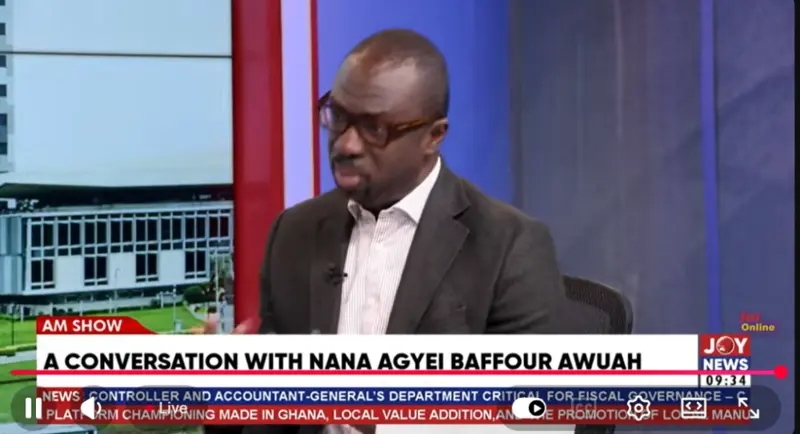
Image: MyJoyOnline
GhanaFront aggregates news from trusted sources. Click to read the original article.
Keywords
Explore related tagsMore from MyJoyOnline
Related Stories
More from Politics

EU is set to propose ban on social media and AI chatbots for under-15s
Brussels is drafting rules that would force tech giants to change how children access their platforms - but what will it mean for parents?
13h ago•3 min read