Working from home is linked to higher fertility - New study finds
Steven J. Davis and colleagues published research finding that working from home is linked to higher fertility. The research, titled 'Work from Home and Fertility', was published as a working paper by the National Bureau of Economic Research (NBER). Across 38 countries, estimated lifetime fertility is higher by 0.32 children per woman when both partners work from home at least one day per week, compared with couples where neither does. In the United States, the increase rises to 0.45 children per woman.
The sample consisted of adults aged 20 to 45. The average number of children per woman is 2.26 when neither partner works from home. If the woman works from home at least one day per week, lifetime fertility rises to 2.48 children. If both partners do so, it increases further to 2.58. If the man works from home at least one day per week, the increase is more limited at 2.36 children. The report suggests, "All three stories align with the idea that WFH jobs make it easier for parents to combine child rearing and employment."
The researchers find 'clear evidence' that fertility rates rise with WFH opportunities. Among workers aged 20-45, the share who work from home at least one day per week ranges from 21 per cent in Japan to 60 per cent in Vietnam. The United Kingdom (UK) leads Europe with 54 per cent. The report estimates that, if "interpreted causally", WFH accounts for 8.1 per cent of US fertility, equal to about 291,000 births per year as of 2024.
Quick Summary
A new study examines the link between working from home and fertility across 38 countries. The research explores how changes in work environments may influence family planning - but what does this mean for countries like Ghana?
Summary - read the full story for complete context.

Image: MyJoyOnline
GhanaFront aggregates news from trusted sources. Click to read the original article.
Keywords
Explore related tagsMore from MyJoyOnline
Related Stories
More from Health
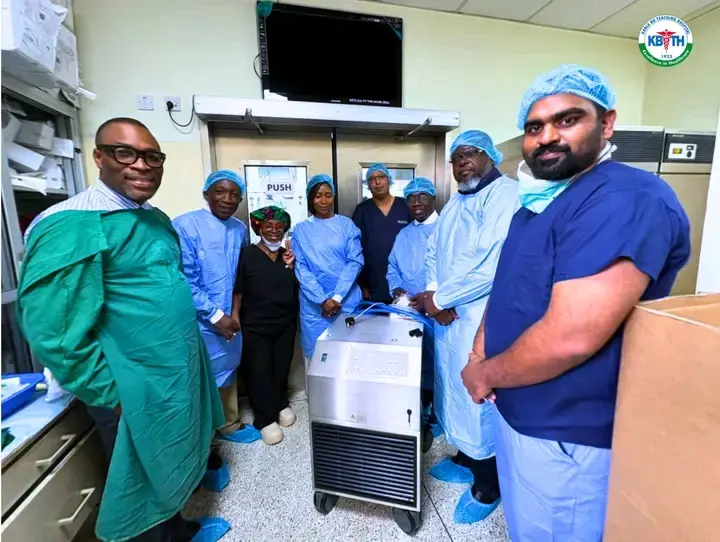
Quantum LC donates €75,000 state-of-the-art heater-cooler unit to National Cardiothoracic Centre
A major medical upgrade arrives at Ghana's heart surgery hub - but what does it mean for patients?
1d ago•