Nigeria reels from Easter attacks as church raid is foiled
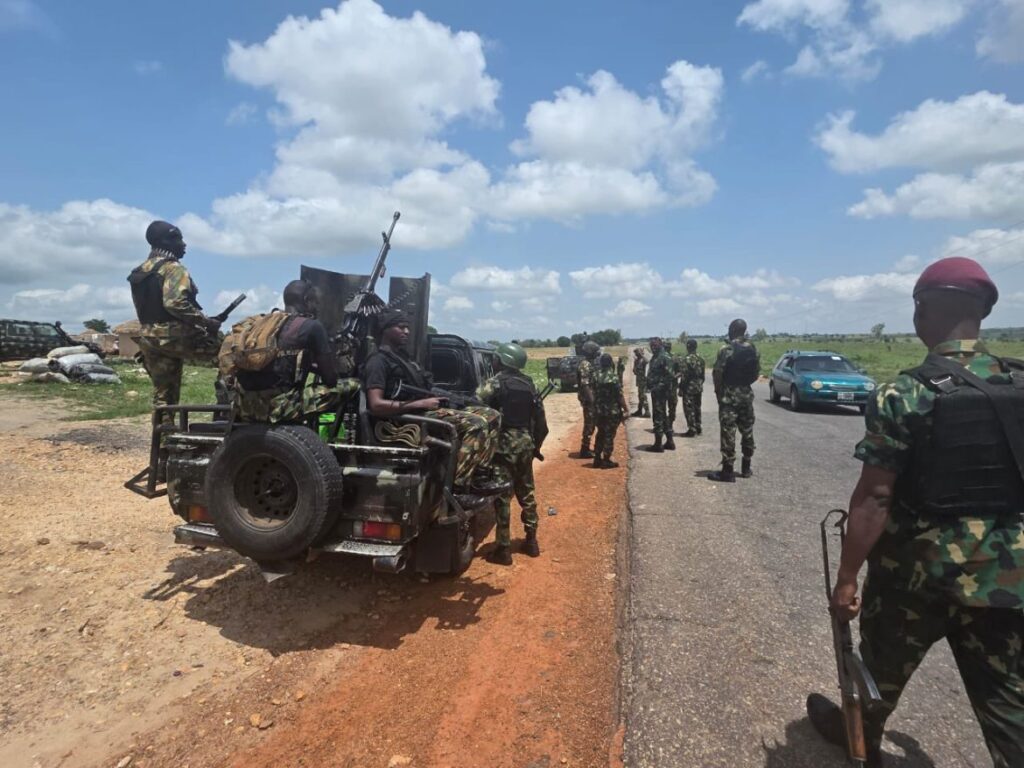
Image: GhanaFront Editorial
Nigeria is facing fresh pressure over its security response after a string of Easter weekend attacks left scores dead across several states, deepening fears over violence driven by insurgency, banditry, communal conflict and kidnappings.
Authorities and local leaders reported deadly incidents in Benue, Borno, Kaduna and Plateau, while the military also announced a major offensive in Zamfara. Taken together, the incidents have reinforced concerns that the country is battling overlapping threats that continue to hit rural communities, worship centres and security formations with alarming regularity.
Benue attack raises alarm over protection failures
One of the deadliest incidents was recorded in Mbalom in Gwer West Local Government Area of Benue State, where armed attackers stormed the farming community on Holy Saturday between 5:00 p.m. and 6:00 p.m. local time.
Timothy Adi, Chairman of Gwer LGA, said at least 17 people were killed. At least one other resident was left in critical condition. Governor Hyacinth Alia later confirmed that an attack had occurred, though local accounts provided the casualty figure.
The killings have drawn added anger because they happened despite prior warnings of a possible terrorist incursion. The failure to stop the assault after an alert had already circulated has sharpened criticism from residents who say vulnerable communities are being left exposed even when danger is anticipated.
Governor Alia described the attack as barbaric and a direct affront to the peace and security of Benue State.
Benue sits in a zone long troubled by violent disputes linked to land use and grazing, particularly between largely Muslim Fulani herders and mostly Christian farming communities. The area also faces criminal activity from armed gangs, making the security situation more difficult to contain.
For residents, the timing of the killings is especially painful. The rainy season is approaching, and many families would ordinarily be preparing their farms. That cycle has now been disrupted by fear, trauma and uncertainty over whether people can safely return to their land.
Churches, police and civilians hit in separate assaults
In Borno State, another attack unfolded in the early hours of Saturday when an Islamic State-affiliated group targeted a police headquarters at about 4:00 a.m. local time. Police spokesperson Kenneth Daso said four officers were killed after an extended gun battle.
The Borno attack is a reminder that the country’s northeast remains under intense pressure from jihadist groups despite years of military campaigns. The insurgency has continued to strain local communities and security forces, with fighters still able to mount lethal operations.
In Kaduna State, violence also reached places of worship. Gunmen attacked two churches in Ariko village in Kachia Local Government Area during Easter services on Sunday morning. According to Caleb Maaji, chairman of the Christian Association of Nigeria in the state, the targeted congregations were a Catholic church and an ECWA church.
Nigerian troops responded after receiving a distress call and engaged the attackers in what was described as a fierce firefight. The intervention led to the rescue of 31 civilians who had been abducted.
The army said five bodies were recovered at the scene, while local church leadership put the death toll at seven and said assessments were still ongoing.
Military officials said the attackers retreated under heavy fire and appeared to have suffered losses, citing blood trails along their escape routes. Security forces have since expanded operations in the area in an effort to track down those responsible.
The latest church attack fits into a troubling pattern in Kaduna, where abductions and assaults on worshippers have repeatedly unsettled local communities. In January, more than 150 worshippers were abducted from Kurmin Wali in Kajuru, underscoring how quickly mass hostage-taking can unfold in the state.
Plateau killings and wider instability deepen national concern
Outside the Easter weekend attacks, Plateau State also recorded major bloodshed. On Palm Sunday night, gunmen opened fire at a popular gathering point in Angwan Rukuba, Jos. Local reports said 14 people died at the scene, while 13 others later died in hospital.
In response, Governor Caleb Manasseh Mutfwang imposed a 48-hour curfew, saying authorities needed urgent measures to restore order and pursue those behind the shooting. The incident also disrupted academic activity, with the University of Jos postponing examinations scheduled for the start of the week because of the security situation.
The fresh violence comes just days after suicide bombings in Maiduguri killed 23 people, further highlighting the scale of insecurity in the country. No group immediately claimed responsibility for the Jos attack, but the effect on public confidence has been severe.
At the same time, the military said it killed 65 insurgents in Zamfara State during an offensive against armed gangs widely described in Nigeria as bandits. The operation followed another mass abduction earlier in the week, and police said efforts were still underway to locate missing residents.
- At least 17 residents killed in Mbalom, Benue
- Four police officers killed in Borno
- 31 hostages rescued in Kaduna after church attacks
- At least five to seven deaths reported in the Kaduna incident
- 27 deaths reported in Jos, based on local accounts
- 65 insurgents killed in a Zamfara military operation
These figures point to a security environment in which the threat is not confined to one region or one type of violence. Instead, Nigeria is confronting several crises at once, each feeding a broader atmosphere of instability.
Pressure grows on federal authorities
The scale of the attacks has renewed scrutiny of President Bola Tinubu’s administration and the wider national security architecture. Nigeria was recently ranked the fourth most terrorism-affected country in the world in the 2026 Global Terrorism Index, a finding that has strengthened criticism from opposition figures and civil society groups.
The federal government has pushed back against attempts to frame the violence strictly as persecution of Christians, arguing that victims include people of different faiths and that the deeper problem is a nationwide security breakdown involving insurgents, kidnappers and armed communal actors.
That position has not stopped international concern from growing. The United States issued a security alert on April 2 warning that terrorist attacks could occur without notice, with places of worship and holiday gatherings identified as high-risk locations. Earlier in February, US troops were deployed to Nigeria to provide training and intelligence support to local forces.
Those developments reflect the extent to which Nigeria’s internal security crisis now carries wider international attention. They also raise difficult questions about whether intelligence, early warning systems and military deployments are being converted into effective civilian protection on the ground.
For many affected communities, the central question is simple: if alerts exist and troops are deployed, why do mass-casualty attacks still keep happening?
Across the Middle Belt and the north, the humanitarian consequences continue to mount. The United Nations has identified 5.9 million Nigerians as being in urgent need of assistance due to displacement and food insecurity. Every new wave of killings compounds that burden, especially in agricultural areas where violence directly disrupts livelihoods.
Officials say they are intensifying regional cooperation and moving toward more intelligence-led operations. Whether that shift produces meaningful relief for communities living under repeated threat will be closely watched in the weeks ahead.
For now, the Easter season that should have brought prayer, family gatherings and reflection has instead left behind grief, unanswered questions and renewed doubt over the state’s ability to shield ordinary people from a crisis that keeps widening.
More from GhanaFront Editorial
Related Stories
More from Technology

The man who saw tomorrow: How Dr Bawumia built for Ghana what America and Nigeria are building today
America and Nigeria are unveiling tech Ghana already has - what did Bawumia create first?
4d ago•