AG's Move to Strip OSP of Independent Powers Raises Constitutional Red Flags, Warns Legal Scholar Bobby Banson

Image: GhanaFront Editorial
A prominent legal scholar and practising lawyer has urged Ghanaians and public commentators alike to exercise caution in their reactions to the escalating constitutional battle between the Office of the Attorney-General (AG) and the Office of the Special Prosecutor (OSP), warning that premature conclusions could deepen the institutional damage already threatening the country's anti-corruption framework.
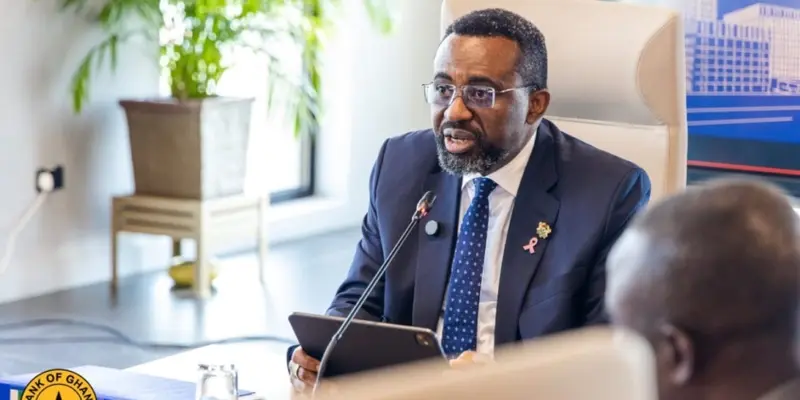
Bobby Banson, a law lecturer and lead counsel for engineering and project management firm Engineers and Planners (E&P), made the remarks during his appearance on JoyNews' Newsfile programme on Saturday, 11 April 2026. Mr Banson's intervention comes as the dispute between Ghana's two most powerful prosecutorial offices intensifies in the courts and the corridors of public opinion.
The Crux of the Constitutional Dispute
At the heart of the controversy is a constitutional writ filed before the Supreme Court of Ghana in the case of Adamtey v. Attorney General. In an affidavit submitted to the court on Wednesday, 8 April 2026, the Attorney-General -- Ghana's chief legal adviser -- took the remarkable step of aligning with the plaintiff to argue that key provisions of the Office of the Special Prosecutor Act, 2017 (Act 959) are inconsistent with the 1992 Constitution.
Specifically, the Attorney-General contends that the sections of Act 959 granting the Special Prosecutor the authority to initiate and conduct criminal proceedings without first obtaining the express authorisation of the Attorney-General run contrary to the constitutional order. The AG's position, in essence, is that no prosecutorial body operating under Ghanaian law can function independently of the constitutional office of the Attorney-General when it comes to the formal prosecution of criminal matters.
The move has sent ripples through Ghana's legal and political establishment, given that the OSP was established precisely to function with a degree of independence -- insulating anti-corruption prosecutions from political interference, including potential interference from the very office of the AG.
Banson Raises the Alarm on "Mischief"
For Mr Banson, the timing and framing of the AG's intervention demand careful scrutiny. He urged both the public and legal commentators to be deliberate in how they respond to the unfolding developments, noting that the constitutional stakes are too high for rushed judgements.
"We should be mindful of the mischief in this. There are constitutional implications here that require us to tread carefully. The public discourse around this matter must not become a vehicle for undermining institutions that took considerable effort to build."
The reference to "mischief" is legally significant. In statutory interpretation, the mischief rule -- one of the foundational tools used by courts -- directs judges to consider what "mischief" or defect in existing law the legislation sought to remedy. By invoking the concept, Mr Banson appeared to be suggesting that any legal or political move that strips the OSP of its independent prosecutorial powers runs counter to the very purpose that Parliament had in mind when it enacted Act 959.
Why the OSP Was Created -- and Why Independence Matters
The Office of the Special Prosecutor was established in 2018 under Act 959, fulfilling a key campaign promise of the then-Akufo-Addo administration. The mandate of the office was clear -- investigate and prosecute corruption-related offences involving public officials, public institutions, and their associates, with an independence that would theoretically shelter the process from political manipulation.
The critical design feature of the OSP was precisely its operational autonomy from the AG's office. In many jurisdictions across Africa and beyond, anti-corruption efforts have been hamstrung by the subordination of prosecutorial decisions to political principals. Ghana's Parliament, in crafting Act 959, sought to build in structural safeguards against that outcome.
- The Special Prosecutor has the power to receive and investigate complaints relating to corruption
- The office can initiate criminal proceedings without waiting for a referral from the AG
- The OSP operates its own budget, staff, and investigative apparatus
- The office reports to Parliament, not to the executive through the AG
It is precisely these independence provisions that the current constitutional challenge seeks to dismantle -- or at the very least, bring under the supervisory authority of the AG.
The Broader Constitutional Question
Article 88 of Ghana's 1992 Constitution vests in the Attorney-General the power and authority to initiate and conduct all prosecutions for criminal offences in Ghana. It is this provision that forms the backbone of the AG's current argument -- that Act 959's grant of independent prosecutorial power to the Special Prosecutor is ultra vires the Constitution.
Legal scholars have long debated whether Parliament has the authority to create parallel prosecutorial bodies with independent powers. Those who support the AG's position argue that the Constitution's grant of prosecutorial authority to the AG is exclusive and cannot be delegated away by an Act of Parliament. Opponents, including defenders of the OSP's independence, counter that the Constitution does not prohibit Parliament from creating specialised prosecutorial offices with defined mandates -- particularly where doing so advances the constitutional goals of accountability and rule of law.
The Supreme Court's eventual ruling on the matter will carry profound implications -- not just for the OSP, but for Ghana's entire approach to institutional design in the fight against corruption.
Political Undertones Draw Scrutiny
The decision by the Attorney-General -- a political appointee of President John Mahama -- to join hands with the plaintiff in seeking to curtail the OSP's independence has not gone unnoticed by political observers. Critics have questioned whether the move is driven purely by constitutional principle or by political considerations, particularly given that the OSP has, at various times, pursued cases touching on figures connected to different political administrations.
Mr Banson, while careful not to ascribe motives to the AG's office, was nonetheless pointed in his warning that the institutional consequences of weakening the OSP must be weighed seriously.
Ghana has consistently ranked among the better-performing West African nations on anti-corruption indices, in no small part due to the existence of institutions like the OSP and the Commission on Human Rights and Administrative Justice (CHRAJ). Any significant rollback of prosecutorial independence at the OSP could send damaging signals to both domestic citizens and international partners -- including investors and development finance institutions -- about the direction of governance in the country.
What Happens Next
The case of Adamtey v. Attorney General is now squarely before the Supreme Court, which alone has jurisdiction to determine questions of constitutional interpretation of this nature. Legal experts anticipate that the case could take several months to be fully argued and decided, given its complexity and the number of constitutional provisions at play.
In the interim, the OSP continues to operate under its existing mandate, though the cloud of the pending legal challenge inevitably casts uncertainty over its institutional standing. There are also questions about whether the outcome of the Supreme Court's deliberations could affect ongoing prosecutions initiated by the OSP under the provisions now being challenged.
Several civil society organisations and legal advocacy groups are expected to apply to file amicus curiae briefs in the matter, reflecting the broad public interest implications of the case. The Ghana Bar Association has also been called upon by commentators to weigh in on the constitutional questions at stake.
A Defining Moment for Ghana's Anti-Corruption Architecture
For Bobby Banson and many in Ghana's legal community, the Adamtey v. Attorney General case represents a defining moment for the country's anti-corruption institutions. Whatever one's views on the constitutional merits of the AG's position, there is broad consensus that the outcome will shape the landscape of accountability and prosecutorial independence in Ghana for years to come.
Mr Banson's call for measured discourse is timely. In a political environment where institutions can quickly become instruments of partisan contestation, preserving the integrity of the debate -- and of the courts themselves -- is not merely good legal practice. It is an act of democratic responsibility.
As the Supreme Court prepares to examine one of the most consequential constitutional questions of the current era, Ghanaians from all walks of life will be watching -- and waiting -- for clarity on what kind of anti-corruption architecture their country truly intends to build.
More from GhanaFront Editorial
Related Stories
More from Technology

Beyond word of mouth: Bizella's bid to build trust in Ghana's services market
Can a mobile app replace word-of-mouth for finding reliable plumbers and electricians in Accra?
1d ago•4 min read