Accra's Korle Drains Choked With Refuse Spark Fears of Flooding and Disease Outbreaks
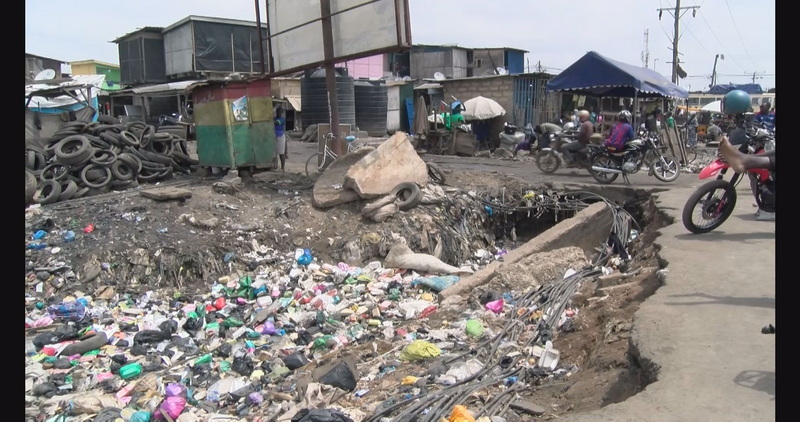
Image: GhanaFront Editorial
The Korle drain network, a vital component of Accra's flood management and ecological system, is currently submerged under mounting heaps of garbage. This severe sanitation breakdown has triggered widespread panic among traders and residents in the capital, who fear an imminent disaster if the impending rains arrive before the waterways are thoroughly cleared. The situation highlights a persistent struggle with waste management in densely populated urban centers across Ghana, where infrastructural deficits often clash with rapid population growth and unregulated commercial activities.
Local business operators and inhabitants of the area have largely attributed the mounting filth to the reckless disposal of waste by commercial tricycle riders, commonly known as "aboboyaa," as well as "kayayei" (head porters) and residents of the nearby Old Fadama settlement. The daily influx of refuse has severely choked significant portions of the drainage architecture, effectively transforming a crucial water management asset into a hazardous, stagnant landfill. These drains were originally engineered to channel excess rainwater safely away from human settlements and into the sea, but the accumulation of solid waste has completely compromised their structural integrity and intended function.
Near Tragedies and Mounting Health Concerns
The consequences of this environmental neglect are already manifesting in highly dangerous ways for those who live and work near the encroaching filth. Adjei Mensah, a 70-year-old commercial driver and an executive member of the Agbogbloshie Lorry Station, recently shared a harrowing personal experience that underscores the gravity of the situation. During a recent heavy downpour, the blocked drains caused water levels to rise rapidly and unpredictably, trapping Mensah in severe floodwaters that swept through the lorry park.
"The drains are heavily choked, and if nothing is done, lives and property will continue to be at risk whenever it rains," Mensah warned.
He emphasized that he only survived the terrifying ordeal due to the timely intervention of courageous bystanders who rushed to his rescue as the waters threatened to overpower him. His testimony resonates deeply with other traders operating within the bustling Agbogbloshie market vicinity, a major economic hub that is repeatedly paralyzed by preventable flooding. Vendors dealing in second-hand metal sinks and other hardware have pointed out that the stagnant, polluted water created by the dumped refuse serves as a major breeding ground for mosquitoes and harmful bacteria. They directly link the unsanitary conditions, heavily blamed on the unregulated activities of "aboboyaa" operators who dump waste under the cover of darkness, to a noticeable spike in local cases of malaria, cholera, and typhoid fever. The health of the community remains constantly under threat as long as the filth remains untouched and allowed to fester in the tropical heat.
The Root of the Problem: Container Shortages and Public Apathy
While fingers are being pointed at specific groups for the rampant dumping, a deeper examination of the locality reveals systemic shortfalls contributing heavily to the ongoing crisis. Several residents have openly admitted that the primary driver of this illegal dumping is the glaring absence of adequate public waste disposal containers provided by municipal authorities. Faced with limited logistical options for waste management, and unable to afford the fees charged by private waste collection companies, many households and informal businesses feel compelled to utilize the Korle drains as an impromptu dumping site. The logic, however flawed, is that the eventual rains will simply wash the problem away -- a misconception that continues to cost the city dearly.
The social dynamics surrounding this environmental degradation are equally troubling and highlight a breakdown in community self-regulation. Residents who actively try to police their neighborhoods and caution offenders against throwing rubbish into the drains report facing intense hostility and physical threats. When confronted, perpetrators often dismiss these warnings with defiant questions, asking those attempting to intervene whether they hold personal ownership of the drainage system. This blatant disregard for civic responsibility and public infrastructure makes community-led sanitation efforts nearly impossible to sustain without official law enforcement backing.
AMA Responds with Clean-Up Plans and Stern Sanctions
Faced with mounting public pressure, negative media coverage, and the looming threat of catastrophic urban flooding, city authorities are finally taking visible steps to address the crisis. Paul Nii Oblie Laryea, the Policy Advisor to the Mayor of Accra, has publicly acknowledged the severe conditions plaguing the Korle drains. According to Laryea, the Accra Metropolitan Assembly (AMA) is highly aware of the threat posed by the clogged waterways and is actively rolling out emergency interventions.
Currently, the AMA is engaged in a broader city-wide clean-up exercise focused on removing accumulated refuse from the main streets and commercial districts. Laryea disclosed that definitive plans are already underway to heavily mobilize equipment to thoroughly desilt the Korle drains. This intensive dredging operation is viewed as a crucial step required to restore the free and natural flow of water before the absolute peak of the rainy season hits the capital.
Recognizing the logistical challenges driving the indiscriminate dumping, the local government has also initiated the distribution of new, large-capacity refuse containers across strategic parts of Old Fadama and the Agbogbloshie enclave. This move is specifically designed to improve regular waste collection capacity and provide local residents and traders with viable, legal alternatives to polluting the watercourses.
- AMA says it is clearing refuse from major streets and commercial areas.
- Equipment will be mobilized to desilt the Korle drains before heavier rains.
- New refuse containers are being placed around Old Fadama and Agbogbloshie.
- Residents who dump waste into drains face arrest and prosecution.
Furthermore, Laryea issued a strong directive to all residents, traditional leaders, and commercial operators within the affected areas, urging them to utilize the newly provided containers responsibly. He did not mince words regarding the consequences of continued non-compliance, issuing a stern warning that the Assembly will no longer tolerate environmental sabotage. Anyone caught dumping refuse into the drains or other vital watercourses will face strict legal sanctions, including immediate arrest and prosecution.
The battle to save Accra's drainage systems from total collapse requires a multi-faceted and highly collaborative approach. The municipal authorities continue to stress that while the Assembly remains committed to infrastructural maintenance and waste collection, genuine, long-lasting progress relies heavily on the public's willingness to embrace proper sanitation practices. Safeguarding public health, protecting property investments, and preventing annual flood disasters must evolve from being a mere talking point into a shared national priority, backed by both action and accountability.
More from GhanaFront Editorial
Related Stories
More from Politics

Mahama charges new ambassadors to prioritise trade, investment and welfare of Ghanaians abroad
New envoys get a clear mandate - but what specific targets must they hit to succeed?
5h ago•