A Plus Says He Personally Funded Road Repairs in Gomoa Central, Defends Easter Carnival as Economic Strategy

Image: GhanaFront Editorial
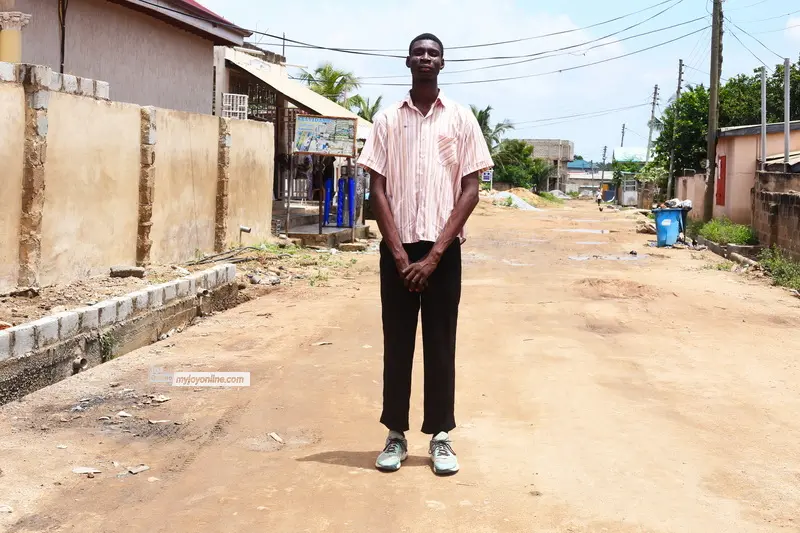
Gomoa Central Member of Parliament Kwame Asare Obeng, widely known as A Plus, has come out swinging against critics who accused him of channelling constituency resources into entertainment while roads in the area remain in poor condition. The legislator insists he has not only been mindful of infrastructure needs but has gone as far as personally financing portions of highway repair work -- a step he argues no one was asking MPs to take.
MP Defends Himself Against Road Neglect Claims
The criticism reached a crescendo during the Gomoa Easter Carnival held from 2nd to 5th April 2026 at Gomoa Ekwamkrom, when some residents publicly questioned why their representative was organising large-scale festivities while interior roads in the constituency continued to deteriorate. For a constituency that stretches across parts of the Central Region with communities linked by worn tarmac and unpaved stretches, the grievance resonated with many.
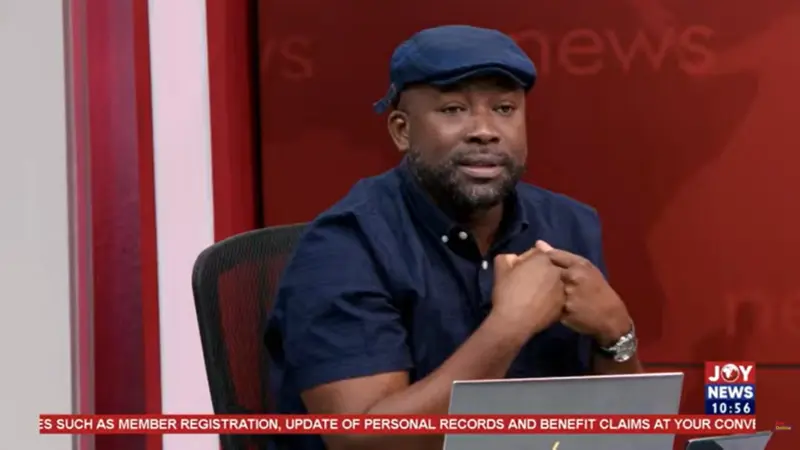
But A Plus, speaking on Joy FM's Showbiz A-Z programme with host Kwame Dadzie, was unequivocal in his rebuttal. He acknowledged the roads situation but pushed back firmly on the narrative that he had done nothing about it.
"There are some monies that the highway authority will need. I know that if we wait for government it will take forever. And so I have supported them to be able to do this. It's a huge sum but I want to get the roads done. So I had to support government. Any time they get the money, they pay back."
The MP clarified that road construction falls outside the formal mandate of a Member of Parliament, whose Common Fund allocations are generally directed toward social infrastructure such as schools, clinics and boreholes. Yet rather than use that constitutional grey area as a shield, A Plus said he opted to intervene financially, effectively giving the Ghana Highway Authority an interest-free advance to accelerate road work in Gomoa Central.
The Carnival Critics vs. The Economic Case
The timing of the controversy was not lost on observers. The Gomoa Easter Carnival, now in what organisers describe as a structured, multi-year rollout, was always going to attract scrutiny in a country where constituents measure their MP's worth largely by the visible condition of roads and school blocks. Holding a four-day music and culture extravaganza -- headlined by some of Ghana's biggest musical acts -- while roads crumble nearby was always a flashpoint waiting to happen.
A Plus, however, reframed the event not as a distraction from development but as a tool for it. His argument follows a logic increasingly embraced by development economists and local government practitioners: that events-driven tourism creates immediate, tangible economic activity that supplements slower-moving infrastructure investment.
According to him, the carnival was a deliberate effort to put Gomoa Central on the national and international map -- to make the constituency a destination rather than just a corridor that people pass through on the way to Takoradi or Cape Coast.
An Artist Lineup That Put Gomoa on the Map
By any measure, the Gomoa Easter Carnival drew a remarkable roster of Ghanaian talent. The four-day programme brought together artists spanning multiple genres and generations, among them:
- Sarkodie, Shatta Wale and Kuami Eugene -- three of Ghana's most commercially successful acts
- Veteran highlife icons including Samini, Kwabena Kwabena, Ofori Amponsah, KK Fosu and Dada Hafco
- Gospel stalwarts Obaapa Christy and Piesie Esther
- Contemporary acts including Amerado, Nero X, Sefa, Keche and Sista Afia
- Fan favourites Patapaa, Tinny, Kofi Kinaata, Kwaw Kese and Bisa Kdei
Beyond the music, the programme included bonfire and barbecue sessions, art exhibitions, painting displays, a fashion show, masquerade performances and a grand durbar of chiefs complete with traditional drumming and dancing. The blend of contemporary entertainment and cultural heritage was deliberate -- positioning Gomoa Ekwamkrom as a space where Ghana's modern creative economy and its ancestral traditions coexist.
The event was organised in partnership with Multimedia Group Limited under a three-year media agreement, ensuring television, radio and digital coverage across the group's extensive platform network. HotWav phones signed on as a primary sponsor, giving the event both financial muscle and branding visibility.
Taking On Kwahu -- A Bold Tourism Gambit
For decades, the Kwahu Easter festival in the Eastern Region has stood as Ghana's signature domestic holiday destination. Thousands of Ghanaians from the diaspora and across the country converge on the Kwahu plateau each Easter for paragliding, concerts and a general carnival of social activity. Replicating or rivalling that draw is no small ambition.
Yet that is precisely what the Gomoa Easter Carnival is positioning itself to do -- not by competing directly, but by offering an alternative. Organisers have framed the event as a distinct experience built on the cultural identity of the Gomoa people and the natural assets of the Central Region coastline, rather than the highland spectacle that defines Kwahu.
If the goal is diversification, it aligns well with the Ghana Tourism Authority's stated agenda of spreading tourism revenue beyond the handful of hotspots that have historically absorbed the bulk of domestic and international travel spending. Festivals and events in underrepresented regions create supply chains -- for transport operators, food vendors, hoteliers, tailors and artisans -- in communities that rarely benefit from tourism money.
Free Zones, Waterfalls and a Long-Term Vision
The carnival, however, is only one piece of what A Plus describes as a broader constituency development strategy. Among the initiatives he is actively pursuing is a free zone development licence for Gomoa Central -- a move that, if successful, would create a legal framework to attract foreign and domestic investors into light manufacturing, logistics or agro-processing ventures within the constituency.
Free zone designations have historically been concentrated in Accra and Tema. Extending that framework to a Central Region constituency would represent a meaningful decentralisation of industrial incentives -- and the kind of structural economic shift that road repairs alone cannot deliver.
Additionally, A Plus has announced plans to develop a waterfall attraction within the constituency by next year. While details remain sparse, the concept fits a growing pattern of community-led ecotourism investments across Ghana, where natural features that were once overlooked are being developed into revenue-generating sites with guided tours, accommodation facilities and ancillary services.
"I want to get the roads done," the MP said, stressing that his financial support for the highway authority is a bridge measure while government funding follows its bureaucratic course. The implication is clear: the festival and the infrastructure are not competing priorities but parallel tracks in the same development push.
A Broader Conversation About What MPs Owe Their Constituents
The debate in Gomoa Central reflects a wider conversation playing out in constituencies across Ghana about the role of the MP as economic actor versus service deliverer. The Common Fund, Ghana's primary mechanism for channelling parliamentary resources to constituencies, is structured to fund social infrastructure -- not tourism events, not industrial zoning applications, not advances to highway authorities.
When MPs venture outside that framework -- using personal resources, constituency-level partnerships or private investment relationships -- they expose themselves to exactly the kind of criticism A Plus has faced: the optics of spending on spectacle while basics remain unaddressed.
But the counter-argument, which A Plus is clearly making, is that the traditional model of MP-as-contractor-for-public-works is increasingly inadequate for constituencies that need economic transformation, not just boreholes and classroom blocks. In that framing, a well-executed Easter carnival that puts Gomoa Ekwamkrom on the national tourism circuit may deliver more long-term value than another section of rehabilitated road -- even if the road is what constituents are shouting about today.
Whether voters in Gomoa Central accept that argument will ultimately be decided at the ballot box. For now, A Plus has made his position plain: he has put his own money on the line for roads, he has delivered a landmark cultural event, and he has a plan for the years ahead. The constituency, and the country, will be watching to see which of those commitments bears fruit first.
More from GhanaFront Editorial
Related Stories
More from Technology
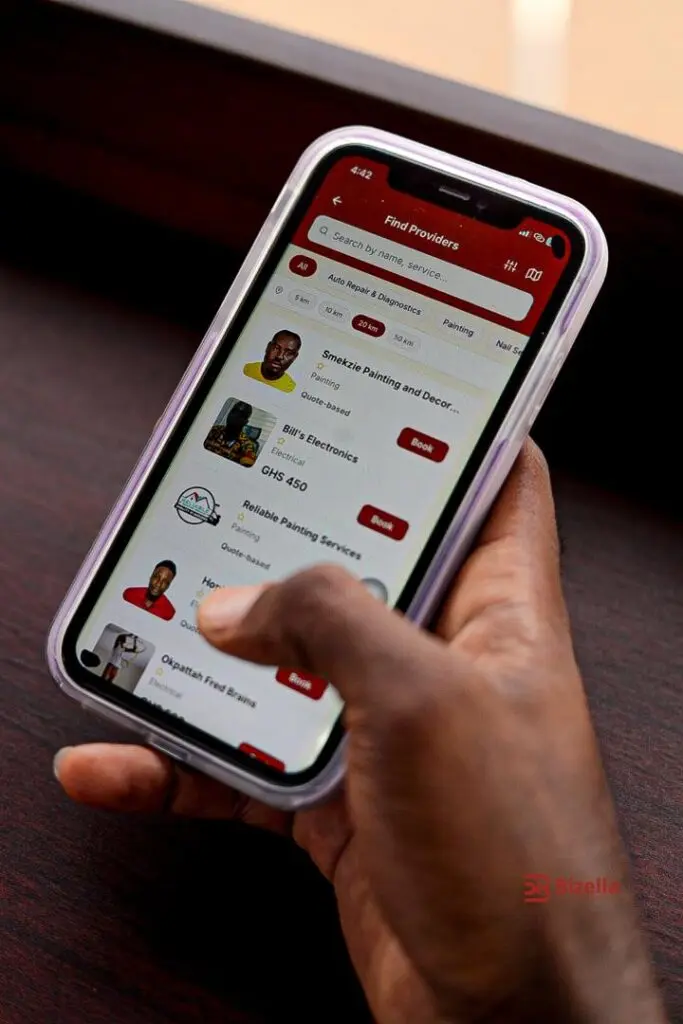
Beyond word of mouth: Bizella's bid to build trust in Ghana's services market
Can a mobile app replace word-of-mouth for finding reliable plumbers and electricians in Accra?
1d ago•4 min read