24-hour economy policy misdiagnoses employment issues-Baffour Awuah
Nana Agyei Baffour Awuah, a prominent figure in Ghanaian politics, has recently voiced his perspective on the government's approach to stimulating economic growth and tackling unemployment. As the Member of Parliament for Manhyia South and holding a key position within the Subsidiary Legislative Committee of Parliament, his views carry significant weight within the political landscape. His commentary arrives at a time when the government is actively pursuing new strategies aimed at boosting the economy and creating employment opportunities for the nation's youth.
Ghana's economic landscape is characterized by a complex interplay of factors, including a large informal sector, reliance on commodity exports, and a persistent challenge of youth unemployment. Successive governments have grappled with these issues, implementing various policies aimed at diversification, industrialization, and job creation. The current administration has placed particular emphasis on initiatives such as the "24-hour economy" concept, designed to encourage businesses to operate around the clock, thereby increasing productivity and employment. This policy is rooted in the belief that maximizing the utilization of existing resources and infrastructure can unlock significant economic potential. However, the effectiveness and practicality of such initiatives are often subject to intense debate, with critics questioning their feasibility and long-term sustainability. The private sector's role in driving economic growth is also a recurring theme in Ghanaian economic discourse, with many arguing that government intervention should primarily focus on creating an enabling environment for businesses to thrive and generate employment.
The debate surrounding economic policy in Ghana often involves various stakeholders, including government officials, opposition parties, business leaders, and civil society organizations. Each group brings its own perspectives and priorities to the table, leading to robust discussions about the most effective strategies for achieving sustainable economic development. Tensions can arise between those who advocate for greater government intervention and those who favor a more market-oriented approach. The stakes are high, as the success or failure of economic policies can have a profound impact on the lives of ordinary Ghanaians. The current administration is under pressure to deliver on its promises of job creation and economic prosperity, while the opposition seeks to hold the government accountable for its performance. The business community is keen to see policies that will foster investment, innovation, and competitiveness. The outcome of these debates will shape the future direction of Ghana's economy and determine the country's ability to address its pressing development challenges.
Several key questions remain unanswered as the debate over Ghana's economic direction unfolds. Will the government's current policies, including the "24-hour economy" initiative, achieve their intended goals of creating jobs and boosting economic growth? How will the government balance the need for public sector employment with the importance of fostering private sector development? What measures will be taken to ensure that economic opportunities are distributed fairly and that cronyism does not undermine the growth of genuine businesses? How will the government address the structural challenges that contribute to youth unemployment and prevent many Ghanaians from accessing decent work? The answers to these questions will be crucial in determining whether Ghana can achieve its aspirations of becoming a prosperous and inclusive society. The perspectives of key figures like Nana Agyei Baffour Awuah will undoubtedly continue to shape the national conversation as these issues are debated and addressed.
Quick Summary
Manhyia South MP Nana Agyei Baffour Awuah has critiqued the government's 24-hour economy plan. He suggests the approach misdiagnoses the core issues hindering job creation and economic advancement- but what are the real problems?
Summary - read the full story for complete context.
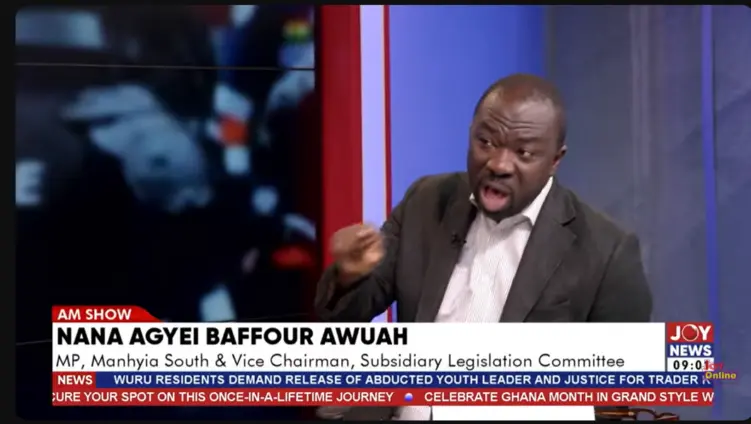
Image: MyJoyOnline
GhanaFront aggregates news from trusted sources. Click to read the original article.
Keywords
Explore related tagsMore from MyJoyOnline
Related Stories
More from Business & Economy

Development expert outlines blueprint to operationalise Ghana's 24-hour economy
Can a new blueprint unlock job creation and transform Ghana's economy amid a youth joblessness crisis?
2d ago•