World Bank urges gov't to urgently to tackle looming youth employment crisis
The global economic landscape is constantly shifting, placing immense pressure on developing nations like Ghana to adapt and prepare their citizens for the future of work. International financial institutions frequently engage with local stakeholders to assess challenges and offer guidance. These interactions often involve high-level discussions with government officials, academics, and, importantly, the youth who will inherit the consequences of today's decisions. The focus is often on identifying critical areas where strategic interventions can unlock potential and foster sustainable growth. These discussions are particularly crucial in sectors like education and job creation, where long-term planning is essential to avoid potential crises.
Ghana's demographic profile presents both an opportunity and a challenge. The nation boasts a youthful population, a potential engine for economic growth and innovation. However, this demographic dividend can only be realized if young people are equipped with the skills and knowledge demanded by the modern workforce. Historically, Ghana has faced challenges in aligning its education system with the needs of the job market, leading to a skills gap that hinders economic progress. This gap is further exacerbated by rapid technological advancements and globalization, which are reshaping industries and creating new demands for specialized skills. The government has implemented various initiatives aimed at addressing these challenges, including reforms in the education sector and programs designed to promote entrepreneurship and vocational training. However, the effectiveness and scalability of these initiatives remain a subject of ongoing debate. The situation is further complicated by the informal sector, which employs a significant portion of the workforce and often lacks the structures and resources to provide adequate training and development opportunities.
Several key players are deeply invested in Ghana's economic future. The government, of course, is at the forefront, tasked with formulating and implementing policies that promote job creation and economic growth. Educational institutions play a vital role in preparing young people for the workforce, but they often face constraints in terms of resources, infrastructure, and curriculum development. International organizations, like the World Bank, provide financial and technical assistance, but their involvement can sometimes be met with skepticism, particularly regarding the conditions attached to loans and the potential impact on national sovereignty. The private sector is also a crucial stakeholder, as it is the primary driver of job creation. However, businesses often struggle to find qualified candidates, highlighting the persistent skills gap. Tensions can arise between these stakeholders due to differing priorities and approaches. For instance, the government may prioritize short-term job creation initiatives to address immediate political concerns, while international organizations may advocate for long-term structural reforms that require significant investment and may not yield immediate results.
Several open questions remain regarding Ghana's ability to effectively address the looming youth employment crisis. How can the government ensure that its education system is truly aligned with the needs of the job market? What innovative strategies can be employed to bridge the skills gap and equip young people with the competencies required for success in a rapidly evolving global economy? How can the informal sector be integrated into the formal economy and provided with the resources and support needed to create more sustainable and meaningful employment opportunities? What role can technology play in transforming education and creating new pathways to employment for young people? And, perhaps most importantly, how can all stakeholders work together in a coordinated and collaborative manner to ensure that Ghana's youth are empowered to contribute to the nation's economic prosperity?
Quick Summary
The World Bank is engaging with Ghana and other developing countries about youth employment. They are concerned about the skills gap as more young people enter the workforce - and the potential impact.
Summary - read the full story for complete context.
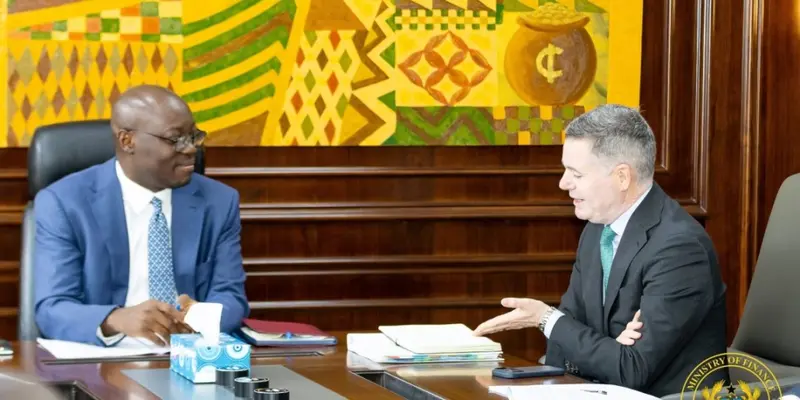
Image: MyJoyOnline
GhanaFront aggregates news from trusted sources. Click to read the original article.
Keywords
Explore related tagsMore from MyJoyOnline
Related Stories
More from Business & Economy

Development expert outlines blueprint to operationalise Ghana's 24-hour economy
Can a new blueprint unlock job creation and transform Ghana's economy amid a youth joblessness crisis?
2d ago•