Teacher Shortages Threaten Learning Gains In One-Fifth Of Ghana Districts
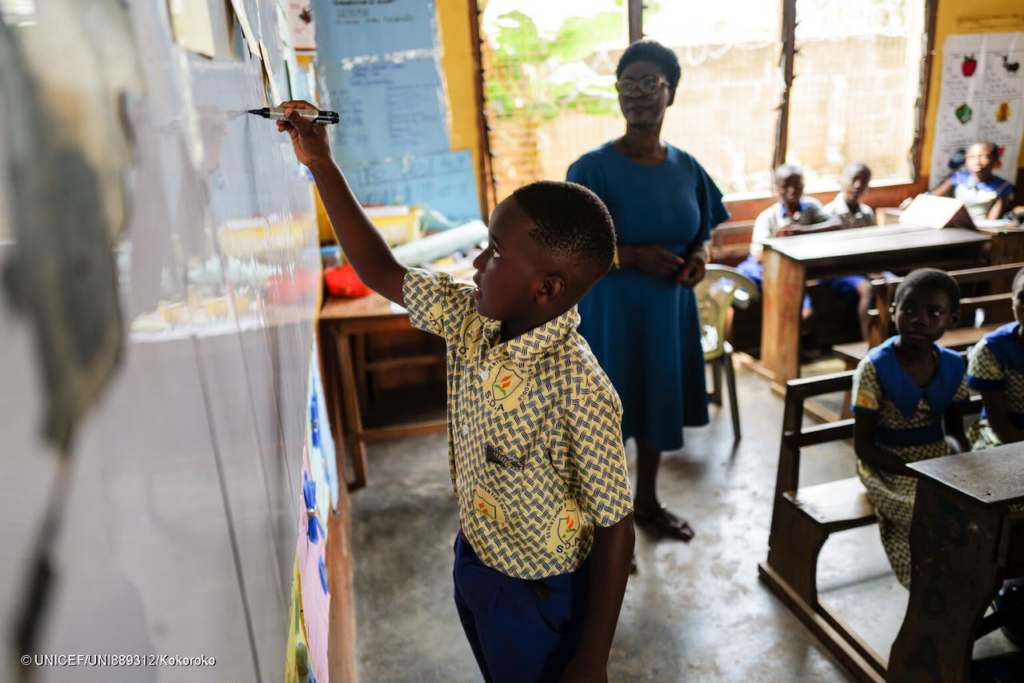
Image: GhanaFront Editorial
Ghana's push to get almost every child into basic school is running into a hard classroom reality: too many pupils still do not have enough teachers where they need them most.
A new Teachers for All Ghana Report, launched by the Ministry of Education with support from UNICEF, the UK Foreign, Commonwealth and Development Office and other partners, has put fresh evidence behind a problem long felt in many communities. The country has expanded access to basic education, but teacher deployment remains sharply uneven across districts and regions.
The report says Ghana recorded gross enrolment of 99.6% at primary level and 98.4% at junior high school level in the 2022/23 academic year. Those figures point to major progress in getting children into classrooms. The concern is what happens after they arrive.
About one in five districts now faces severe teacher shortages, with average primary school pupil-teacher ratios above the Ministry of Education's target of 35 pupils to one teacher.
The finding matters because access without adequate teaching support can leave children present in school but behind in learning. Results from the 2024 National Standardised Test show the scale of the challenge. According to the report, 45.27% of learners performed below basic proficiency in Mathematics, while 50.33% fell below basic proficiency in English.
Rural And Northern Schools Carry The Heaviest Burden
The report identifies unequal teacher deployment as a key pressure point in Ghana's basic education system. Shortages are especially severe in rural communities, where schools often struggle not only to attract teachers but also to retain them over time.
The problem is more visible in the northern parts of the country, where pupil-teacher ratios are well above the national target. The North-East Region recorded a ratio of 48 pupils to one teacher, Savannah Region recorded 41 to one, and Northern Region recorded 39 to one. In practical terms, that means teachers in many classrooms are managing far more pupils than the system considers acceptable.
Overcrowded classrooms limit individual attention, slow down lesson delivery and make it harder for teachers to identify pupils who are falling behind. The impact is felt most strongly in foundational literacy and numeracy, where early gaps can follow children through the rest of their schooling.
The report also draws attention to the gender dimension of teacher deployment. Rural postings can be particularly difficult for women teachers because of concerns over safety and security, transport challenges, and inadequate hygiene and sanitation facilities. These barriers affect where women teachers are willing or able to serve, which in turn affects the balance of the teaching workforce in underserved communities.
Report Calls For Smarter Deployment And Stronger Incentives
The Teachers for All Ghana Report is not only a diagnosis. It also lays out reforms aimed at making teacher deployment more targeted, fair and responsive to real classroom needs.
At the centre of its recommendations is a stronger evidence-based deployment system. That means using detailed data to identify the districts and schools with the most urgent staffing gaps, rather than relying on broad allocations that may miss local realities.
- Use school-level and district-level data to guide teacher postings.
- Prioritise underserved and difficult-to-staff communities in deployment decisions.
- Improve incentives for teachers who accept postings in areas with severe shortages.
- Support women teachers through safer working conditions, family-friendly policies and leadership opportunities.
- Strengthen action against discrimination and gender-based violence within the education system.
The incentives question is central. Rural and underserved schools often face structural challenges beyond the classroom, including poor transport links and limited facilities. Without practical support, posting teachers to such communities may not translate into long-term retention.
The report also argues for a more equitable teaching workforce. Increasing the number of women teachers in underserved areas can support girls' education, provide role models and strengthen confidence among parents and pupils. But that cannot happen if postings expose women teachers to avoidable risks or poor living and working conditions.
Teacher Spending Must Translate Into Learning
The report makes a direct link between teacher deployment and value for money in public education spending. It notes that about 84% of the Ministry of Education's 2026 budget has been allocated to teacher compensation. That level of spending makes deployment efficiency more than an administrative issue. It is a national investment question.
If teachers are concentrated in some areas while other districts remain understaffed, the country risks paying for a workforce that is not being used where the need is greatest. Better deployment would help reduce class sizes, improve daily teaching contact and strengthen outcomes for children who are currently most exposed to shortages.
The report's message is clear: Ghana has made strong progress on enrolment, but the next test is whether children can receive quality instruction once they enter school. Near-universal access is a major achievement, yet it will not deliver its full promise unless classrooms are staffed fairly across the country.
For rural families, the issue is not abstract policy. It is the difference between a child sitting in an overcrowded classroom and a child receiving the attention needed to read, write and build confidence in Mathematics. For government, it is a reminder that education reform must move beyond counting pupils in school to ensuring that every school has the teachers required to make learning real.
More from GhanaFront Editorial
Related Stories
More from Education
Ghana cannot industrialize without skilled workforce - TVET Director-General
A top official makes a bold case for TVET's role in Ghana's future - but what specific reforms are on the table?
2d ago•