Okyenhene Declares Total Ban on Home Burials Across Akyem Abuakwa Traditional Area

Image: GhanaFront Editorial
Okyenhene Declares Total Ban on Home Burials Across Akyem Abuakwa Traditional Area
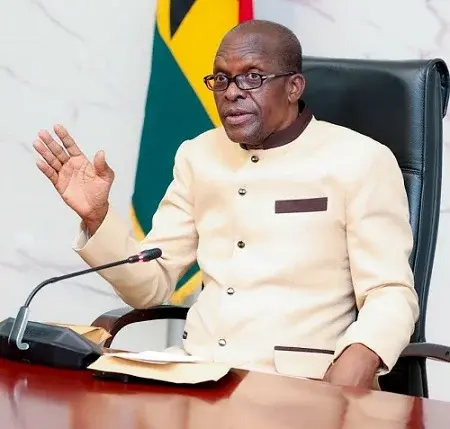
The Okyenhene, Osagyefo Amoatia Ofori Panin, has issued a sweeping directive prohibiting the burial of deceased persons in private homes and residential compounds throughout the Akyem Abuakwa Traditional Area, citing grave public health risks and violations of both national law and longstanding cultural traditions.
The declaration, made during the first quarter State Council Meeting of the Akyem Abuakwa people in Kyebi, represents one of the most forceful interventions by a traditional authority on a practice that has persisted in many parts of Ghana despite existing legal prohibitions.
A Practice at Odds With Law and Tradition
Osagyefo Amoatia Ofori Panin made it clear that home burials are not merely culturally inappropriate within Akyem Abuakwa -- they are flatly illegal under Ghanaian law. He pointed to two key pieces of legislation that govern the matter: the Public Health Act of 2012 (Act 851) and the Mortuary and Funeral Facilities Act of 1998 (Act 563).
Both laws require that burials take place only at officially designated sites and only after the requisite permits have been obtained. Even private mortuaries and burial grounds must secure prior authorization before any interment can proceed.
"The laws require you to take a permit for the burial of deceased at designated places," the Okyenhene stated. "Failure to comply with the laws comes with consequences."
He directed all Metropolitan, Municipal and District Chief Executives (MMDCEs) within the traditional area to enforce these statutes rigorously and without exception. The message was unambiguous: the era of overlooking home burials is over.
The Public Health Case Against Home Burials
Beyond the legal arguments, the Okyenhene painted a troubling picture of the environmental and health consequences that flow from burying the dead in residential compounds. His concerns centre on groundwater contamination -- a risk that becomes especially acute as more households across the region turn to boreholes for their water supply.
When human remains decompose in the soil near homes, the resulting leachate can seep into underground water sources. For families drawing water from wells and boreholes just metres away from burial sites, the contamination risk is not theoretical. It is a ticking public health crisis.
"These dead bodies buried in the house compound will eventually produce serious contamination and end up in the wells," the Okyenhene warned. "Can you imagine the health implications?"
The warning resonated with particular force given the broader water crisis facing the Akyem Abuakwa area, where clean water access is already under severe strain from other environmental pressures.
Birim River Crisis Deepens the Urgency
The home burial ban did not emerge in isolation. It formed part of a broader set of environmental interventions announced by the Okyenhene at the State Council Meeting, all of which are connected by a single thread -- the deteriorating state of the Birim River.
Osagyefo Amoatia Ofori Panin revealed alarming figures about the river's condition. Turbidity levels in the Birim have soared past 500,000 units -- a figure so extreme that the Kyebi water treatment plant can no longer function. The plant, which serves as the primary source of treated water for the township and surrounding communities, has been effectively knocked offline by the sheer volume of sediment and pollutants in the river.
The Birim River's degradation is widely attributed to illegal small-scale mining, commonly known as galamsey, which has ravaged river systems across Ghana's forest belt. The Okyenhene's frustration with the pace of enforcement was evident throughout his address.
30-Man Water Guard Deployed to Protect the Birim
In a concrete step toward addressing the crisis, the Okyenhene announced the commissioning of a 30-member Water Guard squad tasked specifically with policing the Birim River and its tributaries.
The squad's mandate is straightforward: patrol the river, identify illegal mining operations along its banks, and work in close coordination with the Ghana Police Service to ensure that those responsible for the destruction are held accountable.
The formation of the Water Guard reflects a growing trend among traditional authorities in mining-affected areas who have grown impatient with the pace of state-led enforcement. While the central government has launched several anti-galamsey campaigns over the years, many communities along rivers like the Birim, Pra and Ankobra say the destruction continues largely unchecked.
By establishing its own dedicated patrol unit, the Akyem Abuakwa Traditional Council is effectively supplementing state enforcement with local muscle -- a move that carries both practical and symbolic weight.
Foreign Nationals in the Mining Spotlight
The Okyenhene also used the meeting to raise concerns about the involvement of foreign nationals in illegal mining activities within the Kyebi area. He specifically cited the presence of Malian, Nigerien and Nigerian nationals who, he alleged, are being recruited and used in galamsey operations.
He called on the Ghana Immigration Service to conduct raids within the Kyebi Zongo and surrounding areas to identify and remove illegal immigrants who are participating in the mining enterprise. The directive reflects a persistent tension in Ghana's galamsey debate, where the role of foreign actors -- both as participants and financiers -- has become an increasingly contentious issue.
It is worth noting that the involvement of foreign nationals in small-scale mining is not unique to Akyem Abuakwa. Communities across the Eastern, Ashanti and Western regions have raised similar concerns, and successive governments have pledged crackdowns with varying degrees of success.
MMDCEs Under Pressure to Act
Perhaps the most consequential element of the Okyenhene's address was his direct challenge to local government officials. By publicly tasking MMDCEs with enforcement of existing laws, he placed the responsibility squarely on the shoulders of officials who have the legal authority -- but have often lacked the political will -- to act.
The Public Health Act and the Mortuary and Funeral Facilities Act provide clear frameworks for regulating burials. The laws are not new, and the penalties for non-compliance are well established. What has been missing, in many communities, is consistent enforcement.
The Okyenhene's intervention effectively removes the cover of ambiguity. MMDCEs within Akyem Abuakwa can no longer claim ignorance or uncertainty about the traditional authority's position. The directive is explicit, the laws are on the books, and the expectation is strict compliance.
Regional Security Council Called to Support
To reinforce the enforcement push, the Okyenhene also called on the Regional Security Council to ensure compliance across the traditional area. The involvement of the security apparatus signals the seriousness with which the traditional authority views both the burial ban and the broader environmental enforcement agenda.
The Regional Security Council, which brings together military, police, immigration and intelligence officials at the regional level, has the operational capacity to coordinate the kind of multi-agency enforcement that the Okyenhene's directives require.
A Broader Pattern of Traditional Authority Activism
The Okyenhene's intervention at the State Council Meeting fits within a broader pattern of traditional leaders across Ghana stepping into governance gaps where state institutions have been slow to act. From anti-galamsey campaigns in the Ashanti Region to land management reforms in the Northern Region, chiefs and traditional councils are increasingly using their moral authority and institutional platforms to drive policy outcomes.
Whether the home burial ban and the Birim River interventions translate into lasting change will depend largely on the follow-through from MMDCEs, the police and the Immigration Service. But the Okyenhene has done what traditional leaders do best -- he has set the tone, drawn the line and put everyone on notice.
For the people of Akyem Abuakwa, the message from Kyebi is clear: bury your dead at designated cemeteries, protect the rivers and follow the law. There will be no more exceptions.
More from GhanaFront Editorial
Related Stories
More from Health
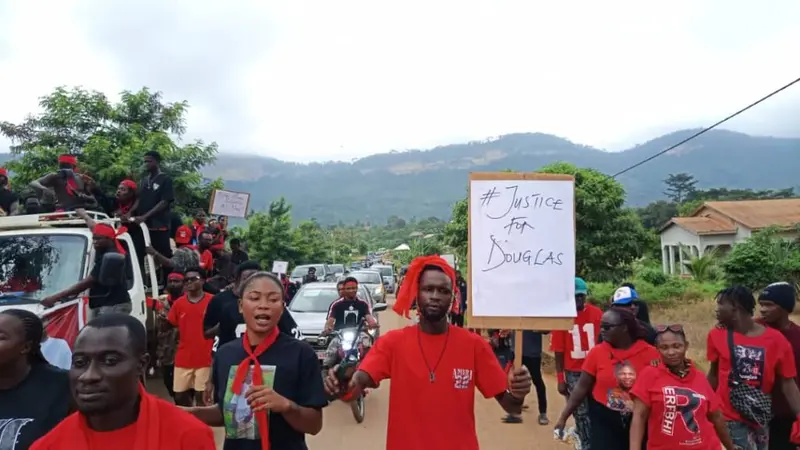
Akyem Hemang residents protest alleged military killing of 28-year-old man, demand justice
A community demands answers after a young man's death during a clash at a mining concession - who will be held responsible?
14h ago•