Minority MPs Say GRIDCo CEO Suspension Will Not Fix Power Outages
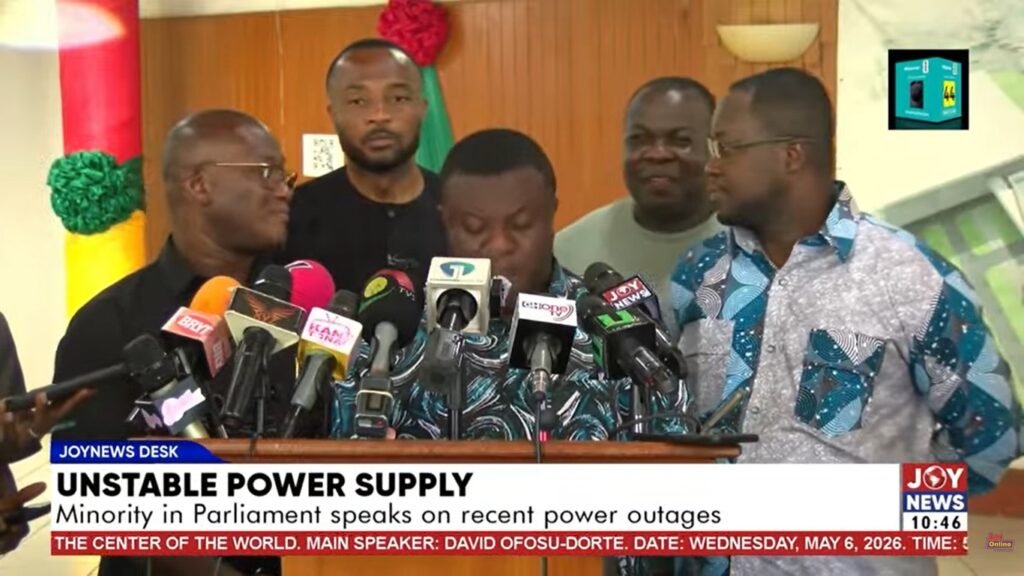
Image: GhanaFront Editorial
Minority MPs have pushed back against the government's handling of the latest power supply crisis, arguing that the suspension of Ghana Grid Company Chief Executive Officer Ing. Mark Awuah Baah will not resolve the deeper weaknesses behind the country's recent outages.
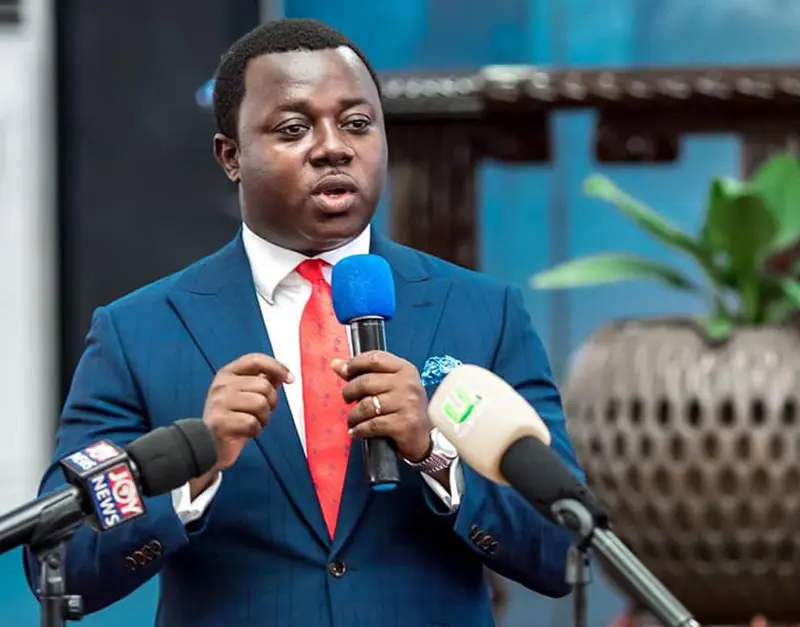
The criticism was led by Collins Adomako-Mensah, Member of Parliament for Afigya Kwabre North, who addressed the matter at a press conference organised by the Minority in Parliament on Tuesday. The briefing followed comments made a day earlier by the Minister for Energy and Green Transition, John Jinapor, on the fire incident that affected key power transmission infrastructure at Akosombo.
According to the Minority, the government's response has focused too heavily on visible administrative action and too little on the structural problems that continue to expose Ghana's electricity supply system to disruption.
Minority questions government's crisis response
Adomako-Mensah said the decision to ask the GRIDCo CEO to step aside, alongside the reassignment of some regional power sector managers, gives the appearance of action without addressing the actual causes of instability in the power sector.
"Ghana cannot afford a government that manages crises through spectacle. Suspending a CEO, reshuffling a regional management team and calling a press briefing are not an energy policy; they are the choreography of an administration desperate to be seen acting while refusing to confront the true altar of this catastrophe itself," he said.
The MP's comments reflect a wider concern within the Minority that leadership changes and temporary sanctions may distract from the long-term work required to protect national transmission assets, improve operational reliability and restore public confidence in the power system.
The Akosombo incident disrupted important transmission infrastructure and partly affected electricity supply in some parts of the country. It came at a time when households and businesses have already been complaining about intermittent power cuts and uncertainty over the stability of supply.
For the Minority, the central question is not whether the fire should be investigated. They agree that the incident requires a full probe. Their concern is that suspending top officials before the root causes are established risks turning the matter into a public relations exercise rather than a serious technical and policy response.
Energy Minister ordered GRIDCo CEO to step aside
Energy and Green Transition Minister John Jinapor directed Ing. Mark Awuah Baah to step aside pending a full investigation into the fire. The directive was presented as part of government's effort to establish accountability and determine what led to the disruption of the transmission infrastructure.
The Minority, however, argues that accountability must be tied to evidence, not political pressure. Adomako-Mensah suggested that Ghana's energy sector needs decisions that strengthen institutions rather than weaken operational continuity at a sensitive moment.
GRIDCo plays a central role in moving electricity from generation points to distribution networks. Any disruption in its operations can have consequences across the national grid, affecting homes, industries, hospitals, schools and other critical services. That is why the response to the Akosombo incident has attracted close attention from both energy sector watchers and the general public.
The recent outages have renewed public debate about whether Ghana's power sector has received the level of planning, investment and maintenance needed to prevent recurring shocks. While the immediate fire incident is under investigation, the Minority says the broader system must not be reduced to the fate of one executive or a few managers.
- The Akosombo fire affected key power transmission infrastructure.
- The Energy Minister directed the GRIDCo CEO to step aside pending investigations.
- Some regional power sector managers were also reassigned.
- The Minority says these actions do not amount to a lasting energy policy.
- Public concern has grown over recent power disruptions across parts of the country.
Calls for investment, planning and stronger institutions
Adomako-Mensah said the current power challenges demand a more strategic response. In his view, Ghana's electricity stability depends on sustained investment, long-term planning and stronger institutions, not sudden punitive measures that may create uncertainty within the sector.
The Minority's position is that the country must examine the full chain of responsibility: infrastructure protection, maintenance schedules, emergency readiness, technical oversight, financing and policy direction. Without that broader review, they argue, Ghana risks repeating the same cycle of outages, public anger, official briefings and personnel changes.
The power sector remains one of the most politically sensitive areas of national life because electricity reliability affects almost every household and business. When supply becomes unstable, small shops lose sales, factories face production delays, cold-chain businesses incur losses and ordinary families are forced to reorganise daily routines around uncertainty.
That public pressure often pushes governments to show quick action. But the Minority insists that quick action must still be useful action. Suspending an official may satisfy a demand for accountability in the short term, but it does not automatically repair damaged infrastructure, prevent future fires or guarantee a more resilient grid.
The call from the opposition MPs is therefore for government to move beyond administrative reshuffling and present a clearer plan for stabilising supply after the Akosombo incident. That plan, they argue, should explain how critical transmission assets will be protected, how investigations will guide reforms and how the public will be assured that the system is being fixed rather than merely managed through announcements.
As investigations continue, the debate is likely to remain focused on whether the Energy Ministry can balance accountability with technical continuity. For now, the Minority is making one point forcefully: Ghana's power outages will not be solved by changing faces alone. The sector needs the kind of disciplined planning and investment that prevents crises before they reach the national grid.
More from GhanaFront Editorial
Related Stories
More from Politics
Kusaug Youth demands probe into alleged killing of lecturer by soldiers in Bawku
A youth group's ultimatum over a soldier-linked death in Bawku could reshape peace efforts - but what exactly are they demanding?
12h ago•