Mahama declares transition from Fairwages and Salary Commission to Independent Emoluments Commission
Ghana's public sector compensation has long been a subject of intense debate, involving various stakeholders from government officials to labor unions. The existing framework, designed to ensure fair wages and salaries, has faced persistent challenges in balancing the needs of workers with the economic realities of the nation. A recent announcement from the Jubilee House has brought renewed focus to this critical area, promising significant changes in the years to come.
The issue of public sector remuneration in Ghana is deeply rooted in the country's socio-economic history. Over the years, disparities in pay, frequent labor disputes, and concerns about fiscal sustainability have plagued the system. Attempts to address these problems have often been piecemeal, leading to a sense that a more fundamental restructuring is needed. The current system, while intended to be equitable, has struggled to keep pace with the evolving needs of the workforce and the nation's economic goals. The promise of a new approach raises questions about how these historical challenges will be overcome and whether the proposed changes will truly deliver a more equitable and sustainable system.
At the heart of this issue are the key players: the government, represented by figures tasked with managing the nation's finances and ensuring social stability; Organised Labour, advocating for the rights and welfare of workers; and, ultimately, the Ghanaian public, who rely on efficient public services and bear the burden of taxation. The stakes are high for all involved. For the government, maintaining macroeconomic stability and managing public expectations are paramount. For Organised Labour, ensuring fair compensation and improved working conditions for their members is the primary objective. For the public, the hope is for a system that is both fair and sustainable, delivering quality services without placing undue strain on the national budget. The tensions inherent in balancing these competing interests are palpable, and the success of any reform will depend on the ability to navigate these challenges effectively.
The announcement has sparked numerous questions about the future of public sector pay in Ghana. How will the transition be managed to ensure minimal disruption and maintain industrial harmony? What specific criteria will be used to determine salaries and benefits under the new framework? How will the roles and responsibilities of existing institutions be redefined? Will the proposed changes truly address the deep-seated inequalities that have plagued the system for so long? The answers to these questions will be crucial in determining the success of this ambitious reform and its impact on the lives of countless Ghanaians.
Quick Summary
President Mahama has declared 2026 as the transition year from the Fair Wages and Salaries Commission to an Independent Emoluments Commission. This announcement is part of a major overhaul of Ghana's public sector pay - but what could this mean for workers?
Summary - read the full story for complete context.
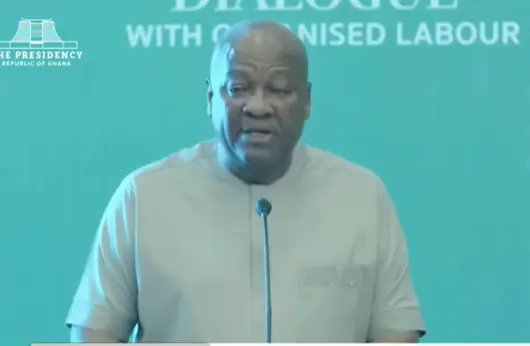
Image: MyJoyOnline
Also covered by
GhanaFront aggregates news from trusted sources. Click to read the original article.
Keywords
Explore related tagsMore from MyJoyOnline
Related Stories
More from Politics
Mahama says he'll continue inherited gov't policies, but not Akufo-Addo's personal Cathedral pledge
Which former president's pledge does Mahama say is not a national policy - and why does he insist taxpayers' money shouldn't fund it?
2d ago•