Ghana's No Bed Syndrome Linked to Scrapping of Digital Health Platform

Image: GhanaFront Editorial
Ghana's "No Bed Syndrome" Linked to Abandonment of Digital Health Platform, Says NPP Spokeswoman
The persistent challenge of patients being turned away from hospitals due to unavailable beds has been directly tied to the scrapping of the Lightwave Health Information Management System (LHIMS) by a senior health policy voice within the New Patriotic Party (NPP). Dr Ekua Amoakoh, Deputy Spokesperson for former Vice-President Dr Mahamudu Bawumia, has argued that the decision to discontinue what she describes as a functioning digital infrastructure has strained coordination across the country's health facilities and worsened an already critical patient management problem.
Her remarks come in response to the Health Minister's announcement of a new government-owned digital platform -- the Ghana Health Information Management System (GHIMS) -- which is being introduced to replace LHIMS. Dr Amoakoh contends that far from representing progress, the transition amounts to dismantling gains that took years to establish, while leaving hospitals unable to efficiently track bed availability in real time.
What LHIMS Was Designed to Do
Launched in 2019, LHIMS was conceived as an integrated, end-to-end digital health solution that would connect 950 health facilities across Ghana under a unified platform. The system was designed to enable real-time data sharing between facilities, including the tracking of patient records, bed occupancy, and laboratory information. According to Dr Amoakoh, these capabilities were precisely what made the platform critical to addressing the "no bed syndrome" -- a well-documented phenomenon in which patients are referred from one hospital to another without prior confirmation of space availability.
The $100 million contract awarded to Lightwave Health Systems was intended to digitalise the country's health infrastructure in a coordinated and scalable way. Advocates of the system maintain that despite implementation challenges, LHIMS had begun to deliver on its core promise before it was suspended.
"LHIMS was designed as an integrated, end-to-end digital health solution that enables real-time coordination across facilities, including tracking bed availability nationwide. Its abandonment has directly undermined efficient patient management." -- Dr Ekua Amoakoh
The Government's Case Against LHIMS
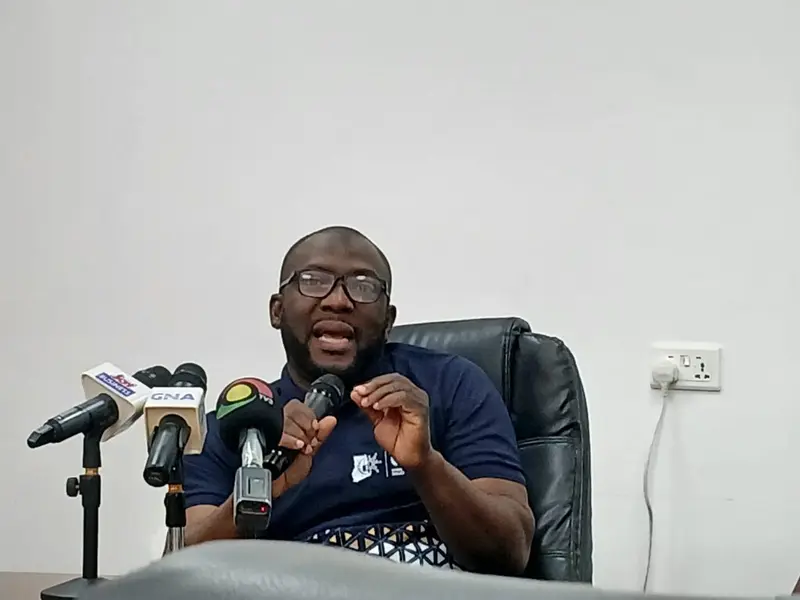
Health Minister Kwabena Mintah Akandoh, speaking at a media engagement at the Jubilee House, outlined the government's rationale for transitioning away from LHIMS. According to the Minister, only 450 of the intended 950 health facilities had been connected under the platform, despite substantial financial disbursements. He also cited procurement irregularities, technical shortcomings, and a contractor's refusal to hand over full administrative access as grounds for discontinuing the system.
The Minister framed the rollout of GHIMS as a step towards ending manual record-keeping in Ghana's health facilities -- a goal that has long been cited as central to improving service delivery. The new system is also intended to integrate with the National Health Insurance Authority database and support a National Health Information Exchange architecture, allowing patient records to be accessed seamlessly across institutions.
NPP Pushes Back on Narrative
Dr Amoakoh rejected the characterisation of LHIMS as a failed project. She argued that the issues cited by the government -- from low facility connectivity to contractor conduct -- were manageable within the existing framework and should not have led to a complete overhaul. In her view, the cumulative set of justifications offered to justify the discontinuation of LHIMS amounted to a systematic effort to discredit the platform rather than improve it.
She also dismissed the claim that the contractor's reluctance to surrender administrative access constituted "blackmail," describing it as an exaggeration deployed to build a case for scrapping the system. According to her, such disputes should have been resolved through corrective action rather than abandonment.
On the question of investment, Dr Amoakoh raised concerns about duplication. She noted that under the new arrangements, Ghana is now committing significant public resources to building laboratory software capabilities from scratch -- even though these same functionalities were already embedded within LHIMS. The additional expenditure, she argued, is difficult to justify at a time when the country faces pressing demands on its healthcare budget.
A Leaked Document Raises Fresh Questions
Adding another dimension to the debate, a confidential document submitted to the Ghana Health Service has come to light, revealing ambitious and highly compressed plans for the rollout of an Integrated National Laboratory Information System (INLIS). The document, prepared by MedTrack Technologies Limited, outlines an "Accelerated Deployment" model that would compress what was originally a 39-month implementation schedule into just seven months.
Key elements of the plan include:
- Technical development commencing as early as the third week, before requirements gathering is fully completed
- Overlapping project phases, with planning, development, and testing running simultaneously in what the document calls a "hyper-parallel execution model"
- A pilot rollout across facilities expected to begin by the fifth month of the programme
- A requirement for the Ghana Health Service to respond to approvals and feedback within 24 to 48 hours throughout the implementation process
- Immediate availability of regional directors, laboratory heads, and technical personnel to support deployment
The document's own risk section acknowledges the extraordinary pressures of such a timeline. It warns that even a one-week delay could represent five per cent of the total project window, and states that the plan's success depends on what it describes as "extraordinary intervention from top-level authorities." It further cautions that any scope expansion -- even minor additions -- could derail the entire timeline.
"A one-week setback could account for five per cent of the total project timeline." -- MedTrack Technologies Limited document on INLIS deployment
Concerns About Policy Continuity and Value for Money
The emergence of the INLIS document has intensified scrutiny around the coherence of Ghana's broader digital health strategy. Analysts note that the functionalities outlined in the leaked plan -- including laboratory data management, integration with the DHIS2 platform, and real-time reporting capabilities -- overlap significantly with what LHIMS was already designed to provide.
This has reignited debate over whether successive government decisions are creating parallel digital health systems rather than building on existing ones. Critics argue that this pattern represents a costly cycle of investment followed by abandonment, with each new administration prioritising fresh starts over continuity.
The question is particularly pointed at a time when Ghana's healthcare system continues to face resource constraints. The "no bed syndrome," which affects patients in both public and private facilities, has been a persistent point of public frustration, and the digital tools intended to address it appear to be in an extended state of transition.
What Comes Next
The Health Ministry has yet to provide a detailed public response to Dr Amoakoh's specific claims, nor to the concerns raised by the leaked INLIS deployment document. The rollout of GHIMS is reportedly proceeding in phases across teaching hospitals, regional facilities, and lower-tier health institutions, though no updated timeline for full deployment has been publicly confirmed.
Whether the new platform will succeed where LHIMS fell short remains to be seen. What is clear is that the debate around Ghana's digital health infrastructure has moved well beyond technical questions and into the territory of governance, political accountability, and the effective use of public resources.
For ordinary Ghanaians -- patients referred between hospitals without assurance of a bed, or families navigating a system still heavily reliant on paper records -- the resolution of that debate cannot come soon enough.
More from GhanaFront Editorial
Related Stories
More from Technology
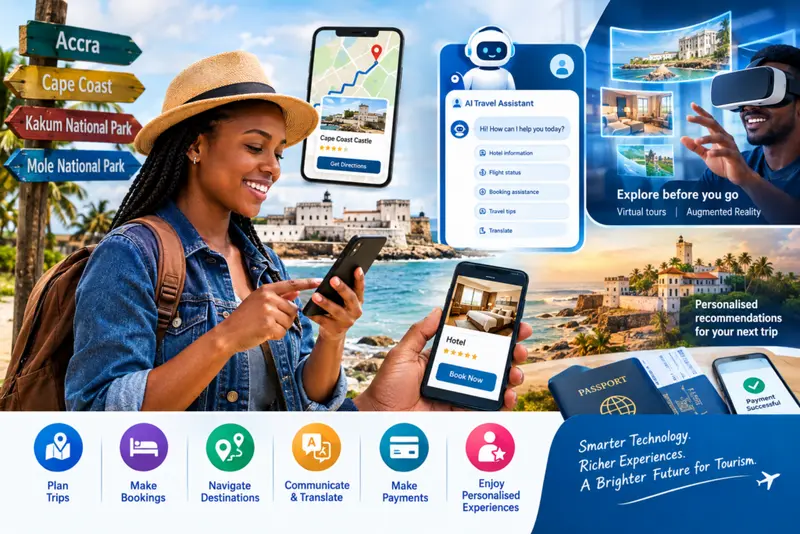
The importance of technology and artificial intelligence in tourism
How are smart tools changing the way tourists explore Ghana? The answer may surprise you.
2d ago•4 min read