Ghana Leads Africa's Climate Diplomacy Push Ahead of COP31 and COP32
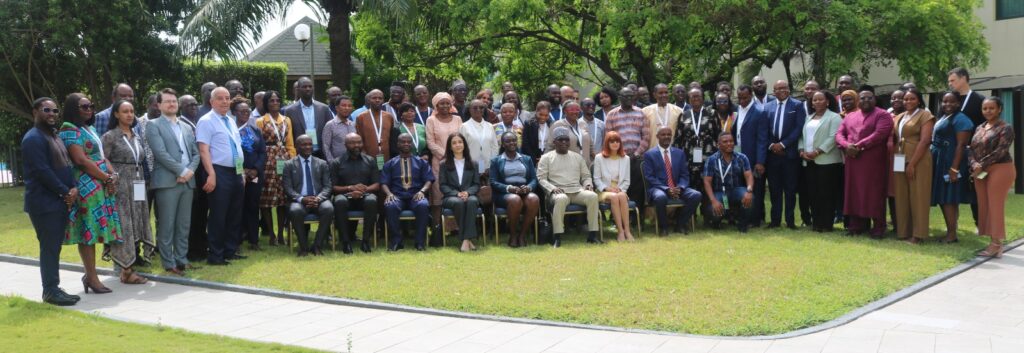
Image: GhanaFront Editorial
For three days in Accra, Africa is doing the difficult, unglamorous work that global climate diplomacy actually demands -- not speeches at packed conference halls, but the careful, coordinated preparation that determines whether the continent walks into major negotiations with a fighting chance or arrives divided and outmanoeuvred.
Ghana is hosting a high-level strategy meeting of the African Group of Negotiators (AGN) from March 30 to April 1, 2026, bringing together climate experts and national focal points from across the continent. The goal is clear: consolidate a unified African position ahead of COP31 in Turkey and COP32 in Ethiopia, and ensure the continent enters both forums as a coherent bloc rather than a collection of competing national interests.
A Milestone Under Ghana's Chairmanship
The Accra gathering carries particular significance. It is the first in-person strategic session held under Ghana's chairmanship of the AGN -- a leadership role assumed by Nana Dr. Antwi-Boasiako Amoah, who made history as the first Ghanaian to chair the group since the country signed the United Nations climate convention in 1992.
That milestone is more than symbolic. Ghana's elevation to AGN leadership places the country at the centre of Africa's engagement with the global climate architecture at a period when the stakes have rarely been higher. The next two COPs -- one in a NATO-allied country, one on home soil -- will test whether the continent's negotiators can move from reactive participation to genuine agenda-setting.
Prof. Nana Ama Browne Klutse, Chief Executive Officer of Ghana's Environmental Protection Authority, set the tone in her welcome address to participants.
"Africa's strength in global climate negotiations has always been its unity," she said. "This meeting is timely and essential in shaping Africa's priorities ahead of the next two COPs."
Prof. Klutse did not soften the underlying tension: Africa contributes the least to global greenhouse gas emissions yet bears some of the most severe climate impacts. That injustice -- widely acknowledged, rarely adequately addressed -- shapes every dimension of the continent's negotiating agenda, from adaptation finance to technology transfer to loss and damage.
Shifting From Passive to Decisive
The keynote address by Baba Issifu Seidu, Minister of State at the Office of the President for Climate Change and Sustainability, laid out the challenge in direct terms. The global climate process, he argued, has entered a phase where countries are no longer judged on the quality of their pledges but on the credibility of their actions.
For Africa, that shift demands a corresponding change in posture.
"Africa must shift from being a passive participant to becoming a driver of outcomes across all negotiation tracks," Minister Seidu said.
His remarks identified three priority areas that will anchor Africa's position going into COP31 and COP32:
- Adaptation metrics: Securing measurable, verifiable indicators under the Global Goal on Adaptation -- so that progress is not left to interpretation but held to concrete standards.
- Climate finance: Pushing for adequate, accessible, and predictable financing under the New Collective Quantified Goal (NCQG), the successor framework to the long-debated $100 billion annual commitment.
- Fairness in mitigation: Ensuring the Mitigation Work Programme does not place unfair transition burdens on African economies still working to industrialise and deliver energy access to hundreds of millions of people.
On climate finance specifically, Minister Seidu was unequivocal. Without sufficient and genuinely accessible funding, Africa's adaptation and mitigation ambitions risk remaining aspirational -- well-crafted on paper but undeliverable on the ground.
What the Accra Meeting Is Actually Doing
Beyond the formal addresses, the substance of the three-day meeting is technical and granular. Delegates are working through partner dialogues, thematic working sessions, and closed-door discussions designed to produce sharp, coordinated negotiating instructions for the 2026-2027 cycle.
Participants will identify outstanding technical and political issues from previous negotiations, assign responsibilities for follow-up, and map out where Africa needs to strengthen its positions before Turkey and Ethiopia. The aim is not just agreement in principle, but operational readiness -- knowing who argues what, where flexibility exists, and where the continent must hold firm.
That kind of preparation matters more than most outsiders appreciate. Global climate negotiations are not simply about having the right arguments. They are about timing, coalition-building, procedural knowledge, and the ability to respond quickly when proposals shift. Africa's negotiators have often been outpaced not because their positions were wrong but because the infrastructure supporting their delegations -- in terms of legal expertise, technical analysis, and real-time coordination -- has lagged behind wealthier blocs.
Civil Society: Treat These COPs as Decisive
Observers from civil society have been watching the Accra preparations closely, and their message is pointed. Augustine Njamshi of the Pan African Climate Justice Alliance (PACJA) urged AGN delegates to approach the next two COPs with urgency rather than routine.
"Africa cannot afford to treat COP31 and COP32 as routine negotiation cycles," Njamshi said, warning that recent global decisions have demonstrated that strong positions alone are not enough if they are not backed by strategy and collective action.
PACJA and allied civil society groups argue that the window for securing meaningful commitments on adaptation finance, technology transfer, and loss and damage mechanisms is narrowing. Each COP that passes without binding, enforceable outcomes pushes the cost of adjustment higher -- and the communities least responsible for the climate crisis bear the compounding price.
Ghana's Broader Climate Posture
As host of the current meeting and chair of the AGN, Ghana is in an unusual position: simultaneously leading the continental process while also having to demonstrate credibility through its own domestic climate performance.
Government officials say Ghana is advancing its national adaptation plans and updating its climate pledges -- Nationally Determined Contributions (NDCs) -- as part of a broader commitment to climate resilience. The country is also promoting deeper regional cooperation as a feature of its AGN leadership, rather than treating the chair role as purely administrative.
With COP32 scheduled for Addis Ababa in 2027, this year's strategic groundwork carries added weight. Africa hosting a COP is a demonstration of ownership and authority over the global process -- but it also raises the stakes for the continent's collective performance. If the outcomes of the Africa-hosted conference fall short of what the continent has called for, the reputational cost will be significant.
Ghanaian authorities believe the decisions that emerge from the Accra meeting will help sharpen that voice in the months remaining before Turkey.
The Larger Picture
The AGN strategy meeting in Accra is the kind of event that rarely makes global headlines. There are no world leaders, no dramatic last-minute agreements, and no communiques drafted for maximum media impact.
But this is precisely where Africa's climate future gets shaped -- in rooms full of negotiators arguing over language, finance formulas, and procedural tactics. The continent's ability to turn its moral authority on climate justice into concrete policy wins depends on the quality of preparation that happens in meetings like this one.
Participants are expected to issue concrete decisions and assign clear responsibilities before the session closes on April 1. For Africa's climate negotiators, the work that follows will define how much of the continent's agenda survives contact with the full complexity of global climate politics at COP31 and beyond.
More from GhanaFront Editorial
Related Stories
More from Technology
Police train enforcement team ahead of Traffictech-GH implementation
Before the October 1 launch, a key training wraps up - but what changes for drivers?
2d ago•2 min read