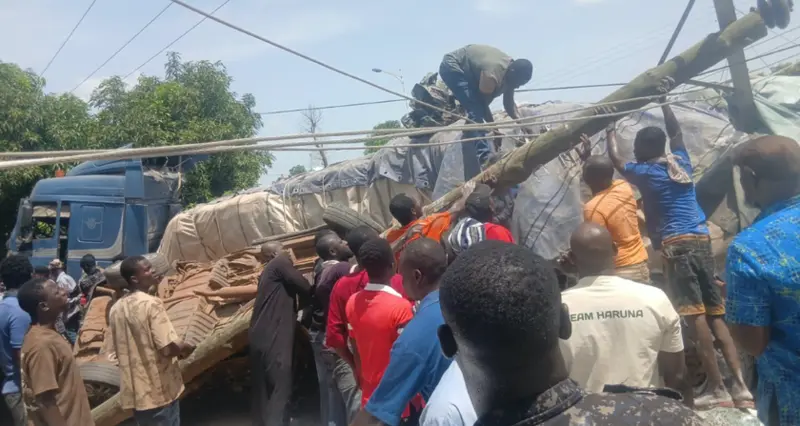
Devastating Floods Wipe Out Over A Million Ganesh Idols In India's Raigad District
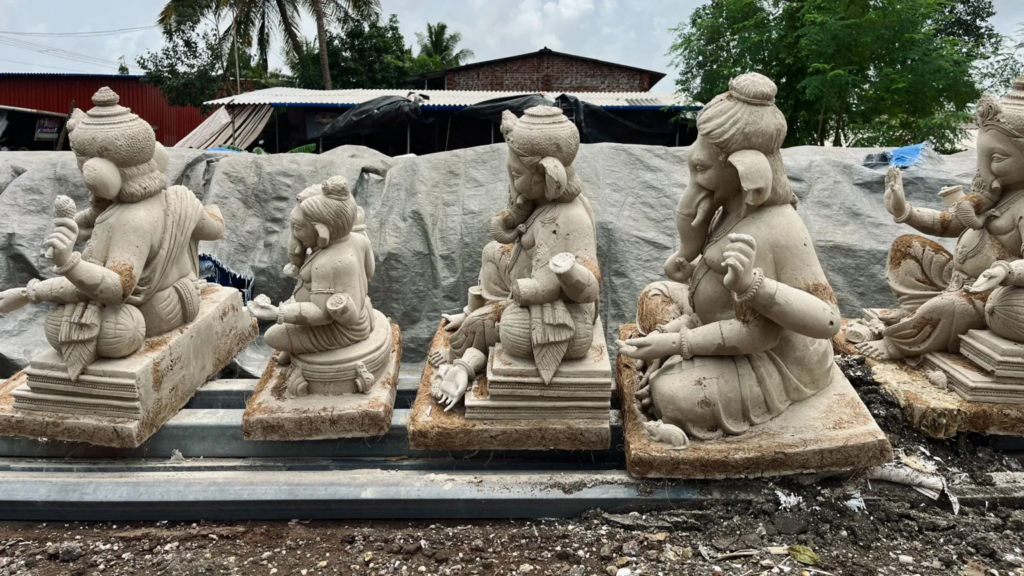
Image: GhanaFront Editorial
A Cultural and Economic Catastrophe
In a devastating blow to one of India's most vibrant cultural traditions, severe flooding in the Raigad district of Maharashtra has wiped out an estimated one million clay idols of the Hindu deity Ganesha. Striking just weeks before the highly anticipated Ganesh Chaturthi festival, the deluge has left thousands of artisans in a state of despair, dismantling months of painstaking labour and threatening the economic lifeblood of the region.
The scale of the destruction is staggering. For generations, Raigad has served as the epicentre of idol production in the state, boasting approximately 20,000 workshops that collectively churn out up to eight million idols annually. This seasonal industry is a colossal economic engine, providing employment for nearly 150,000 individuals and generating an estimated 3.5 billion rupees in sales each year. However, the recent unprecedented rainfall has ground this bustling ecosystem to a sudden and heartbreaking halt.
Sachin Patil, who serves as the president of the Ganesh Murtikar Utkarsh Mandal -- the primary association representing idol makers in the region -- confirmed the sheer magnitude of the disaster. He noted that the heavy rains have affected around 3,000 individual workshops, leaving a trail of ruined clay, shattered moulds, and unsalvageable artwork in their wake.
"Around a million Ganesh idols were damaged by heavy rains across the district," Patil disclosed, painting a grim picture of the immediate aftermath.
Unprecedented Rainfall Defeats Traditional Defences
While heavy monsoon downpours are a regular and expected feature of life in Maharashtra, the intensity of this year's weather event caught even the most seasoned sculptors entirely off guard. Local artisans have long developed strategies to protect their delicate work from seasonal moisture, traditionally relying on plastic sheets and elevated platforms to keep the clay safe. This year, however, those conventional defences proved grossly inadequate.
According to India's weather department, the Raigad district was battered by more than 548 millimetres (21.6 inches) of rain between the 5th and 7th of July. To put this anomaly into perspective, this three-day deluge was nearly equivalent to the 663 millimetres recorded over the entire month of July in the previous year. The sheer volume of water rapidly overwhelmed local river systems and drainage networks, triggering widespread and catastrophic flooding that swept through workshop areas that typically remain dry.
Dilip Mhatre, a 40-year-old sculptor who has dedicated three decades to his craft, shared his harrowing experience. "In the past, rainwater would collect in the village but never reach the workshop area," he explained, recounting the terrifying speed at which the floodwaters rose. "This time, everything was washed away."
The Human Cost of the Deluge
Behind the staggering statistics lie the shattered livelihoods of thousands of artisans who rely exclusively on this seasonal window to sustain their families. The creation of a single Ganesh idol is a highly labour-intensive process that demands meticulous moulding, casting, sculpting, drying, and painting. A small idol, retailing for merely five to eight dollars, can take up to a full two weeks to complete, while larger, more intricate pieces designed for community celebrations can consume weeks of effort and tens of thousands of rupees in raw materials.
For Mhatre, the financial toll is catastrophic. He had successfully completed approximately 500 clay idols, slated for delivery across the western state of Maharashtra. The estimated value of his destroyed inventory stands at around 800,000 rupees. In total, he projects his losses to reach nearly 1.2 million rupees, a devastating blow for a man whose family has relied on this income for household expenses and educational costs for thirty years.
"We have no idols, no moulds and no raw material. We don't know how we'll fulfil the orders now," Mhatre lamented.
The situation has forced many artisans into the unenviable position of contacting expectant customers to cancel long-standing orders. With advance payments already spent on now-ruined raw materials, craftsmen are being forced to take out high-interest loans simply to refund their clients, plunging them deeper into a cycle of debt.
Insurance Shortfalls and an Uncertain Recovery
As the floodwaters slowly recede, the path to recovery appears fraught with bureaucratic hurdles and financial shortfalls. While some workshop owners had the foresight to purchase insurance, early indications suggest that the payouts will be woefully insufficient to cover the true extent of the damages.
Anita Patil, a 53-year-old workshop owner from Kalve village, highlighted the grim reality of the claims process. "If the actual loss is one million rupees, the insurance payout may be only around 10,000 rupees," she revealed, expressing deep frustration with the system. "There are many conditions attached to these policies and getting meaningful compensation is not easy."
The government has initiated preliminary steps to address the crisis. Tanaji Shejal, a local government official, indicated that authorities have begun surveying the damage across the district. He assured the public that financial assistance would be disbursed under established government protocols once the comprehensive assessments are finalised. However, for artisans facing immediate refund demands and zero inventory, bureaucratic timelines offer little comfort.
Global Repercussions for a Local Craft
The ripple effects of the Raigad floods are expected to extend far beyond the borders of Maharashtra, impacting the global diaspora that relies on these authentic idols for their own Ganesh Chaturthi celebrations. Industry leaders are already warning that international orders, which have become an increasingly vital revenue stream for local sculptors, will face significant delays or outright cancellations.
The crisis is compounded by broader economic headwinds. "International demand had already slowed because of the global economy," Sachin Patil noted. "Now the floods will delay some overseas orders. We may have to rely on sculptors outside Raigad to fulfil them."
In response to the disaster, the artisan community is being forced to fundamentally rethink its approach to climate resilience. Moving forward, many sculptors are planning significant infrastructural upgrades to their workshops:
- Installing permanent, heavy-duty plastic roofing to replace temporary tarpaulins.
- Constructing significantly elevated platforms to keep inventory above projected flood lines.
- Building reinforced structural barriers around the perimeter of workshop clusters.
- Developing rapid-response plans to relocate idols indoors when severe weather warnings are issued.
However, these crucial adaptations require capital that the artisans simply do not have at this moment. With the festival rapidly approaching, the sole focus remains on salvaging the unsalvageable. Across Raigad, artists are painstakingly drying out slightly damaged idols, clearing away thick layers of toxic mud, and attempting to repair the minor cracks in hopes of fulfilling at least a fraction of their commitments.
While the financial devastation is absolute, the cultural resilience of the Raigad artisans remains unbroken. Few expect to recover their losses in the near term, but abandoning the heritage craft that has defined their community for generations is simply not an option they are willing to entertain. The road to recovery will be long, but the spirit of the sculptors endures.
The Environmental and Economic Intersection
The tragic events unfolding in Maharashtra highlight a growing crisis at the intersection of climate change and traditional economic practices. The artisans of Raigad represent a vital sector of the informal economy, one that operates with razor-thin margins and little to no safety net. When anomalous weather events -- such as the dumping of a month's worth of rain in a mere seventy-two hours -- strike, these vulnerable communities absorb the absolute brunt of the impact.
For Ghana and other developing nations observing this crisis, there is a stark lesson in climate vulnerability. Traditional industries, reliant on predictable seasonal patterns and basic infrastructure, are increasingly at risk in an era of global climate volatility. The destruction of a million cultural artefacts in India serves as a potent reminder that the consequences of extreme weather are not just environmental, but deeply economic and cultural. As the artisans of Raigad begin the arduous task of digging out from the mud, their plight underscores an urgent, global need for targeted climate resilience strategies that protect the world's most exposed local economies.
More from GhanaFront Editorial
Related Stories
More from Politics

Withdraw from Juaben chairmanship race or face disqualification - NDC tells Obuasi SHTS headmaster
A party's ultimatum to a suspended headmaster could reshape a key constituency race.
1d ago•